Editor
THE Bank of Industry (BoI) has said that most people are not paying back loans because tgey erroneously believe that any money from the Bank is owned by the government and is a national cake.
Specifically, the bank’s managing director, Olukayode Pitan, who disclosed this recently, added that
Join our WhatsApp Channelthe country’s entrepreneurs don’t have the habit of repaying loans.
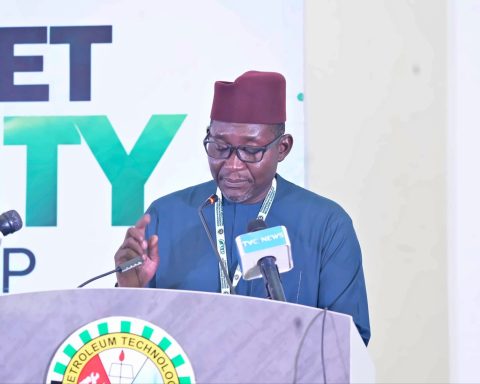
He made the observation at the first edition of the community engagement development workshop organised by the Arthur Mbanefo Digital Research Centre (AMDRC) of the University of Lagos (UNILAG), Akoka.
Mr Pitan said this, and other conditions make it difficult for Nigerian start-ups to access loans from the bank.
According to him, if proper steps are taken start-ups can get loans of up to N10million to expand their business initiatives.
“You can get the loans without bringing your house as security. All we require are two guarantors and I can tell you, most Nigerians have problems getting two guarantors because they know them. We require the BVNs of those guarantors and a few things but they will not give it because they know the people. So we are saying if people that know you do not want to guarantee you, why should we believe in you?” he said.
The workshop, with the theme; “Building the Nigeria’s Economy for the Immediate Future: The Role of Innovation and Entrepreneurship and Startups Creation,” featured scholars and industry leaders including the director of the university’s Institute of China Development Studies, Olufemi Saibu; head of programme- migration for development at the German Agency for International Cooperation, Sarah Alonge, and the director, entrepreneurship and skills development centre at UNILAG, Sunday Adebisi, among others.
Pitan further said another thing the bank tried was the introduction of matching grants which he noted that about 20 states are a part of.
His words: “We go to your state and tell the governor that any amount you give us, we will match it. We will lend the money in your state but I can tell you that the non-performing loan ratio so far is on the average between 80-100 per cent.
“People believe that any money from the Bank of Industry that is owned by the government is part of the national cake. All we ask of you is pay back that money so that we can give you another loan.”
Meanwhile, in his own presentation, Mr Saibu said the way Nigeria is pursuing its entrepreneurship programme will only lead to an increased number of people living in poverty in the country.
He said an entrepreneur is expected to identify a problem, look critically at the problem, and come up with a solution that is treatable and can be exchanged with a buyer but that what Nigerian entrepreneurs are doing was merely to create applications for Nigerians to access products overseas.
“If you create a product that nobody can buy, that is not a solution,” he said.
According to him, an entrepreneur does three things including bringing up a completely new product or facilitating product getting to the buyer or creating access to that product.
“Our focus so far has been creating platforms for people to have access to products and that has been creating problems for our supply side. We are not creating entrepreneurs who are creating products, we only create entrepreneurs who facilitate the trading of a product produced in other countries,” he said.
He said creating platforms and apps that make people buy oversea only adds problems to Nigeria’s foreign exchange.
“The start-ups may earn billions of dollars but they are adding to the problem of our country because the products and apps they created are promoting businesses overseas.
“They make it easier for people to buy in Amazon and China but they have not made people buy from Nigeria. Therefore, we need to have a rethink that the entrepreneurs that we want to produce will be people who create products that we can sell outside Nigeria,” he said.
Mr Saibu also said the recently introduced Central Bank of Nigeria’s Tertiary Institution Entrepreneur Scheme (TIES) identifies agricultural businesses, creative industry and science and technology, saying they are all about software application development.
He said; “The scheme is supposed to assist entrepreneurs and innovators but it will only create demand access, making Nigerians build websites and apps that can make it easy for people to buy overseas.
“They are not looking for people who can go into engineering, develop a prototype of a phone that can be accessible to all Nigerians and produce locally for people to buy Nigeria-made phones.
“They are not looking at entrepreneurs who can design vehicles that are not using electricity and solar but our oil and be able to make it available. So, until we begin to redirect our creativity, innovations and entrepreneurship towards expanding the domestic economy, we may continue to have increasing entrepreneurship and at the same time increasing unemployment.”
Continuing, he said Nigeria needs to understand that it cannot teach entrepreneurs but develop the talent in people that they become entrepreneurs.
“It is not the training that produced Ronaldo but the talent of a footballer that is in him. He was only given the opportunity to develop that potential.”
“We need to promote IT and my own take is that we should change information technology to industrial technology. It is when we build our industry that we can compete globally, not agriculture,” he said.