Editor
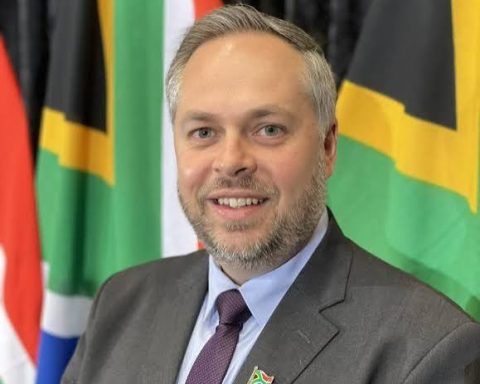
The President’s former spokesman in the South East, Denge Josef Onoh, has strongly criticized President Bola Tinubu’s decision to grant clemency to convicts, including Maryam Sanda and drug offenders.
Onoh argues that the pardons undermine the rule of law and moral accountability, potentially damaging Nigeria’s international reputation.
“This act, while constitutionally permissible, contravenes the moral imperatives of retributive justice and restorative equity, inflicts psychological trauma on victims’ families, perpetuates systemic injustice, and erodes the foundational deterrence mechanisms essential for societal stability,” Onoh said.
Join our WhatsApp ChannelA Matter of Justice and Accountability
Onoh contends that Maryam Sanda’s case, in particular, is a heinous example of lethal violence that resulted in irreversible loss. He believes that pardoning her would undermine the intrinsic value of human life and the principle of accountability.
Concerns About Drug Convicts
Regarding the drug convicts, Onoh argues that their pardon sends a wrong signal, normalizing predation on society’s most vulnerable members, including youth. He warns that this decision may spike youth involvement in drugs and violence, sabotaging the demographic dividend essential for Nigeria’s future.
According to Onoh, “absolving drug dealers like Chibueze, whose trafficking perpetuates cycles of addiction, community devastation, and organised crime, signals a moral abdication that normalises predation on society’s most fragile members, including the youth ensnared in narcotics webs.”
International Implications
Onoh also highlights the potential international implications of the pardons, including erosion of diplomatic credibility and damage to Nigeria’s global stature. He urges President Tinubu to reverse the pardons, emphasizing that such a move would be a moral imperative for a just federation.
He said: “Nationally, this portrays Nigeria as a haven for impunity, tarnishing its image as Africa’s largest democracy and deterring foreign investment in a nation already grappling with reputational deficits from corruption indices such as Transparency International’s 2024 score of 25/100.
“Internationally, it undermines diplomatic credibility; bodies like the UN Office on Drugs and Crime, which lauded Nigeria’s anti-narcotics strides, may now view the administration as complicit in recidivism, eroding alliances in global counter-trafficking pacts like the UN Convention Against Illicit Traffic in Narcotic Drugs (1988), to which Nigeria is a signatory.
READ ALSO: 175 Convicts Granted Presidential Clemency by Tinubu (See Full List)
“For the upcoming generation youth, comprising 70 percent of Nigeria’s 220 million population, per World Bank data, this criminally shapes psyches towards cynicism and criminality. Social learning theory (Bandura, 1977) posits that observing unpunished elite crimes fosters normalised deviance, potentially spiking youth involvement in drugs (already at 14.4% prevalence per UNODC 2023) and violence, sabotaging the demographic dividend essential for Vision 2050.
“Critically, these pardons of the few mentioned convicts demoralise Nigeria’s security apparatus—the NDLEA agents who risked lives for Chibueze’s 2010 conviction, or police investigators who endured Sanda’s protracted 2017–2020 probe — discouraging enlistment and efficacy in a force already strained by underfunding (with NDLEA’s 2025 budget at a mere ₦120 billion).
“This erodes the rule of law’s deterrence core, as affirmed by Nigeria’s Evidence Act (2011) and Supreme Court precedents emphasising consistent enforcement for public order.”