Prime Business Africa
By Arize Nwobu
The Central Bank of Nigeria (CBN) has worked dedicatedly alongside the federal government and implemented policy shifts towards the reconfiguration of the economy to foster stability and sustainable growth, increase overall economic efficiency and improve living standard.
CBN policy shifts contributed largely to pulling the economy out of the crisis management stage, but it does not necessarily mean the end of economic struggles and difficulties.
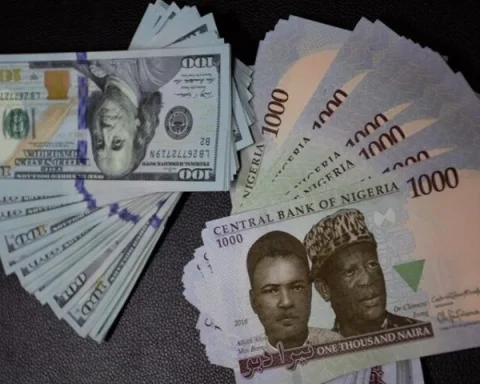
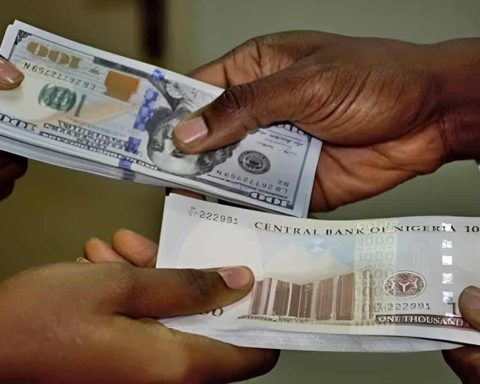
Stabilisation in the context means that there are now less fluctuations of the major macroeconomic variables such as inflation rate, exchange rate etc.
Join our WhatsApp ChannelNotable experts including former Minister of Finance and Coordinating Minister of the economy, now the Director- General, World Trade Organisation( WTO), Dr. Ngozi Okonjo-Iweala acknowledged the stabilisation of the economy and further noted that it was in the right direction and that growth was the next thing.
CBN Governor, Olayemi Cardoso had noted as follows: ” I am pleased to report meaningful progress on all three fronts, even as we remain fully aware of the work ahead.”
He addedl that, “Our actions continue to reflect the policy direction we articulated from the onset. We said what we would do and we have done it transparently and consistently.”
CBN consistently maintained a tight monetary policy and inflation moderated from a peak of 34.60 percent in November 2024 to 14.50 percent in November, 2025 and it is expected to continue to ease and moderate to an average of 12.94 percent.
Despite drop in inflation, there are genuine concerns that the effect has not percolated and reflected in prices and daily living of citizens, and which is because of the time lag in the crest and trough dynamics of the economy.
There is always a time lag between policy implementation and the manifestations of the policy objectives, but going forward it is expected that the effects will fully begin to manifest.
READ ALSO: CBN, AI and effective monetary policy management
Besides disinflation, the consistent tight monetary policy also triggered a wave of capital inflows from the United Kingdom, South Africa, United Arab Emirates, Cayman Islands, France, Singapore and Netherlands and the development proves the tracking of the Nigerian market by global investment fund managers.
Statistics from the Nigerian Exchange Group( NGX) shows a surge of N1.28 trillion worth of foreign portfolio investments for seven months ended in July 31, 2025, compared with N598 billion recorded in the corresponding period in 2024.
Inflow of foreign portfolio investments increase the velocity of the stock market and creates wealth for local investors through higher stock/ asset prices.
Foreign portfolio investments( FPIs) also mprove the host country’s balance of payments, strengthen the exchange rate and provides domestic businesses a wider access to cheaper funds.
But the outflows of FPIs can disrupt the host economy especially the economies of developing countries because their exit is often en masse in a typical demonstration of the herd mentality.
Their exit can cause stock prices in the stock market to plummet and with heavy losses to investors as it happened in Nigeria in 2005- 2008.
The Nigerian stock market meltdown was due to a massive exit of foreign portfolio investments which was triggered by the global financial crisis which started in the USA.
Thus far, the market and economy have remained stable and the inflows of foreign portfolio investments have created liquidity and contributed to the stabilization of the exchange rate.
Statistics show that the economy grew by 4.25 percent in the second quarter( Q2) 2025, and which was said to be the strongest pace in four years and the growth was driven by improved oil production, telecommunications and financial services.
The contribution of financial services was expected because the Nigerian banking sector has remained fundamentally strong as.CBN has maintained effective financial system stability with the key parameters within the regulatory benchmarks.
Banks are very important financial intermediary especially in developing countries and the banks recapitalisation policy will further strengthen the banking system to further boost economic growth in 2026.
The policy stipulates that banks in the international category wiould recapitalise with a minimum share capital of N500 billion, national banks with a minimum of N200 billion and regional banks, N50 billion minimum share capital.
The deadline for the recapitalisation is March 31, 2026 and thus far, nineteen banks have met the new capital requirements.
The banks are, GT Bank, Access Bank, Zenith Bank, Fidelity Bank, Stanbic IBTC, UBA, First Bank and Wema Bank.
Others are, Providus Bank, Ecobank, Globus Bank, Jaiz Bank, Lotus Bank, Nova Bank, Premium Trust Bank, Greenwich Merchant Bank, and FSDH Merchant Bank.
The banks recapitalisation policy is one of CBN’s major policy thrust and which is expected to give the economy a boost in 2026.
The key priorities for CBN in 2026 are, sustaining disinflation, boosting foreign reserve buffers and expanding non-oil earnings and strengthening growth.
CBN has evolved notable policy options and a more stable and resilient economy is projected in 2026.
The economy has been projected to expand from an estimated 3.89 percent in 2025 to 4.49 percent in 2026.
Nwobu, a Chartered Stockbroker and Business Journalist wrote via arizenwobu@yahoo.com Tel 08033021230.

- Editor
- Editor
- Editor
- Editor
- Editor