Prime Business Africa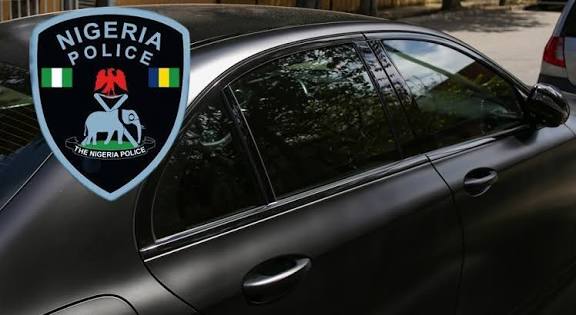
Prosper Okoye
For months, Nigeria’s motorists have lived with uncertainty over a policy that appears to be in a constant state of suspension.
On 15 December 2025, the Nigeria Police Force said it would resume nationwide enforcement of the tinted glass permit policy from 2 January, citing a rise in crimes involving vehicles with darkened windows. But on 1 January, a day before the planned enforcement, the police halted the move after being served with an interim court order restraining it.
A policy caught between announcements and courts
In a statement signed by the Force Public Relations Officer, Benjamin Hundeyin, the police said they were served on 17 December with an interim order in Suit No. HOR/FHR/M/31/2025, restraining enforcement pending the hearing and determination of a substantive case. The matter has been adjourned to 20 January 2026.
Join our WhatsApp ChannelThe Force said it had entered an appearance, raised preliminary objections and applied for the order to be vacated, adding that enforcement would remain suspended nationwide in compliance with the court’s directive.
Yet this was not the first pause. In October 2025, police authorities had already suspended enforcement following consultations with the Nigerian Bar Association (NBA), insisting at the time that there was “no clear court order” preventing them from enforcing the law.
That sequence — announcement, suspension, renewed announcement, then court-ordered restraint — has contributed to public confusion and scepticism.
The law behind the controversy
At the heart of the dispute is the Motor Vehicles (Prohibition of Tinted Glass) Act of 1991, a military-era decree still in force. The Act restricts the use of tinted vehicle glass except with lawful permission, which the police say places enforcement squarely within their mandate.
But the Nigerian Bar Association has challenged not only the enforcement style but the policy architecture itself.
In September 2025, the NBA sued the Inspector-General of Police, Kayode Egbetokun, arguing that the introduction of an annual permit regime — with associated fees — has no clear basis in the law. At its National Executive Council meeting in August, the association described the policy as a violation of citizens’ rights and questioned the continued reliance on a decree promulgated under military rule.
The police, however, maintain that enforcement is necessary to address security threats, particularly kidnappings and armed robberies, where vehicles with tinted windows are often used to conceal identities.
Security tool or revenue concern?
Under the Police Specialised Services Automation Project (POSSAP), motorists seeking permits apply through a digital platform. The official permit fee is about ₦14,200, with additional verification costs bringing the total to roughly ₦17,000. While the police say the process improves transparency, critics argue it has shifted focus from security to revenue.
An Abuja-based policy analyst who writes under the name Megamixer described the policy’s reintroduction in April 2025 as a case of “institutional mission creep”, arguing that the police appear to be expanding their role beyond law enforcement.
In a widely shared post on X, the analyst criticised the police’s 15 December announcement setting a January enforcement date while a substantive suit by the NBA was already before the courts. He argued that the move projected an attitude in which judicial oversight was treated as an inconvenience rather than a foundation of democratic governance.
For such critics, the issue is not only legal but practical.
“There is no evidence that a digital permit reduces kidnapping or ‘one-chance’ robberies,” the analyst wrote, noting that criminal groups rarely seek permits before committing crimes.
Trust and policing
These concerns resonate in a country where relations between the public and the police remain fragile. While the Force insists the policy is designed to improve visibility and officer safety during operations, sceptics say the emphasis on fees — with projections of billions of naira in potential revenue — risks blurring the line between public service and coercion.
Some Nigerians question whether simpler policing measures, such as routine vehicle inspections during stop-and-search operations, would be more effective than a permit system.
“If visibility is the concern, officers can ask motorists to wind down their windows,” said Idorenyin Etuk, reflecting a view expressed widely online. “A permit does not automatically make anyone safe or unsafe.”
Others argue that the police are merely enforcing an existing law and that the real problem lies with the statute itself. “If the law is outdated, it should be repealed by the National Assembly,” said Lawrence Large, a commentator on the issue. “Enforcement is not the problem — the source is.”
A familiar dilemma
Inspector-General Egbetokun has repeatedly said the Force remains committed to upholding the rule of law while protecting lives and property, adding that enforcement decisions will continue to follow court rulings.
But the tinted glass saga has exposed a broader dilemma familiar to many Nigerians: laws that exist without consensus, enforcement that shifts without clarity, and institutions that struggle to command trust even when acting within their powers.
As the court prepares to hear the substantive case later this month, the outcome is likely to shape more than traffic enforcement. It will test how security policies are introduced, justified and restrained — and whether respect for process can coexist with the pressure to act in the name of public safety.

- Editor
- Editor
- Editor
- Editor
- Editor