 MARCEL MBAMALU
After a spectacle of 52 games, and a record-breaking number of goals (121 in the end), the Africa Cup of Nations (AFCON 2025) had come down to the two of the best in a tense final.
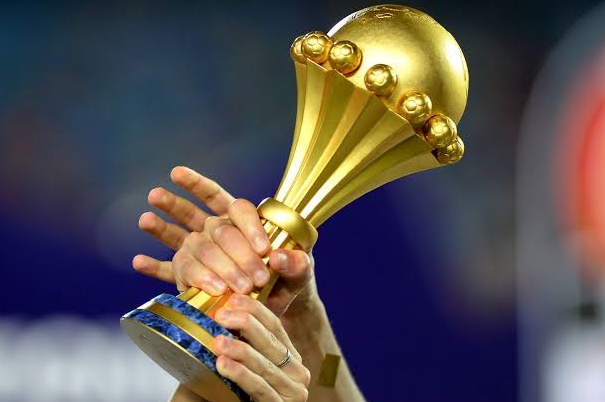
Morocco’s effort in delivering a good tournament in some of the best stadiums in the world was about to see a great finale, mature in talent and technicality. And then the worst!
By the time the AFCON final reached its dying moments, Africa should have been holding its breath for footballing destiny. Instead, it was holding its head in disbelief.
Join our WhatsApp ChannelThis final did not explode because of football. It imploded because of officiating. Senegal won 1-0, but found it hard to celebrate as in other such victories, beginning with the absence of the champions’ shirt on many players. Star player, Sadio Mane, had to remove his own at a point before the trophy was handed to his team.
A Goal That Should Have Counted, the Penalty at the Death and Law without Wisdom
The seeds of controversy were planted earlier with a disallowed goal. Many analysts however thought the goal should have stood. Some say it should have been ruled out as the referee did. But that is not the real issue.
By every reasonable football standard, e.g., movement, timing, and advantage, that decision was certain to be controversial, as is often the case in football. But when a decision lacks conviction and clarity, especially in a final, a referee must seek a healthy balance subsequently.
Finals demand certainty, not hesitation disguised as authority. When you controversially take away a goal in a final, you do not merely affect the scoreline; you destabilise emotions, trust, and discipline on the pitch. Such a decision alone should have urged caution on the referee for the rest of the match. Instead, it became the prelude to a far more damaging moment.
The late penalty call, coming at the very edge of the game, was technically arguable but contextually reckless. Football is not officiated by stopwatch alone; it is governed by judgment. When a referee inserts himself so decisively at the death of a final, after already disallowing a goal, he assumes a protagonistic role that the laws of the game never intended.
We Have Seen This Film Before
In the 2018 UEFA Champions League quarter-final, Real Madrid were awarded a highly controversial last-minute penalty against Juventus. Cristiano Ronaldo scored, Real progressed, and eventually lifted the trophy. Gianluigi Buffon was sent off in rage, and Juventus players surrounded the referee in scenes that mirrored what Africa witnessed in this AFCON final.
That decision remains debated today, not because it was unprecedented, but because it demonstrated how a single whistle can tilt history.
READ ALSO: Nigeria–Morocco, AFCON 2025: A Semi-Final Decided by Margins, Pressure, and Perspective
Player walk-offs, mass protests, and emotional breakdowns are not African inventions. They happen when referees lose control of perception, not just law.
On the Senegal Coach and the “Primitivity” Argument
Some have rushed to brand Aliou Cissé’s (Senegal coach) decision to pull his players off the pitch as primitive. That is a shallow reading. Was it ideal? No. Was it understandable? Absolutely.
When players believe the game has crossed from competition into manipulation, emotional revolt replaces rational obedience. Footballers are not machines. In fact, one could argue that had the penalty been taken immediately, without prolonged chaos, the match might have flowed differently. Momentum matters. Psychology matters. Time matters.
There are also whispers that Brahim Díaz may have been instructed to miss the penalty deliberately to “even things out”. That doesn’t seem to be true given Diaz’s reactions later. The team was also taken aback at the horror of a kick. However, that line of thought is precisely why African football keeps paying reputational costs globally. Once trust in officiating collapses, conspiracy rushes in to fill the vacuum. Even if such claims are absurd, referees create the conditions for them when decisions lack credibility.
Africa’s Image Problem and Nigeria’s Absence
Victor Osimhen and Bright Osayi-Samuel, including many Nigerians, called out Ghanaian referee, Daniel Nii Layear for poor refereeing in the semi-final loss to Morocco.
Yet, for Nigeria, a footballing giant, not a single official was deemed worthy to officiate at any level: not centre referee, not assistant, not VAR, not fourth official. That is an indictment not only of Nigeria’s refereeing pipeline but of CAF’s confidence structure. In a tournament watched by the world, Africa sidelined one of its most experienced football nations in officiating and still ended with refereeing chaos.
Referees are custodians, not stars. The best officials are invisible; the worst are unforgettable. Jeaan Jacques Ndala, the Congolese referee for Senegal vs. Morocco, may not just have comitted blunders, he simply failed to learn from a flashpoint. After controversially disallowing a goal, the final lesson should have been restraint, not escalation. Instead, he added a controversial penalty call at the death to an already bruised narrative.
This AFCON was shaping up to be remembered for quality, passion, and progress. Sadly, its final moments will now be archived under ‘what not to do.’ The referee deserves rebuke, not out of anger alone, but out of necessity. African football cannot afford finales where the whistle drowns out the champions. Trophies should be lifted because of football, not because of the referee’s courage, or lack of wisdom, with a whistle.
Dr Mbamalu, a Media Consultant, is a Jefferson Fellow of the East-West Center, Hawaii, USA, Member of the Nigerian Guild of Editors and Publisher of Prime Business Africa

- Editor
- Editor
- Editor
- Editor
- Editor