 Prosper Okoye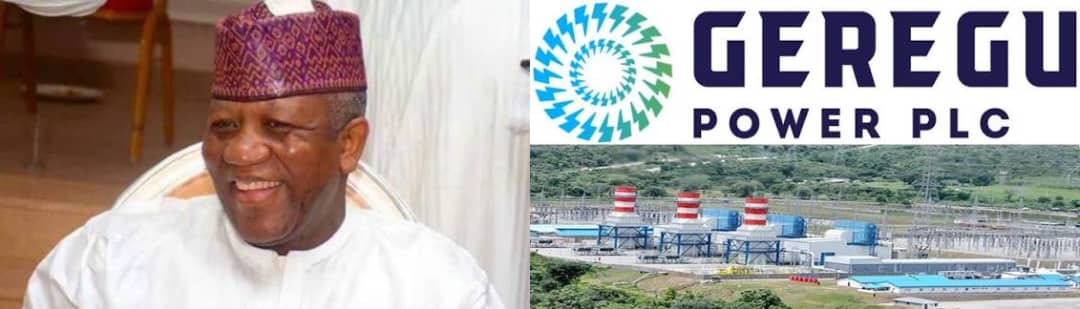
The sale of Geregu Power, one of Nigeria’s largest electricity plants, has drawn attention after politically connected figures assumed top positions.
Billionaire Femi Otedola sold his controlling stake to Abuja-based Ma’am Energy Limited for $700–$750 million. Senator Abdulaziz Yari was subsequently appointed chairman of the company.
The deal, disclosed to the Nigerian Exchange, has sparked questions among Nigerians over the senator’s political ties.
Join our WhatsApp ChannelWho Owns Ma’am Energy
Ma’am Energy Limited now controls 95% of Amperion Power Distribution Company, the vehicle through which Otedola previously held his stake in Geregu Power.
Corporate filings show the company is equally owned by four individuals. Abdulaziz Yari Jr, 32, is the son of Senator Yari, who was also a former Zamfara governor.
Abdulkarim Tsafe, a former Zamfara State commissioner and chief of staff, brings experience in finance and regulatory compliance and currently serves as CEO of Ajap Financial Services Limited.
Jari Jafar, born in 1980, is the chief operations officer of Advance Link Petroleum Limited, with professional experience in corporate management and finance. Abdulaziz Ahmad, born in 2003, holds a 25% stake in the company, though public information about his professional or educational background is limited.
Observers have noted that none of the owners have a publicly documented history of substantial personal wealth, raising questions about how funds for the acquisition were mobilised.
The company’s structure has also drawn attention, particularly how a 32-year-old holds a quarter stake in a firm acquiring a $700 million asset—an unusual scenario in Nigeria, where access to capital remains a significant barrier for young entrepreneurs.
Board Appointments and Governance
Following the acquisition, Senator Yari was appointed chairman of Geregu Power Plc. Other board members include Abdulkadeer Njiddah, an accounting and finance specialist; Usman Mohammed, former managing director of the Transmission Company of Nigeria; Mohammed Jaafaru, an oil and gas executive; Neka Adogu, a senior banking professional; and Mahmud Magaji, a Senior Advocate of Nigeria.
The board brings together political experience, sector knowledge, and professional credentials — a combination supporters say strengthens governance, but which critics argue warrants scrutiny given the strategic importance of electricity generation.
A Politically-exposed Transaction
Although Senator Yari does not hold a direct equity stake in Ma’am Energy, public attention has focused on his role following the transaction, given his chairmanship and the ownership profile of the acquiring company.
Geregu Power operates under a power purchase agreement that includes a take-or-pay arrangement, in which the Nigerian Bulk Electricity Trading Company (NBET) pays for available capacity even when full output is not absorbed by the grid.
Such arrangements are common across Nigeria’s power sector and are designed to provide revenue certainty for investors, while tying public funds closely to privately owned power plants.
Supporters frame the sale as part of a broader trend of domestic investors consolidating control over strategic sectors, noting that Nigerian law does not prohibit serving lawmakers from chairing or holding stakes in private companies.
Critics, however, see the transaction as an example of politically connected capital — wealth closely tied to state power and potentially less exposed to the constraints faced by ordinary investors.
They point to Yari’s previous role as Zamfara governor and the state’s large gold deposits, much of which has allegedly been exploited illegally, as context for concerns about the sources of wealth involved in the deal.
READ ALSO: Geregu Power Deal Shows Nigeria’s Capital Market Can Create Massive Wealth – Nze Duru
Former National Human Rights Commission chairman Chidi Odinkalu has cautioned against presenting the sale as a straightforward “strategic shift” in indigenous capital, arguing that questions remain about how such wealth is accumulated, structured, and deployed.
What Remains Unanswered
Regulators have not publicly detailed the level of scrutiny applied to the transaction beyond standard disclosure requirements.
Questions remain about how potential conflicts of interest are managed when a serving senator chairs the board of a company controlling a critical utility, and how safeguards ensure political influence does not affect regulatory or commercial outcomes.
The Geregu Power sale is more than a transfer of ownership. It offers a window into how power, capital, and influence intersect in Nigeria — and how the country’s institutions respond to elite networks controlling strategic national assets.
Whether it signals a maturing of domestic capital or a further entrenchment of politically connected wealth may depend less on the deal itself and more on the transparency and oversight that follow.