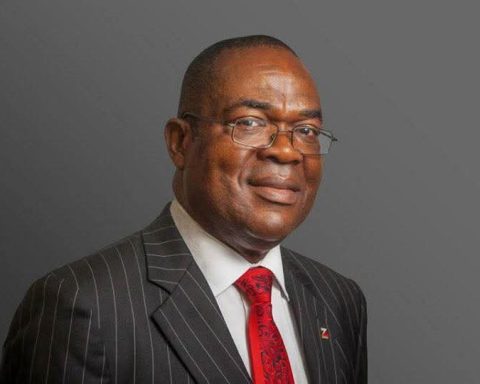
 MARCEL MBAMALU
Imagine a mother in Nigeria’s Benue State who, after years of watching her children disappear in bandit raids, hears the president promise “state police” as the answer to the nation’s blood‑soaked streets. She wonders whether a new force run from the governor’s office will finally bring the armed men to heel—or simply hand the same weapons to local power brokers who have long profited from the chaos.
Across Nigeria, citizens are caught between a federal police force that feels distant and a proposed patchwork of state units that could either restore safety or deepen the divide.
As President Bola Tinubu pushes for a constitutional overhaul to let willing states create their own police, the country stands at a crossroads: will decentralised security finally break the cycle of terror, or will it open the door to a fragmented, politicised force that fuels the very violence it aims to stop? The answer will be written not just in legislation, but in the everyday lives of millions who are still waiting for peace.
Join our WhatsApp ChannelPresident Bola Tinubu recently declared a nationwide security emergency, ordering the police and army to recruit 20,000 additional officers, bringing the planned intake to 50,000. He also urged the National Assembly to review laws to allow states that wish to establish their own police forces.
Contrary to some media reports, Tinubu’s statement does not make state police mandatory nationwide. Whether all states will opt in remains uncertain, since according to the president, only states that want them can establish them.
READ ALSO: Barracks Logic: Guinea‑Bissau’s Coup Fuels West Africa’s Military Temptation
History shows successive Nigerian governments since civil rule raised the issue of state police during security crises, then abandoned it once the immediate threat subsided, highlighting a pattern of reactive, rather than proactive, security planning.
Pattern in history
Nigeria once operated various local and native authority police forces during the colonial period and the early years of independence. Under the 1963 Constitution, regions had the power to maintain their own police formations alongside a central force.
However, this changed in 1966 when the military government abolished regional and native authority police forces and brought all policing under a single national structure called the Nigeria Police Force.
Under the 1999 Constitution, Section 214(1) explicitly vests policing authority in a single national force and prohibits the creation of any separate police force for a state or region.
Yet the debate on creating state-controlled police resurfaced many times. Committees and panels on constitutional review, including those convened under former President Olusegun Obasanjo, repeatedly declined to approve the idea.
In the last decade, rising insecurity led many governors and regional groups to intensify the call for state police. In 2022, the Northern Governors Forum, which had long opposed the idea, publicly supported a constitutional amendment to allow it. Similar calls were made by southern leaders and security experts.
Yet the constitutional bar remains in place, so any expression of support by the government does not mean that state police already exist.
This means that, legally, no state police can exist until the Constitution is amended and enabling legislation is passed.
Although media outlets framed the remark as if state police had already been authorised, it highlights how the media is often quick to report announcements or concerns by the government but slow to report the scale of daily killings and kidnappings across the country.
Question on state police discussion
As discussions around state police gain momentum, critical questions about governance and accountability raises issues the government must address if it genuinely intends to establish state-level forces.
State governors would likely control recruitment, funding, command, and deployment of their respective forces and this also raises the risk of political weaponisation.
In states where insecurity serves entrenched interests, such as generating revenue from informal protection networks or shielding partisan actors, state police could be deployed to target rivals or suppress dissent rather than protect citizens.
Critics over the years have consistently warned that abuses such as partisan enforcement, ethnic profiling, and selective prosecution could quickly erode public trust.
Experience with local vigilante groups and paramilitary units in parts of northern and south-eastern Nigeria shows that poorly regulated forces often deviate from public-interest objectives. Once confidence is lost, federal authorities typically intervene and the initiative collapses, repeating the familiar cycle of reform followed by disillusionment.
Concerns also persist regarding “federal character,” intergovernmental rivalry, and political interference.
Another important concern is that local militias could infiltrate state police recruitment, cross-border arms could enter poorly supervised units, and foreign interests might exploit weak command structures to advance agenda contrary to national security.
Security issues remain a concern
Nigeria’s security situation remains critical even as discussions on state policing are at a preliminary stage. The country faces overlapping crises of insurgency, banditry, kidnappings, and violence by non-state armed groups. According to the National Human Rights Commission (NHRC), October 2025 saw over 406,000 human-rights complaints and more than 160 incidents of killings, abductions, and other grave violations.
In April 2025 alone, there were 570 killings and 278 kidnappings, and over the first 15 months of 2024–2025, at least 3,584 killings and 3,012 kidnappings were recorded.
Residents in states like Benue, Plateau, and Borno continue to live under threat. Social media suggests many attacks go unreported while government negotiations with bandits often fail to reduce insecurity. Peace deals in Zamfara (July 2022) and Katsina saw temporary lulls, but violence quickly resumed.
Similarly, deradicalisation efforts targeting Boko Haram insurgents faltered when some “repentant” fighters escaped with weapons, undermining trust in national security strategies.
If national strategies fail, can decentralised state police overcome structural weaknesses? Evidence shows some violent groups access arms via foreign channels, exploiting weak border control, intelligence, and law enforcement coordination.
Without reforms in these areas, state police risk being infiltrated or manipulated. The government must clarify who funds these groups, how weapons enter the country, and what safeguards will protect new forces from external exploitation. Failure to answer could replicate existing security failures on a decentralised scale.
How government can show sincerely in state policing
Beyond clarifying how state police could operate, the government must outline a framework that ensures credibility, accountability, and effectiveness.
According to Section 214(1) of the current constitution: “There shall be a Police Force for Nigeria, which shall be known as the Nigeria Police Force, and subject to the provisions of this Constitution, no other Police Force shall be established for the Federation or any part thereof.”
Since only federal policing is legally recognised, and any state police would be unconstitutional without amendment, a constitutional amendment is essential to clearly define the powers, limits, and scope of state-level forces while ensuring alignment with national law.
Such amendment should make it a requirement and the establishment should not be for states that want.
Independent oversight bodies must also be created to monitor operations, rather than boards appointed by governors that merely rubber-stamp decisions.
Recruitment, training, and deployment must follow standardized protocols that incorporate human-rights safeguards and professional ethics.
Joint operations protocols between federal and state police are also necessary to maintain coordination, avoid jurisdictional conflicts, and ensure that national security objectives are not compromised. Transparent funding rules must be implemented to prevent political weaponisation or selective deployment for partisan ends.
A credible state-police framework must separate political directives from operational duties to prevent interference, ethnic profiling, or abuse of power. Without such safeguards, decentralised policing risks becoming a tool of oppression rather than protection, eroding public trust and national security.
President Tinubu’s support signals a policy shift, but Nigeria remains far from implementation. Legal, structural, and operational frameworks are yet to be established, and the required constitutional amendment has not been initiated.
Therefore, public debate must focus on facts, confronting entrenched political manipulation, weak oversight, porous borders, and inadequate resources.
Because only with evidence-based planning, independent oversight, and constitutional safeguards can state-level policing protect citizens, restore trust, and strengthen national security and fulfilling its potential rather than becoming a new source of peril.