Editor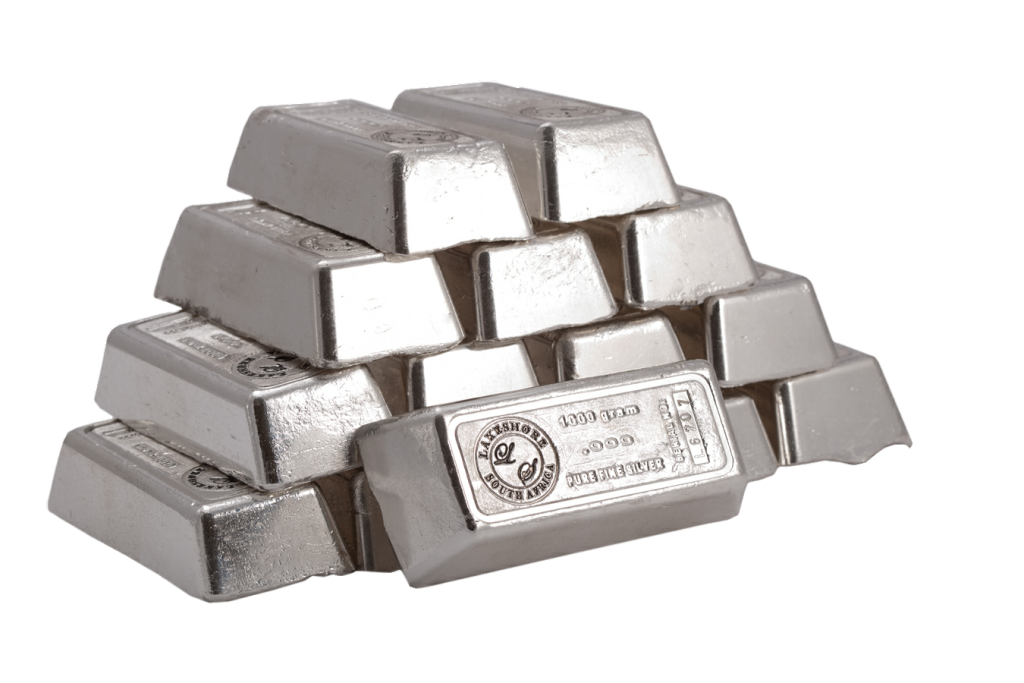
By Rania Gule
Over the past few months, silver prices have witnessed a strong rally — not only as a safe-haven asset alongside gold, but also due to fundamental factors rooted in industrial supply and demand dynamics. As of early October 2025, silver is trading around $48.65 per ounce in spot market data, while ETFs such as iShares SLV show a slightly lower net asset value (NAV), reflecting timing and liquidity discrepancies between the spot and ETF markets.
Join our WhatsApp ChannelThe two main forces underpinning the recent surge are the wave of safe-haven demand amid global political and financial uncertainty, and the rising industrial demand for silver — especially in the solar energy, electronics, and electric vehicle sectors.
On the first front, economic and political developments, such as U.S. fiscal pressures and currency fluctuations (e.g., the yen’s weakness), have bolstered demand for precious metals as a temporary hedge against risk, which has been clearly reflected in early October 2025 price movements.
From a supply-and-demand standpoint, the silver market is under real strain. Data and reports this year indicate a significant jump in industrial consumption, accompanied by recurring supply deficits that have affected registered inventories at delivery exchanges. The decline in available stockpiles at designated delivery centers has added further upward pressure, as any immediate shortage tends to influence spot prices more strongly than the more liquid futures market. This physical market reality is supported by analytical reports showing a sustained drop in supply relative to growing industrial demand throughout 2025.
From a fundamental perspective, silver appears to be entering a pivotal phase where its future trajectory will depend on the balance between industrial supply constraints, financial demand, and global liquidity conditions. The market continues to experience structural deficits; according to the World Silver Survey 2025, another deficit is projected this year, meaning total supply (from mining and recycling) still falls short of actual demand — especially in industrial applications. This recurring shortage provides a sustained bullish foundation, since silver — often mined as a byproduct of other metals — cannot easily ramp up production simply because prices rise, unlike some other commodities.
At the same time, industrial demand remains a powerful driver. Silver plays an increasingly vital role in solar energy, electronics, and photonics, making it not only a store of value or speculative asset but also an indispensable component of technological infrastructure. This growing industrial demand, combined with limited production flexibility, reinforces the upward pressure on prices, making it a structural rather than speculative force.
On the financial and monetary front, global liquidity trends and safe-haven flows serve as an additional lever for silver prices. With geopolitical tensions and currency volatility, investors are shifting away from risk assets, boosting precious metals, and silver particularly benefits from this pattern, especially during tightening cycles or periods of heightened uncertainty. However, this factor could fluctuate if central banks take sudden actions toward renewed stimulus or unexpected monetary tightening.
Given these fundamentals, in the short term (a few months), the bullish trend supported by industrial deficit and liquidity conditions is likely to persist. Silver could potentially test the $50–$55 per ounce range if no major adverse shocks occur, such as a sharp interest rate hike or a significant dollar rebound. This range represents the first major resistance zone that the market is likely to challenge.
In the medium term (6–12 months), if key fundamentals continue — including persistent deficits, growth in green industries, and expansion of solar energy — combined with ongoing safe-haven demand, silver could advance toward $57–$60 per ounce in a moderately optimistic scenario. However, if speculative positioning reverses or unexpected monetary tightening occurs, prices could temporarily retreat toward the $40–$30 range, unless offset by strong industrial or liquidity support.
In the long term (1–3 years), silver maintains a strong fundamental story, driven by green technology, digitalization, and the global energy transition. These trends could propel it toward new historical highs if supportive conditions persist. Nevertheless, this path will not be linear — corrections and retracements are likely — yet the overarching direction, anchored in growing industrial deficits and global demand, points upward.
In my view, silver should be approached as part of a diversified portfolio, accumulated gradually while tracking indicators such as metal inventories, production reports, industrial demand shifts, and central bank policies. Given these dynamics, the upward trend remains the most probable scenario as long as the industrial deficit persists and global liquidity continues flowing into metals, with a high likelihood of seeing prices surpass $50 per ounce should momentum and investor risk appetite strengthen.
Gule, a Senior Market Analyst at XS.com, wrote in from Dubai, United Arab Emirates