Prime Business Africa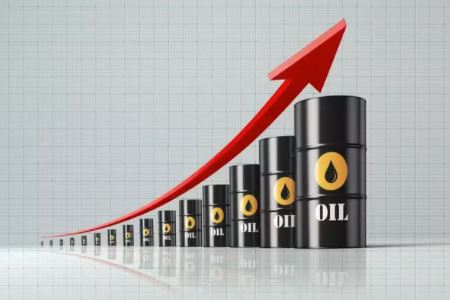
Oil is rebounding for the second consecutive day, gaining more than 0.80% today after hitting its lowest levels since June last week.
The upward move is largely driven by a mix of geopolitical risks in light of both U.S.–Venezuela tensions and OPEC+ supply dynamics. At the same time, expectations of a more accommodative Federal Reserve are adding to the support, keeping sentiment constructive after weeks of pressure on crude.
Join our WhatsApp ChannelGeopolitical tensions are once again playing a critical role. According to the Pentagon, two Venezuelan military aircraft flew dangerously close to a U.S. Navy vessel operating in international waters. This incident occurred just days after President Trump ordered a strike in the region that killed suspected narcoterrorists, marking an escalation in Washington’s naval deployment aimed at stopping drug flows and increasing pressure on Nicolás Maduro’s regime.
CNN reported that Trump is considering a wider range of military options, including potential strikes inside Venezuela itself, as part of a broader effort to weaken Maduro. Meanwhile, The Guardian noted that the dispatch of three U.S. warships earlier this month sparked fears of an imminent invasion, though most experts viewed the move as symbolic, designed to intimidate Maduro’s circle and rally Republican support at home rather than trigger a large-scale intervention.
Nevertheless, the persistent risk of miscalculation means markets are now factoring in a substantial premium for geopolitical risk, primarily because the country in question is home to the world’s largest oil reserves.
On the supply side too, crude futures snapped a three-session losing streak yesterday in what traders described as a “sell the rumor, buy the fact” reaction to OPEC+’s announcement that it will continue unwinding voluntary output cuts in October, adding 137,000 barrels a day, per analyst comments reported in The Wall Street Journal.
The decision had been leaked ahead of time, so the immediate reaction was muted, but analysts highlighted that when factoring in compensation cuts for members that previously exceeded quotas, the net increase is likely to be modest, according to The Journal.
This reinforces the view that OPEC+ remains cautious and flexible, a factor that is helping to stabilize prices rather than push them into deeper declines.
On the geopolitical front, Trump’s strategy on Venezuela’s oil sector also continues to shape the broader energy landscape.
The escalation between the two countries is not new. A review of the timeline of major events suggests that recent US actions may be concealing a hidden economic agenda.
Earlier this year, Trump revoked Chevron’s license to operate in the country, forcing a wind-down of production and fueling a rally in oil prices. He later escalated by imposing a 25% tariff on goods from countries purchasing Venezuelan crude, a move widely interpreted as targeting China.
These steps reflect Trump’s intent to choke off Maduro’s revenue streams while simultaneously reshaping global oil flows to America’s advantage.
At the macro level, monetary policy expectations are also providing a supportive backdrop for commodities. The CME FedWatch Tool shows an 88% probability of a 25-basis-point cut in September, and an 11% probability of a 50-basis-point move, which emerged as a new development this week. By year end, markets are now pricing in around a 70% chance of cumulative 75 basis points in cuts, compared with less than 50% just last week. These expectations followed weaker-than-expected U.S. labor market data, which increased bets on easier financial conditions, indirectly supporting oil demand outlooks.
Yet, downside risks remain. Chinese trade data showed exports rising only 4.4% year-on-year in August, down from 7.2% in July and below Wall Street Journal expectations of 5.2%. The trade balance also missed forecasts, raising concerns about external demand and the resilience of global trade. For oil markets, weaker Chinese trade performance underscores a fragile demand side, limiting the scope for a sustained rally despite geopolitical and monetary policy support.
Written by Samer Hasn, Senior Market Analyst at XS.com