 Amanze Chinonye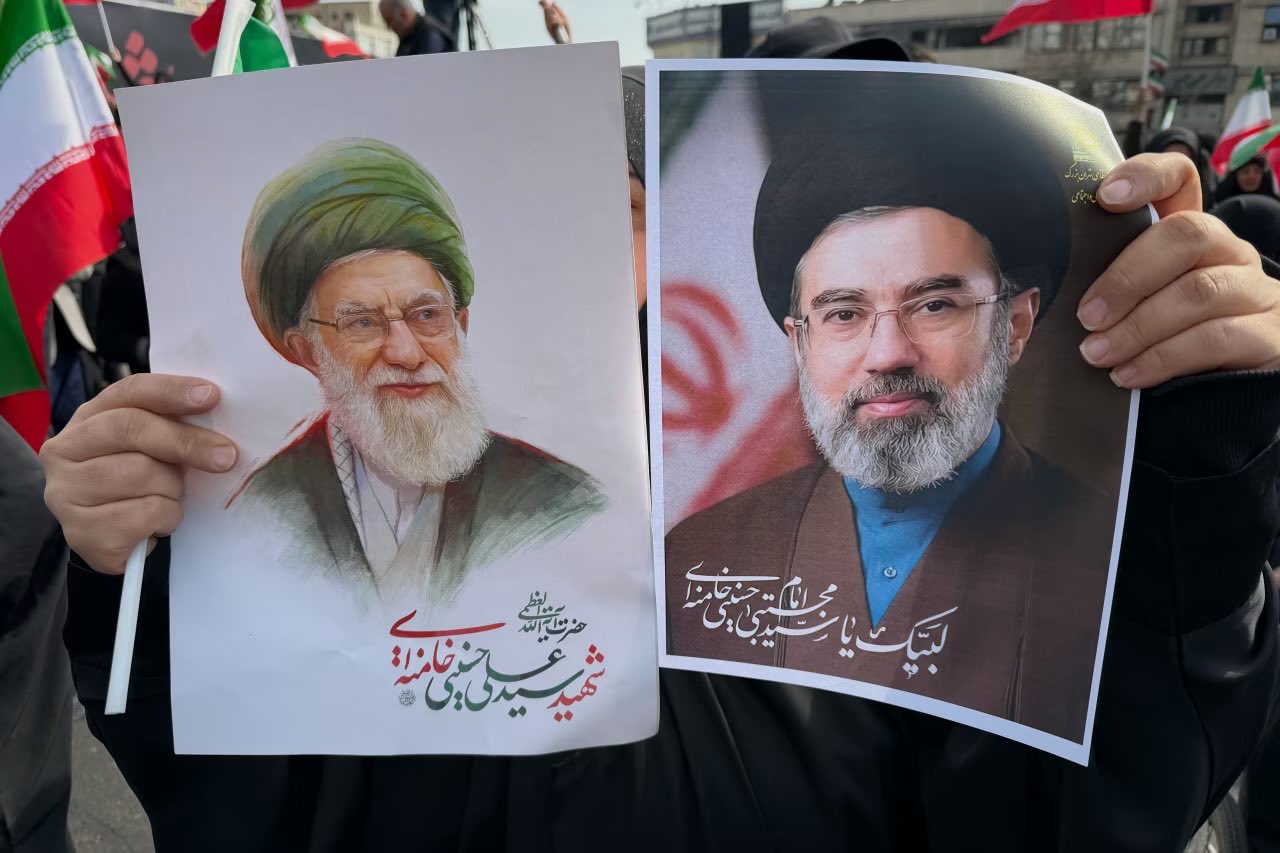
Iranian President Masoud Pezeshkian has formally outlined three conditions for a ceasefire in the ongoing conflict with the United States and Israel: recognition of Iran’s “legitimate rights,” payment of reparations, and firm international guarantees against future aggression.
Pezeshkian said in posts on X that he conveyed the message in calls with the leaders of Russia and Pakistan, framing the demands as essential for regional stability while attributing responsibility for the war to the United States and Israel.
Analysts caution that while the terms are politically significant, they are unlikely to translate into an actionable ceasefire in the current environment.
Join our WhatsApp ChannelPower Beyond Titles
Leadership in the Islamic Republic often relies more on networks of influence than formal positions.
Over the past two decades, Mojtaba Khamenei, son of the late Supreme Leader, has emerged as a key figure in the inner workings of the state, drawing authority from his proximity to the Supreme Leader and his position in Beit-e Rahbari.
Mojtaba has coordinated clerical aides, intelligence officials, and Revolutionary Guard commanders, building a tightly controlled network of influence that underpins both political and military operations. His connections to the IRGC and the Basij militia have been cited in U.S. sanctions, highlighting his role in sustaining institutional continuity during periods of crisis.
Historical events have reinforced the importance of such networks. During the 2009 post-election unrest, the IRGC and Basij militia suppressed widespread protests, consolidating the Supreme Leader’s authority and cementing ties between leadership and military power.
Figures like General Qasem Soleimani, the late commander of the Quds Force, exemplified the combination of battlefield influence and direct access to the Supreme Leader a model of authority disrupted by his assassination in 2020.
READ ALSO : Ali Khamenei: Power, Faith and Control
Leadership Transition Amid War
The 2024 death of President Ebrahim Raisi in a helicopter crash removed a potential clerical successor, focusing attention on Mojtaba Khamenei. His embedded position in Beit-e Rahbari and long-standing ties to Iran’s security institutions positioned him to assume wartime authority after his father’s death.
Analysts warn that Mojtaba’s rise does not resolve structural tensions. Like his father in 1989, he assumes power without universally recognized clerical authority. His legitimacy relies on political coalitions, institutional continuity, and support from the IRGC. At the same time, ongoing war and disruption within Iran’s leadership circle have left the inner workings of the system partially obscured, raising questions about the durability of Iran’s constitutional order.
Analyst Assessment: Ceasefire Demands vs. Military Reality
Experts reviewing Iran’s ceasefire terms note a stark contradiction between civilian messaging and military operations:
- Recognition of Iran’s “legitimate rights” comes from a government whose Supreme Leader has not addressed the nation since his father’s death, and whose successor appeared at an allegiance rally as a life-size cardboard cutout. Thirty-one autonomous IRGC commands operate under sealed orders from the deceased Supreme Leader. The civilian government cannot command these forces.
- Reparations demand compensation from the United States, even as Washington declared the war “won in the first hour” and after strikes destroyed dozens of Iranian naval vessels and key infrastructure. The energy market responded not to reparations but to continued attacks, with WTI crude rising 5.66% to $92.19 the same day.
- International guarantees echo instruments such as the JCPOA, which failed after the U.S. withdrawal in 2018. Iran is effectively requesting assurances from a country that has previously broken such guarantees.
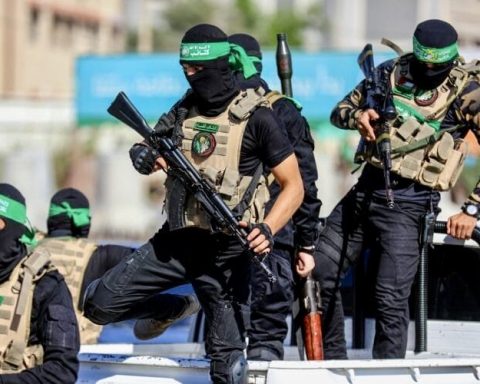
On the same day the demands were issued, the IRGC announced continuous strikes, targeting tankers and drones across the region. Col. Razmjou declared all Western-allied tankers legitimate targets, highlighting the disconnect between civilian messaging and military action.
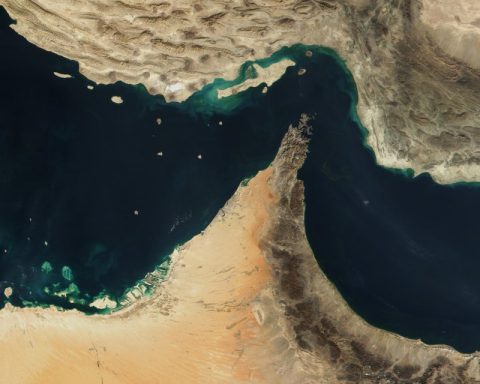
“A ceasefire requires a counterparty capable of enforcing compliance,” the analyst said. “The president issuing the demands does not control the military. Iran is negotiating as if it has already won, while its adversary claims victory and the Strait of Hormuz burns.”
Iran’s three-point ceasefire proposal recognition of rights, reparations, and international guarantees underscores the tension between political signaling and operational realities.
Coupled with Mojtaba Khamenei’s wartime accession, the situation highlights a system where authority depends on security networks, institutional continuity, and military influence as much as formal office or religious legitimacy.
The trajectory of both the war and Iran’s internal order will depend on the interplay between military power, political coalitions, and international diplomacy.

Amanze Chinonye is a Staff Correspondent at Prime Business Africa, a rising star in the literary world, weaving captivating stories that transport readers to the vibrant landscapes of Nigeria and the rest of Africa. With a unique voice that blends with the newspaper's tradition and style, Chinonye's writing is a masterful exploration of the human condition, delving into themes of identity, culture, and social justice. Through her words, Chinonye paints vivid portraits of everyday African life, from the bustling markets of Nigeria's Lagos to the quiet villages of South Africa's countryside . With a keen eye for detail and a deep understanding of the complexities of Nigerian society, Chinonye's writing is both a testament to the country's rich cultural heritage and a powerful call to action for a brighter future. As a writer, Chinonye is a true storyteller, using her dexterity to educate, inspire, and uplift readers around the world.
- Amanze Chinonye
- Amanze Chinonye
- Amanze Chinonye
- Amanze Chinonye
- Amanze Chinonye
- Amanze Chinonye
- Amanze Chinonye
- Amanze Chinonye
- Amanze Chinonye
- Amanze Chinonye
- Amanze Chinonye
- Amanze Chinonye
- Amanze Chinonye
- Amanze Chinonye
- Amanze Chinonye
- Amanze Chinonye
- Amanze Chinonye
- Amanze Chinonye
- Amanze Chinonye
- Amanze Chinonye
- Amanze Chinonye
- Amanze Chinonye
- Amanze Chinonye
- Amanze Chinonye
- Amanze Chinonye
- Amanze Chinonye
- Amanze Chinonye
- Amanze Chinonye
- Amanze Chinonye
- Amanze Chinonye
- Amanze Chinonye
- Amanze Chinonye
- Amanze Chinonye
- Amanze Chinonye
- Amanze Chinonye
- Amanze Chinonye
- Amanze Chinonye
- Amanze Chinonye
- Amanze Chinonye
- Amanze Chinonye
- Amanze Chinonye
- Amanze Chinonye
- Amanze Chinonye
- Amanze Chinonye
- Amanze Chinonye
- Amanze Chinonye
- Amanze Chinonye
- Amanze Chinonye
- Amanze Chinonye
- Amanze Chinonye
- Amanze Chinonye
- Amanze Chinonye
- Amanze Chinonye
- Amanze Chinonye
- Amanze Chinonye
- Amanze Chinonye
- Amanze Chinonye
- Amanze Chinonye
- Amanze Chinonye
- Amanze Chinonye
- Amanze Chinonye
- Amanze Chinonye
- Amanze Chinonye
- Amanze Chinonye
- Amanze Chinonye
- Amanze Chinonye
- Amanze Chinonye
- Amanze Chinonye
- Amanze Chinonye
- Amanze Chinonye
- Amanze Chinonye
- Amanze Chinonye
- Amanze Chinonye
- Amanze Chinonye
- Amanze Chinonye
- Amanze Chinonye
- Amanze Chinonye
- Amanze Chinonye
- Amanze Chinonye
- Amanze Chinonye
- Amanze Chinonye
- Amanze Chinonye
- Amanze Chinonye
- Amanze Chinonye
- Amanze Chinonye
- Amanze Chinonye
- Amanze Chinonye
- Amanze Chinonye
- Amanze Chinonye
- Amanze Chinonye
- Amanze Chinonye
- Amanze Chinonye
- Amanze Chinonye
- Amanze Chinonye
- Amanze Chinonye
- Amanze Chinonye
- Amanze Chinonye
- Amanze Chinonye
- Amanze Chinonye
- Amanze Chinonye
- Amanze Chinonye
- Amanze Chinonye
- Amanze Chinonye
- Amanze Chinonye
- Amanze Chinonye
- Amanze Chinonye
- Amanze Chinonye
- Amanze Chinonye
- Amanze Chinonye
- Amanze Chinonye
- Amanze Chinonye
- Amanze Chinonye
- Amanze Chinonye
- Amanze Chinonye
- Amanze Chinonye
- Amanze Chinonye
- Amanze Chinonye
- Amanze Chinonye
- Amanze Chinonye
- Amanze Chinonye
- Amanze Chinonye
- Amanze Chinonye
- Amanze Chinonye
- Amanze Chinonye
- Amanze Chinonye
- Amanze Chinonye
- Amanze Chinonye
- Amanze Chinonye
- Amanze Chinonye
- Amanze Chinonye
- Amanze Chinonye
- Amanze Chinonye
- Amanze Chinonye
- Amanze Chinonye
- Amanze Chinonye
- Amanze Chinonye
- Amanze Chinonye
- Amanze Chinonye
- Amanze Chinonye
- Amanze Chinonye
- Amanze Chinonye
- Amanze Chinonye
- Amanze Chinonye
- Amanze Chinonye
- Amanze Chinonye
- Amanze Chinonye
- Amanze Chinonye
- Amanze Chinonye