 Amanze Chinonye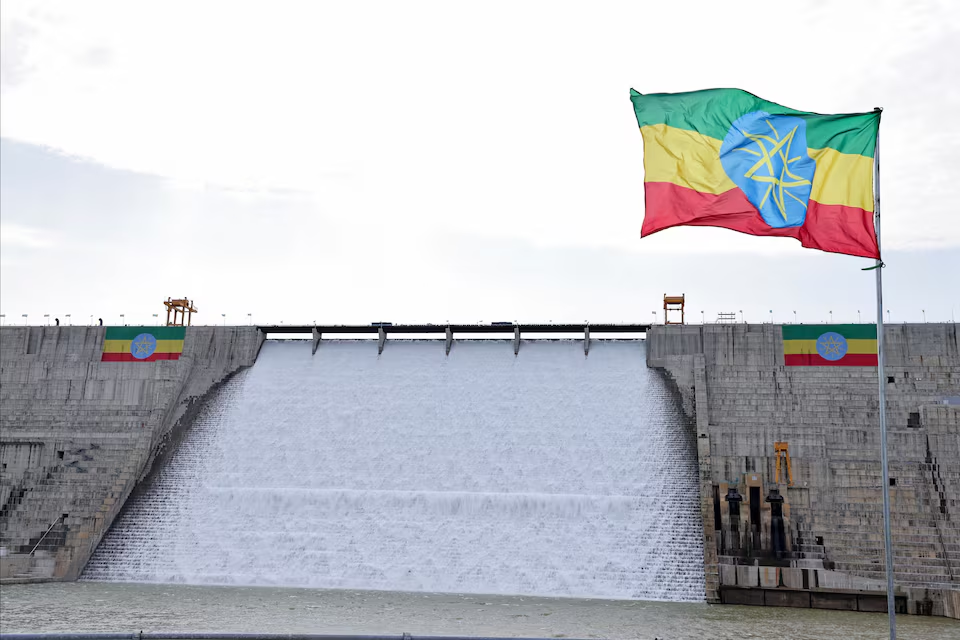
Ethiopia has inaugurated the Grand Ethiopian Renaissance Dam (GERD), Africa’s largest hydroelectric project, in a move hailed in Addis Ababa as a generational victory but viewed downstream as a looming threat to water security.
Standing 170 meters tall and nearly two kilometers wide, the $5 billion dam has a reservoir capable of holding 74 billion cubic meters of water and a planned generation capacity of 5,150 megawatts, more than double Ethiopia’s previous electricity output.
Join our WhatsApp ChannelConstruction began in 2011, employing over 25,000 workers, and was financed largely domestically with 91 percent of funds provided by the Ethiopian central bank and the rest raised through bonds, gifts, and citizen contributions.
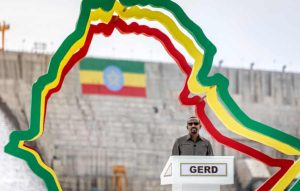
Ethiopia Celebrates Energy Sovereignty
For Ethiopia, GERD is more than an engineering feat. It is a symbol of national pride and economic independence. Officials say it will transform livelihoods in a country where nearly half of the 120 million population still lives without electricity.
“For Ethiopians this is a celebration of a generational aspiration … to make use of this natural resource for development,” said Nebiat Getachew, spokesperson for Ethiopia’s Foreign Ministry. He described the dam as “not an Ethiopian dam, but a regional dam with collective aspirations.”
Egypt Calls GERD an Existential Threat
Egypt, which relies on the Nile for 97 percent of its freshwater, has sounded the loudest alarm. Officials in Cairo fear that in times of drought, water stored behind GERD could leave millions at risk.
President Abdel Fattah al Sisi has repeatedly warned: “Whoever thinks Egypt will turn a blind eye to its water rights is mistaken. Egypt will never compromise on its national water security.”
READ ALSO: The pandemic’s impact in East Africa demands accelerated digital transformation
Egypt’s Foreign Minister Badr Abdelatty and Irrigation Minister Hani Sewilam issued a joint statement reinforcing that stance: “Egypt continues to monitor developments closely and will take all measures permitted under international law to protect the existential resources of its people.”
Sudan Weighs Risks Against Benefits
Sudan’s position remains cautious and divided. While some see benefits in Ethiopia regulating the Nile’s unpredictable flows, such as reduced flooding and steadier irrigation, others warn of grave dangers if the dam is mismanaged.
“The GERD … has been denounced by Sudanese commentators as a ‘water bomb’,” said Dr Ahmed El Mufti, a former Sudanese negotiator. He warned that if the dam collapsed or if water was suddenly released, “Sudan will be completely or partially submerged.”
The Sticking Point: Water Sharing
The dispute centers on how the dam is managed during droughts. Ethiopia has filled the reservoir in stages since 2020 and maintains that GERD is for hydropower, not irrigation. Addis Ababa argues that water used for power generation is eventually released downstream and insists rigid quotas would undermine its sovereignty.
Egypt and Sudan, however, demand a legally binding agreement to guarantee minimum water flows. Without it, they argue, the risk of shortages and destabilization remains unacceptably high.
The Stakes for the Nile Basin
Experts say GERD’s future impact could tilt in either direction. In the best case scenario, the dam could stabilize Nile flows, protect Sudan from flooding, electrify Ethiopia, and export cheap power across East Africa.
In the worst case scenario, a prolonged drought combined with unilateral dam management could cut water to Egypt, threatening agriculture, drinking supplies, and regional stability.
As Ethiopia celebrates its most ambitious infrastructure project, GERD now enters its most politically sensitive phase: proving whether Africa’s largest dam will be a source of shared prosperity or sharpened rivalry along the Nile.

Amanze Chinonye is a Staff Correspondent at Prime Business Africa, a rising star in the literary world, weaving captivating stories that transport readers to the vibrant landscapes of Nigeria and the rest of Africa. With a unique voice that blends with the newspaper's tradition and style, Chinonye's writing is a masterful exploration of the human condition, delving into themes of identity, culture, and social justice. Through her words, Chinonye paints vivid portraits of everyday African life, from the bustling markets of Nigeria's Lagos to the quiet villages of South Africa's countryside . With a keen eye for detail and a deep understanding of the complexities of Nigerian society, Chinonye's writing is both a testament to the country's rich cultural heritage and a powerful call to action for a brighter future. As a writer, Chinonye is a true storyteller, using her dexterity to educate, inspire, and uplift readers around the world.