 Amanze Chinonye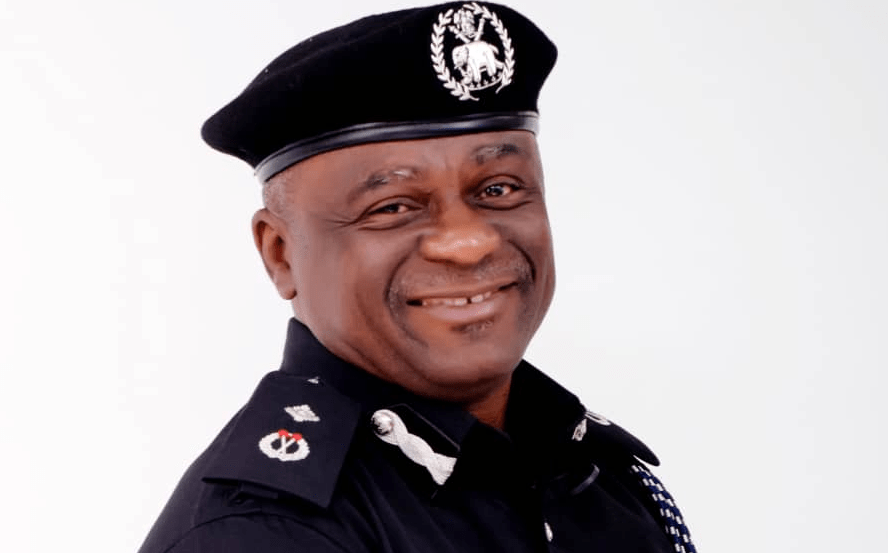
A few days ago, President Bola Tinubu accepted the resignation of Inspector-General of Police Kayode Egbetokun and appointed Assistant Inspector-General Tunji Disu as acting IGP in a swearing-in ceremony at the State House, Abuja.
The official line from the presidency is that Egbetokun stepped down, citing “pressing family considerations” and in recognition of his “distinguished service.” However, multiple sources within government and security circles reportedly suggest a more complex picture. His departure, they say, was forced, influenced by dissatisfaction with his handling of security policies and internal friction over compliance with presidential directives, particularly a November 2025 order to withdraw police from VIP protection duties, which critics say was poorly enforced under his watch, as well as his stand on state policing.
Mr Egbetokun’s exit comes against the backdrop of persistent public frustration with police performance. Citizens and rights groups have repeatedly decried abuses, extortion, and harassment by officers during routine operations, alongside a chronic lack of accountability for misconduct.
Join our WhatsApp ChannelAt his inauguration, Disu echoed familiar rhetoric about ending “impunity” within the police and enforcing “zero tolerance for corruption.” Yet, for many Nigerians, similar promises have been made by successive police chiefs since the #EndSARS protests of 2020, which erupted over the same allegations of brutality and abuse, leaving public trust at a historical low. It raises urgent questions whether the new leadership will deliver tangible change, or will Nigerians witness yet another tenure of recycled slogans while systemic problems persist?
From Egbetokun to Disu: A Familiar Pattern of Appointment
From Egbetokun’s appointment to Disu’s swearing-in as acting IGP, a familiar pattern has already emerged at the top of the Nigeria Police Force. Tinubu appointed Egbetokun as the 22nd IGP on 19 June 2023, despite his proximity to the mandatory retirement age of 60.
To accommodate his appointment, the National Assembly amended the Police Act to allow an IGP to serve a fixed four-year term irrespective of age, a legal change clearly structured to benefit him, raising serious questions about fairness, institutional integrity, and the message it sends to other senior officers who were equally qualified. Part of the reason his tenure was dogged by controversy.
His leadership faced public scepticism, including from former presidential candidate Omoyele Sowore, over his handling of key security directives, including enforcement of presidential orders, and his extended stay in office.
Instead of addressing the insecurity that has marred the country, the now immediate past IGP appeared more intent on prosecuting those criticising him, while atrocities and public harassment continued unchecked.
Civil society activists, including Amnesty International, in a recent report, alleged that a police “anti-kidnapping unit” (Tiger Base) in Imo State was responsible for widespread torture, deaths, and disappearances of detainees over several years.
On 17 February, a Federal High Court judge lamented that the resigned IGP had refused to obey a court order to produce SARS officers who, since 2017, before the EndSARS protests about 8 years ago, abducted a man, John Anozie, in Lagos. The judge, responding to a motion to arrest him for contempt, which she did not grant, said she would have asked the Chief of Army Staff to carry out the arrest.
This is just the tip of the iceberg of how the police have continually been involved in abductions and used by the elite to harass citizens, including dating and relationships, for the last ten years. Social media has also recently been alight with outrage over the use of police by public officials. The former Ebonyi State Governor and Minister of Works, David Umahi have also been accused of using the police to settle personal disputes and alleged debts.
Although Egbetokun exited, officially framed as a resignation for “pressing family considerations,” which contrasts sharply with sources that say it came amid mounting dissatisfaction with police performance and internal friction within the force.
Whether or not the government forced him to step down, one wonders why; it is clear that the administration has shown little seriousness about insecurity, appearing more focused on campaigning for the 2027 elections.
READ ALSO : Tinubu Decorates Disu as Acting Inspector-General of Police
Tunji Disu: Steering Nigeria’s Police Into a New Era
Disu has now been appointed acting IGP, and the same pattern appears to be repeating. He is also approaching retirement by April this year, raising a critical question. Why are the nation’s top police posts consistently given to officers who will soon leave office, rather than to leaders with the time and mandate to implement meaningful reforms?
The repetition of this pattern, coupled with perceptions of ethno-regional concentration at the top of the force, has further eroded public confidence. Even if the appointees are more competent, Nigerians are left to question whether the police hierarchy genuinely serves citizens or merely recycles familiar faces to maintain the status quo. This is why the current IGP must buckle up. To break the cycle, he must ensure this familiar pattern does not define his leadership. He has to get it right.
Current State of the Nigeria Police Under Disu
More challenging is that as Disu steps in, he inherits a force whose record on public protection is deeply troubling. Official complaint units within the Nigeria Police Force logged 1,234 public complaints against officers in 2023, most arising from harassment, extortion, abuse of power, and inaction. The Federal Capital Territory and Lagos alone accounted for nearly half of those cases. More than 84 per cent of complaints remained unresolved, highlighting a broken system of accountability.
Also, between 2021 and the first quarter of 2024, at least 2,421 complaints of misconduct were filed across multiple official channels, including the Ministry of Police Affairs and the Public Complaints Commission, covering unlawful arrests, extortion, brutal conduct, and deaths in custody. Tens of officers have been dismissed over these offences, yet systemic change remains elusive.
Human rights agencies paint a broader picture. The National Human Rights Commission reported over 355,000 cases of rights violations in December 2024, a dramatic rise from earlier in the year, suggesting a surge in abuses by state actors, including the police.
In 2025 alone, the commission received about 3.7 million complaints of human rights violations across Nigeria, a fraction of which have been fully investigated. These complaints span unlawful arrests, extortion, torture, discrimination, and other egregious breaches of dignity, underscoring how pervasive violations have become in everyday life.
Evidently, Disu inherits not just an institution in need of reform but a broken relationship between state and citizen. Restoring trust requires more than rhetoric; it demands concrete action that overturns a decade of neglect and abuse. The data shows the scale of the problem; the question now is whether leadership will rise to meet it.
The new IGP must act decisively and transparently. He cannot treat his office as ceremonial. Nigerians demand tangible reforms. Corruption, impunity, selective enforcement, and abuse of power must end. The police must protect citizens, not shield the powerful.
The government must resist turning the force into a political tool. Leadership must face public scrutiny. Citizens must remain vigilant and hold those in charge accountable.
Promises have been made before. It is time for proof. Ending impunity, enforcing human rights, curbing corruption, and responding promptly to crime are not optional. They are the pillars on which credibility and trust in the police must be rebuilt.

Amanze Chinonye is a Staff Correspondent at Prime Business Africa, a rising star in the literary world, weaving captivating stories that transport readers to the vibrant landscapes of Nigeria and the rest of Africa. With a unique voice that blends with the newspaper's tradition and style, Chinonye's writing is a masterful exploration of the human condition, delving into themes of identity, culture, and social justice. Through her words, Chinonye paints vivid portraits of everyday African life, from the bustling markets of Nigeria's Lagos to the quiet villages of South Africa's countryside . With a keen eye for detail and a deep understanding of the complexities of Nigerian society, Chinonye's writing is both a testament to the country's rich cultural heritage and a powerful call to action for a brighter future. As a writer, Chinonye is a true storyteller, using her dexterity to educate, inspire, and uplift readers around the world.