 MARCEL MBAMALU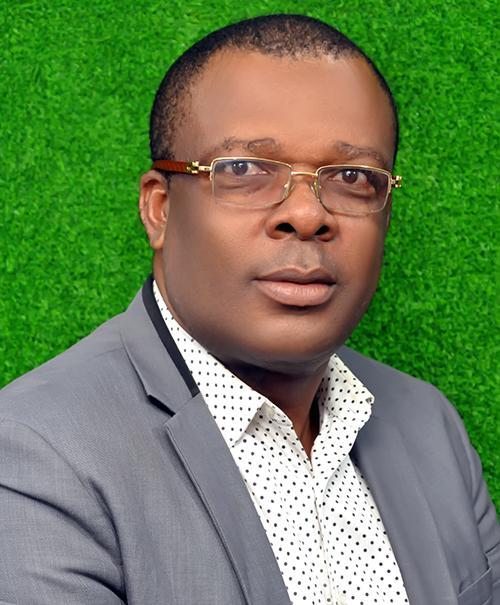
The United Nations has recently announced that it selected Nigeria, alongside Guinea, Indonesia, Madagascar, Zambia and Zimbabwe, as one of the first countries to receive country-level support under its new initiative on critical energy transition minerals.
It is an important announcement at a time when the world is scrambling for the minerals needed to power its transition away from fossil fuels. Demand for lithium, copper, nickel, cobalt and rare earth elements is expected to almost triple by 2030.
Join our WhatsApp ChannelREAD ALSO: Lithium: Will Nigeria Repeat the Oil Curse?
For Nigeria, lithium is at the centre of this new attention. The country is already seeing investment in lithium processing, while the Federal Government has been talking about moving away from the export of raw minerals towards local processing and manufacturing.
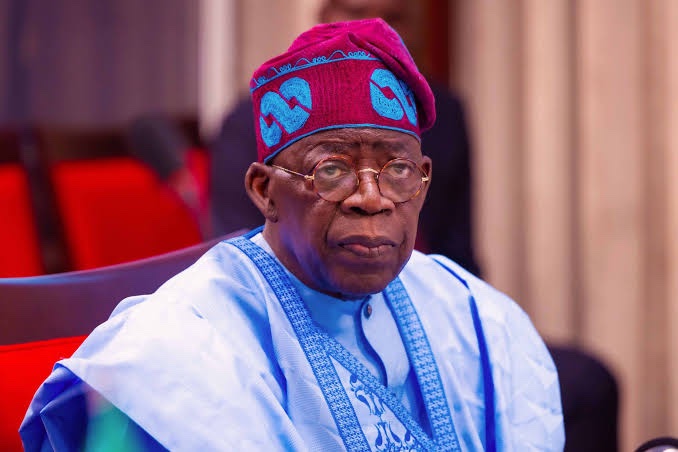
In July, President Bola Tinubu inaugurated a lithium processing plant in Nasarawa State, with the government describing the facility as a step towards retaining more value from Nigeria’s mineral resources. It said it was the largest in West Africa. Less than three months later, the UN announced its promise of country-level support to help countries build better mineral value chains.
On paper, the proposition is attractive. The UN says its country-support mechanism will help mineral-rich countries strengthen value addition, diversify their economies, improve transparency, protect communities and ensure that the benefits of the energy transition are shared fairly.
António Guterres has repeatedly made the point that countries and communities endowed with these resources must first benefit from them. But Nigerians have heard promises about the transformative power of natural resources before.
Oil was going to change everything. Decades after becoming a major oil producer, the country still struggled to build the industrial capacity to fully process the resource it was exporting.
Now that Nigeria’s lithium has arrived at the centre of global attention, it may be smaller than oil in Nigeria’s economy today, but will Nigeria use the world’s demand for lithium to build something at home, or will it once again be satisfied with extracting and exporting what others need? This is even as the UN announcement does not explain how the partnership will work in practice or what it will mean for Nigeria.
What will the United Nations and other international actors help Nigeria to do?
Will the support help Nigeria process lithium locally, develop battery-related industries, acquire technology and train Nigerians for the emerging industry? Will it strengthen mining regulation, attract investment into manufacturing, create skilled and decent employment, and help Nigerian businesses enter the mineral value chain?
Lithium did not suddenly become valuable. For decades, coal, oil and gas powered industries, transport and electricity, but climate concerns, energy security and vulnerable fossil-fuel supply chains are pushing countries towards renewable electricity, electric vehicles, battery storage and, increasingly, nuclear power. More than 40 countries now include nuclear energy in their strategies, with over 70GW under construction globally, while the IEA expects nuclear capacity to grow by at least one-third by 2035. This transition is creating a different dependence on minerals rather than ending dependence on natural resources.
Lithium is central to rechargeable batteries, with electric vehicles and battery storage accounting for about 90 per cent of today’s lithium-ion battery market. Lithium-ion battery deployment increased more than sixfold between 2020 and 2025; electric-vehicle battery deployment reached 1.2TWh in 2025, nearly 30 per cent higher than the previous year, while 108GW of new battery storage was deployed, 40 per cent more than in 2024. The IEA says lithium demand has risen by about 25 per cent annually over the past two years, while UNCTAD projects a 353 per cent increase between 2024 and 2040.
Yet lithium is only part of the wider mineral economy. Copper powers electrification; nickel, cobalt and graphite support batteries; rare earths are used in electric motors and wind turbines, while growing data-centre and semiconductor demand is adding pressure. The economic stakes are higher because processing creates far more value than extraction: UNCTAD found refined lithium, graphite, nickel and cobalt were worth several times their raw forms in 2022. Yet Australia and Chile produced more than half of global lithium in 2024, while China dominates processing of several critical minerals.
Nigeria’s Lithium Deposits: Why Are Investors Coming?
Nigeria’s attraction begins with geology. Lithium-bearing pegmatites have been identified in Nasarawa, Kaduna, Kogi, Kwara, Oyo, Ekiti, Cross River and parts of the Federal Capital Territory, with Nasarawa emerging as the centre of the current rush. Endo, Udege, Kokona and Keffi are among the areas attracting activity.
Geological studies indicate varying grades, from below 0.5 per cent to as high as 13 per cent lithium oxide, although many reported deposits fall around 2.5 to 5 per cent. Claims of 20 million tonnes of ore at about 6 per cent Li₂O in parts of Nasarawa and up to 50 million tonnes across the wider area have also circulated, but Nigeria does not yet have one nationally established lithium reserve figure. Most deposits still require systematic drilling to establish their commercially recoverable resources.
Mining is already taking place through artisanal and small-scale operations and larger companies. Ganfeng Lithium has developed an open-pit operation at Endo, while Jupiter Lithium and US-based ReElement Technologies are exploring a 442-square-kilometre area and targeting a 55,000-tonne annual spodumene concentrate operation.
Thor Explorations, through Newstar Lithium, has also secured more than 600 square kilometres across Oyo, Kwara and Ekiti. Investment has moved into processing: China’s Avatar New Energy Materials commissioned a plant in Nasarawa with a reported 4,000-tonne daily capacity in 2024, Canmax announced a $200 million project, and Diamond New Energy, with Jiuling Lithium and Canmax, commissioned a 6,000-tonne-per-day facility at Endo in 2026, backed by about $250 million. The government has also announced or supported proposed projects involving hundreds of millions of dollars, including lithium processing and battery manufacturing.
The investors now span Chinese, British-linked, American, Canadian and Nigerian interests, including Avatar, Ganfeng, Jiuling, Canmax, Jupiter Lithium, ReElement, Thor Explorations and Lithium King. Yet the country’s actual earnings remain difficult to establish. Government figures show solid-minerals revenue rising from N6 billion in 2023 to more than N38 billion in 2024, but this covers the entire sector, not lithium.
NEITI’s 2023 audit recorded China as Nigeria’s largest mineral export destination, receiving 176,352 tonnes of minerals, including lithium and spodumene, but without a separate lithium export value. Nigeria therefore has deposits, miners, processors and foreign investors, but still lacks a transparent national picture showing exactly how much lithium is being extracted, exported and converted into public revenue.
Even if investors bring processing plants, capital and jobs, Nigeria may still capture only a fraction of its lithium’s value. The UN warns that weak governance and irresponsible extraction could leave resource-rich communities bearing environmental and human costs without significant economic benefits. Its new critical-minerals initiative therefore aims to support value addition, diversification and fairer benefit sharing. The question is how much value will actually be created and retained in Nigeria.
The lithium chain runs from mining and processing to refining, battery materials, batteries, electric vehicles and energy storage. Nigeria has begun moving beyond extraction, including through the 6,000-tonne-per-day Nasarawa plant commissioned in July 2026, but processing is only one stage. Who owns the facilities? Where does the material go? How much technology, capital, skilled employment and supply-chain participation remain Nigerian? Job numbers alone are insufficient: wages, safety, workers’ rights, child and forced labour, and environmental exposure matter.
READ ALSO: Just Energy Transition: Can Nigeria and Ghana Turn $410bn Promises Into Power?
So do the costs to mining communities through land loss, pollution, water contamination and displacement. Who bears those costs, and who captures the value when Nigerian lithium becomes somebody else’s industrial input?
Nigerian Government’s Role: Are the Rules Strong Enough?
The UN’s decision to support Nigeria under its critical minerals mechanism suggests that it sees an opportunity to connect the country’s mineral wealth with development. But the UN has also warned that poor governance and irresponsible extraction can leave resource-rich countries and communities with environmental and social costs while others capture the economic gains. It means that no matter what support is provided; the onus is still on the government of that country to push the development. Although Nigeria already has rules covering mining licences, royalties, environmental obligations and Community Development Agreements. The Mining Act requires mining companies to enter agreements with host communities covering issues such as employment, training, infrastructure and environmental management.
The harder question, however, is enforcement. Nigeria’s experience with oil makes the concern unavoidable. The country has had decades to develop systems for turning natural resources into jobs, public revenue and wider economic development, yet resource wealth has not automatically produced those outcomes. Oil generated enormous revenues: NEITI records oil and gas revenue of $52.8 billion in 2024, compared with $45.2 billion in 2023.
Yet for decades, Nigeria remained primarily an exporter of crude while importing much of the refined petroleum it consumed. Between 2020 and 2024, petroleum-product imports averaged about 376,000 barrels per day, even as crude remained one of the country’s principal exports.
Domestic refining capacity was allowed to deteriorate for years; crude supplied to Nigerian refineries was negligible in 2021 and 2022 before rising sharply with the commissioning of the Dangote refinery.
The environmental cost was equally severe. UNEP’s assessment of Ogoniland found widespread contamination after more than 50 years of oil operations, including polluted soil, groundwater, drinking water, creeks and mangroves. It examined more than 200 sites, 122 kilometres of pipeline rights of way, over 5,000 medical records and engaged more than 23,000 people. UNEP estimated that restoring the environment could take 25 to 30 years and initially required a $1 billion restoration fund. Oil theft and weak accountability compounded the problem. NUPRC recorded oil theft of about 102,900 barrels per day in 2021, while NEITI continues to audit gaps in production, payments and government receipts.
The lesson is not that foreign participation in Nigeria’s oil industry was inherently harmful, nor that oil produced no development. It is that possessing the resource did not automatically give Nigeria control over the wider value chain or ensure that producing communities shared adequately in the benefits.
Lithium now presents a different opportunity, but the underlying question is familiar: will Nigeria use the resource to build industrial capacity, or once again become a supplier while others capture more of the value?

Dr. Marcel Mbamalu is a distinguished communication scholar, journalist, and entrepreneur with three decades of experience in the media industry. He holds a Ph.D. in Mass Communication from the University of Nigeria, Nsukka, and serves as the publisher of Prime Business Africa, a renowned multimedia news platform catering to Nigeria and Africa's socio-economic needs.
Dr. Mbamalu's journalism career spans over two decades, during which he honed his skills at The Guardian Newspaper, rising to the position of senior editor. Notably, between 2018 and 2023, he collaborated with the World Health Organization (WHO) in Northeast Nigeria, training senior journalists on conflict reporting and health journalism.
Dr. Mbamalu's expertise has earned him international recognition. He was the sole African representative at the 2023 Jefferson Fellowship program, participating in a study tour of the United States and Asia (Japan and Hong Kong) on inclusion, income gaps, and migration issues.
In 2020, he was part of a global media team that covered the United States presidential election.
Dr. Mbamalu has attended prestigious media trainings, including the Bloomberg Financial Journalism Training and the Reuters/AfDB Training on "Effective Coverage of Infrastructural Development in Africa."
As a columnist for The Punch Newspaper, with insightful articles published in other prominent Nigerian dailies, including ThisDay, Leadership, The Sun, and The Guardian, Dr. Mbamalu regularly provides in-depth analysis on socio-political and economic issues.