 Amanze Chinonye
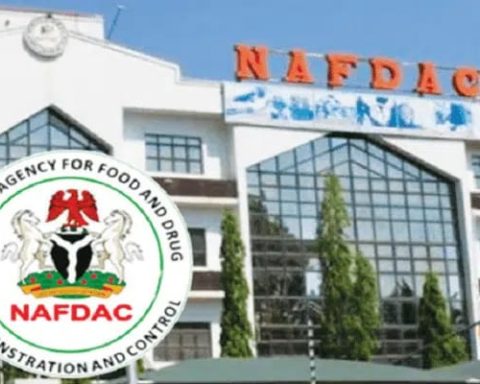
The Manufacturers Association of Nigeria (MAN) and labour unions in the food and beverage sector have faulted the National Agency for Food and Drug Administration and Control (NAFDAC) over its renewed enforcement of the ban on alcoholic beverages sold in sachets and in PET bottles below 200 millilitres, warning that the policy is disrupting businesses, threatening jobs and could harm the Nigerian economy, Prime Business Africa reports.
MAN’s Director-General, Mr. Segun Ajayi-Kadir, raised the concerns in a press statement issued on Tuesday, in which the association described NAFDAC’s action as inimical to the operations of companies in the wines and spirits sub-sector.
According to Ajayi-Kadir, the ban is detrimental to indigenous manufacturers, many of whom have invested heavily in production facilities and supply chains, and now face uncertainty over the survival of their businesses.
Join our WhatsApp Channel“This is worrisome as it comes at the expense of the jobs and livelihoods of workers and all those involved in the value chain,” he said, warning that the ban could open the market to illicit, sub-standard and unregulated products, encourage smuggling, reduce government revenue and deny low-income adult consumers access to regulated products.
He appealed to the Federal Government to prevail on NAFDAC to halt the enforcement and comply with earlier directives to suspend implementation of the ban on the production and sale of alcoholic beverages in sachets and small PET bottles.
READ ALSO : NAFDAC Shifts Focus to Distribution Networks After Counterfeit Crackdown
NAFDAC Destroys N20bn Worth of Counterfeit, Expired Products in South-West Clampdown
Ajayi-Kadir further alleged that NAFDAC’s action contradicted a directive issued by the Office of the Secretary to the Government of the Federation on December 15, 2025, as well as a resolution of the House of Representatives dated March 14, 2024, which followed a public hearing and stakeholder consultations and restrained the agency from imposing the ban.
He said the association was concerned that manufacturers were now confused by what he described as “multiple and conflicting directives” from different arms of government.
MAN also argued that the introduction of sachet and small-size alcohol packaging was an innovation meant to serve adult consumers with limited purchasing power and provide them with choice. Ajayi-Kadir added that smaller portions could, in some cases, discourage abuse associated with larger volumes.
Labour unions in the sector have echoed similar concerns. The Food, Beverages and Tobacco Senior Staff Association (FBTSSA) and the National Union of Food, Beverages and Tobacco Employees challenged NAFDAC to provide empirical evidence that sachet alcoholic beverages are being consumed by children.
Members of the unions on Tuesday again gathered at NAFDAC’s Lagos office as protests against the ban entered their third day.
Speaking to THISDAY, National President of FBTSSA, Mr. Oyibo Jimoh, said there was no data to support claims that sachet alcohol was responsible for underage drinking in Nigeria. He argued that sachet alcohol products are easier to regulate because their manufacturers are known and traceable, unlike some imported bottled products that are often adulterated.
“Sachet alcohol has not been known to be faked. NAFDAC regularly inspects our facilities and laboratories to ensure compliance,” Jimoh said, adding that many counterfeit bottled wines and spirits pose a greater public health risk.
Jimoh acknowledged challenges in the sector but described the ban as unfair, noting that industry groups have invested heavily in responsible drinking campaigns to discourage underage consumption.
Similarly, the Executive Secretary of FBTSSA, Mr. Solomon Adebosin, maintained that sachet alcohol could help promote moderation among consumers, arguing that accessibility does not necessarily translate to abuse.
However, the controversy has also seen counter-protests, with some groups staging marches in support of NAFDAC’s action, claiming that sachet gin consumption contributes to health problems and juvenile delinquency.
NAFDAC’s Response
Reacting to criticisms, the Director-General of NAFDAC, Prof. Mojisola Adeyeye, has consistently defended the ban, explaining that it was introduced to address growing public health concerns, particularly alcohol abuse among young people.
Prof. Adeyeye said the policy is not intended to prohibit alcohol consumption, but to curb the easy accessibility of highly concentrated alcohol in small, cheap packages that encourage misuse.
According to her, the decision followed extensive consultations with stakeholders, including the Federal Ministry of Health and Social Welfare, the Federal Competition and Consumer Protection Commission (FCCPC) and industry players.
She noted that studies and regulatory observations indicate that sachet and small-volume alcoholic drinks are more prone to abuse, especially among youths and other vulnerable groups, contributing to health, social and safety challenges.
The NAFDAC boss emphasised that alcoholic beverages approved by the agency remain legal for sale, provided they comply with existing regulations on packaging and labelling. She reaffirmed the agency’s commitment to firm but fair enforcement of the ban nationwide, while continuing engagement with stakeholders.
As enforcement continues, the sachet alcohol ban remains a subject of intense debate, highlighting the broader challenge of balancing public health objectives with economic growth, investment and employment in Nigeria’s fragile economy.

Amanze Chinonye is a Staff Correspondent at Prime Business Africa, a rising star in the literary world, weaving captivating stories that transport readers to the vibrant landscapes of Nigeria and the rest of Africa. With a unique voice that blends with the newspaper's tradition and style, Chinonye's writing is a masterful exploration of the human condition, delving into themes of identity, culture, and social justice. Through her words, Chinonye paints vivid portraits of everyday African life, from the bustling markets of Nigeria's Lagos to the quiet villages of South Africa's countryside . With a keen eye for detail and a deep understanding of the complexities of Nigerian society, Chinonye's writing is both a testament to the country's rich cultural heritage and a powerful call to action for a brighter future. As a writer, Chinonye is a true storyteller, using her dexterity to educate, inspire, and uplift readers around the world.