 Amanze Chinonye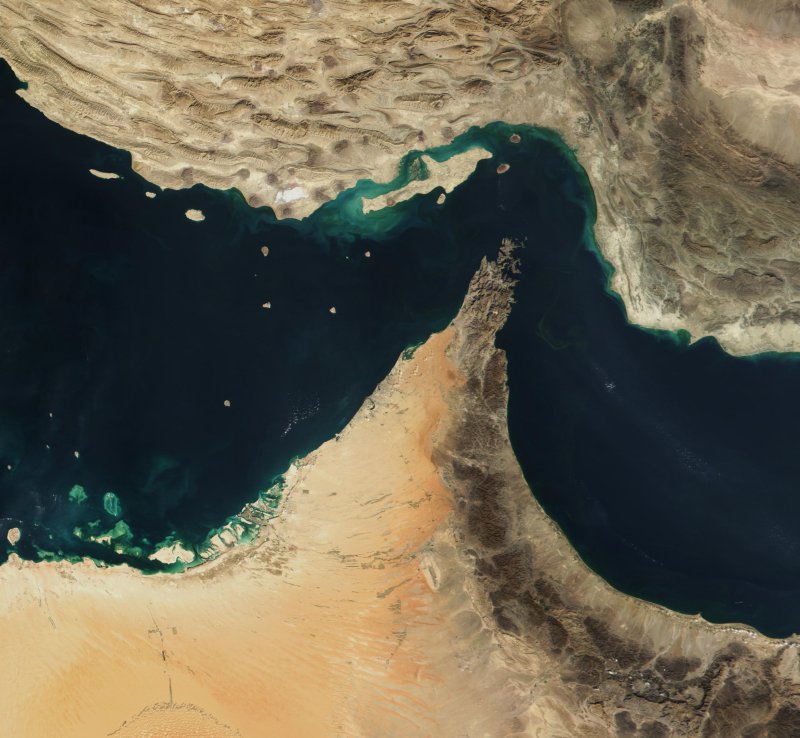
The escalating disruption around the Strait of Hormuz is sending shockwaves through global commodity markets.
While much of the immediate attention has focused on oil prices, analysts warn that a quieter but potentially more consequential crisis is unfolding in fertiliser markets one that could eventually ripple into the global food system.
The narrow maritime corridor linking the Persian Gulf with the Arabian Sea is among the world’s most important trade chokepoints. Under normal conditions, roughly 20 million barrels of oil pass through the strait each day, along with nearly 20 percent of global liquefied natural gas (LNG) shipments destined largely for Asian markets.
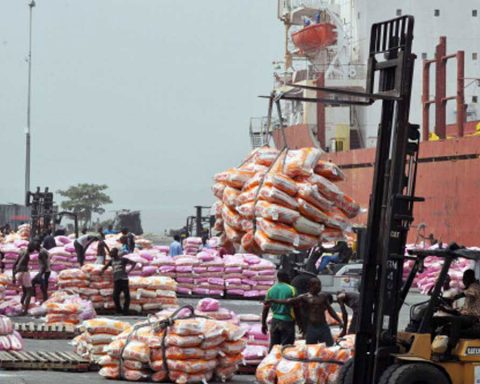
Join our WhatsApp ChannelBut the waterway is also a crucial artery for agricultural inputs. A significant share of globally traded fertilisers estimated between 20 percent and one-third of the market transits the route, making it central not only to energy security but also to global food production.
As tensions in the region disrupt shipping and raise maritime insurance costs, fertiliser prices have already begun climbing sharply.

Urea, a nitrogen fertiliser widely used in the cultivation of staple crops such as wheat, rice and maize, rose to about $584.50 per metric ton on March 9, marking an increase of roughly 29 percent within 11 days and about 52 percent compared with a year earlier. Before the crisis intensified, the benchmark price hovered near $470 per ton.
In the United States, barge prices at the New Orleans fertiliser hub have climbed to roughly $520–$550 per ton, reflecting tightening supply conditions in international markets.
Phosphate fertilisers are also feeling the strain. Diammonium phosphate (DAP), a key nutrient used in crop production, has climbed to around $655 per ton, gaining roughly $30 within a single week.
The rapid price movements highlight the heavy concentration of fertiliser production in the Gulf.
READ ALSO : Insurance Retreat, Iraq Warning, China’s Pressure Deepen Strait of Hormuz Crisis
Nigeria Week Ahead: Equities sink, Oil surpasses $100, CPI in focus
According to the International Fertilizer Association, five Gulf producers Iran, Qatar, Saudi Arabia, United Arab Emirates and Bahrain accounted for 34 percent of global urea trade and 23 percent of global ammonia trade in 2024.
Nearly 18.5 million metric tons of urea exports from the Middle East passed through the Strait of Hormuz that year, underscoring the scale of the region’s role in supplying agricultural nutrients to the world.
The disruption matters because nitrogen fertiliser is deeply intertwined with energy markets.
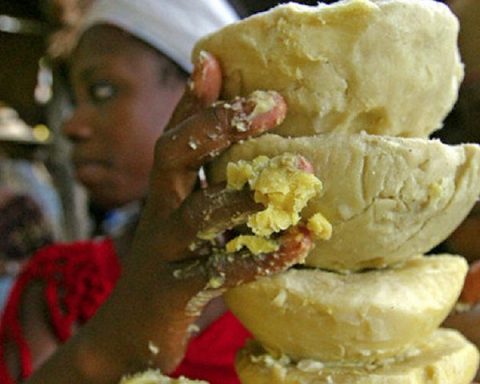
Most nitrogen fertilisers begin with natural gas. Through the Haber–Bosch process, methane is converted into ammonia, which is then processed into urea and other nitrogen compounds used to boost crop yields. Natural gas typically accounts for 80 to 90 percent of the cost of producing ammonia, the fundamental building block of nitrogen fertilisers.
In effect, modern agriculture converts natural gas into plant nutrients and ultimately into food.
Globally, about 180 million metric tons of nitrogen fertilisers are consumed each year, with roughly 55 to 60 million metric tons of urea moving through international trade. The Middle East supplies around 40 to 50 percent of that traded volume, much of it exported through Hormuz.
This concentration creates a structural vulnerability in global supply chains.
Major production hubs lie within the Gulf itself. Facilities such as the Ras Laffan industrial complex in Ras Laffan Industrial City in Qatar host some of the world’s largest ammonia and urea plants.
Iran alone exports roughly five million metric tons of urea annually, representing about 10 to 12 percent of global trade. Other producers, including Saudi Arabia and Oman, contribute several million tons more.
Together, more than 15 million metric tons of export capacity sits behind the Strait of Hormuz.
The waterway also plays a lesser-known but equally important role in phosphate fertiliser production. Nearly half of global seaborne sulphur shipments pass through the strait, supplying the raw material used to convert phosphate rock into finished fertilisers.
Any disruption to shipping therefore affects multiple stages of the fertiliser supply chain.
Maritime traffic through the strait has already been heavily affected as insurance costs surge and shipping companies reassess risks. War-risk premiums have risen sharply, and some carriers have suspended voyages through the Gulf altogether.
Analysts estimate that shipping flows through the strait may have fallen by as much as 70 to 75 percent, as vessels struggle to secure insurance coverage.
For fertiliser markets, the timing could hardly be worse.
In many parts of the Northern Hemisphere, fertiliser purchases accelerate ahead of the spring planting season. Delays during this critical period can force farmers to reduce nitrogen application rates, switch crops, or absorb higher input costs.
Lower fertiliser use often translates directly into lower crop yields.
Large agricultural economies are particularly exposed to these dynamics.
India relies heavily on Middle Eastern fertiliser supplies and imported LNG to fuel its domestic urea production. Reports indicate that authorities have already taken steps to increase domestic output as planting season approaches.
Meanwhile, major agricultural exporters such as Brazil depend on imported fertilisers to sustain large-scale production of soybeans and corn.
Even countries with significant domestic fertiliser industries are not insulated. The United States, for example, produces large volumes of nitrogen fertiliser but still imports substantial quantities of urea from overseas markets.
Unlike oil markets, fertiliser markets lack strategic stockpiles that can be released during supply disruptions. Trade tends to operate on a just-in-time basis aligned with planting cycles, leaving little cushion when shipping routes are disrupted.
Economists warn that fertiliser shocks often appear slowly but carry long-lasting effects.
According to modelling by the World Bank, every 1 percent increase in fertiliser prices can translate into roughly a 0.45 percent rise in global food commodity prices over time.
The Food and Agriculture Organization reported that its Food Price Index averaged 125.3 in February, up 0.9 percent from January and the highest level in four months, even before the full impact of the Hormuz disruption appeared in market data.
The lag between fertiliser supply shocks and food price increases means the consequences may not become visible until months later.
For developing regions where farmers often operate with tight margins particularly parts of South Asia and Sub-Saharan Africa the risk is that higher fertiliser costs lead to reduced usage and weaker harvests.
Oil may dominate headlines during geopolitical crises, but the deeper vulnerability lies further down the supply chain.
The Strait of Hormuz carries energy that powers the global economy. It also carries the nitrogen that sustains modern agriculture.
If the disruption persists, the effects may ultimately be felt not only in energy markets but in the cost and availability of food worldwide.

Amanze Chinonye is a Staff Correspondent at Prime Business Africa, a rising star in the literary world, weaving captivating stories that transport readers to the vibrant landscapes of Nigeria and the rest of Africa. With a unique voice that blends with the newspaper's tradition and style, Chinonye's writing is a masterful exploration of the human condition, delving into themes of identity, culture, and social justice. Through her words, Chinonye paints vivid portraits of everyday African life, from the bustling markets of Nigeria's Lagos to the quiet villages of South Africa's countryside . With a keen eye for detail and a deep understanding of the complexities of Nigerian society, Chinonye's writing is both a testament to the country's rich cultural heritage and a powerful call to action for a brighter future. As a writer, Chinonye is a true storyteller, using her dexterity to educate, inspire, and uplift readers around the world.
- Amanze Chinonye
- Amanze Chinonye
- Amanze Chinonye
- Amanze Chinonye
- Amanze Chinonye
- Amanze Chinonye
- Amanze Chinonye
- Amanze Chinonye
- Amanze Chinonye
- Amanze Chinonye
- Amanze Chinonye
- Amanze Chinonye
- Amanze Chinonye
- Amanze Chinonye
- Amanze Chinonye
- Amanze Chinonye
- Amanze Chinonye
- Amanze Chinonye
- Amanze Chinonye
- Amanze Chinonye
- Amanze Chinonye
- Amanze Chinonye
- Amanze Chinonye
- Amanze Chinonye
- Amanze Chinonye
- Amanze Chinonye
- Amanze Chinonye
- Amanze Chinonye
- Amanze Chinonye
- Amanze Chinonye
- Amanze Chinonye
- Amanze Chinonye
- Amanze Chinonye
- Amanze Chinonye
- Amanze Chinonye
- Amanze Chinonye
- Amanze Chinonye
- Amanze Chinonye
- Amanze Chinonye
- Amanze Chinonye
- Amanze Chinonye
- Amanze Chinonye
- Amanze Chinonye
- Amanze Chinonye
- Amanze Chinonye
- Amanze Chinonye
- Amanze Chinonye
- Amanze Chinonye
- Amanze Chinonye
- Amanze Chinonye
- Amanze Chinonye
- Amanze Chinonye
- Amanze Chinonye
- Amanze Chinonye
- Amanze Chinonye
- Amanze Chinonye
- Amanze Chinonye
- Amanze Chinonye
- Amanze Chinonye
- Amanze Chinonye
- Amanze Chinonye
- Amanze Chinonye
- Amanze Chinonye
- Amanze Chinonye
- Amanze Chinonye
- Amanze Chinonye
- Amanze Chinonye
- Amanze Chinonye
- Amanze Chinonye
- Amanze Chinonye
- Amanze Chinonye
- Amanze Chinonye
- Amanze Chinonye
- Amanze Chinonye
- Amanze Chinonye
- Amanze Chinonye
- Amanze Chinonye
- Amanze Chinonye
- Amanze Chinonye
- Amanze Chinonye
- Amanze Chinonye
- Amanze Chinonye
- Amanze Chinonye
- Amanze Chinonye
- Amanze Chinonye
- Amanze Chinonye
- Amanze Chinonye
- Amanze Chinonye
- Amanze Chinonye
- Amanze Chinonye
- Amanze Chinonye
- Amanze Chinonye
- Amanze Chinonye
- Amanze Chinonye
- Amanze Chinonye
- Amanze Chinonye
- Amanze Chinonye
- Amanze Chinonye
- Amanze Chinonye
- Amanze Chinonye
- Amanze Chinonye
- Amanze Chinonye
- Amanze Chinonye
- Amanze Chinonye
- Amanze Chinonye
- Amanze Chinonye
- Amanze Chinonye
- Amanze Chinonye
- Amanze Chinonye
- Amanze Chinonye
- Amanze Chinonye
- Amanze Chinonye
- Amanze Chinonye
- Amanze Chinonye
- Amanze Chinonye
- Amanze Chinonye
- Amanze Chinonye
- Amanze Chinonye
- Amanze Chinonye
- Amanze Chinonye
- Amanze Chinonye
- Amanze Chinonye
- Amanze Chinonye
- Amanze Chinonye
- Amanze Chinonye
- Amanze Chinonye
- Amanze Chinonye
- Amanze Chinonye
- Amanze Chinonye
- Amanze Chinonye
- Amanze Chinonye
- Amanze Chinonye
- Amanze Chinonye
- Amanze Chinonye
- Amanze Chinonye
- Amanze Chinonye
- Amanze Chinonye
- Amanze Chinonye
- Amanze Chinonye
- Amanze Chinonye
- Amanze Chinonye
- Amanze Chinonye
- Amanze Chinonye
- Amanze Chinonye
- Amanze Chinonye
- Amanze Chinonye
- Amanze Chinonye