 Amanze Chinonye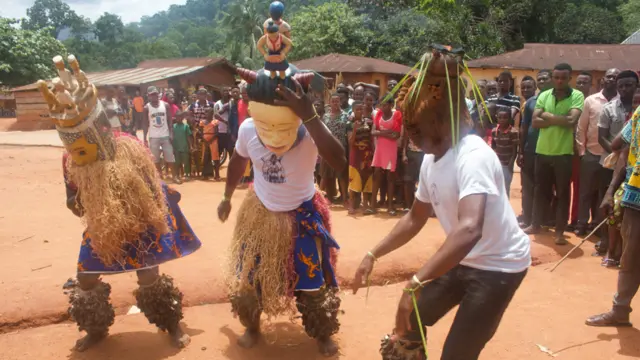
Nestled in the rolling hills of Obudu Local Government Area in Cross River State, Ubang a quiet farming community known for its cocoa, palm oil, bananas, and kola nuts.
Yet its most remarkable feature isn’t its agriculture it is the village’s extraordinary linguistic tradition: men and women speak entirely different languages.
In Ubang, everyday objects, numbers, and expressions have two distinct names, depending on the speaker’s gender. For instance, a tree is okyin for men and onggim for women; water is bala for men, lili for women; a shoe is okpok for men, abuo for women; a cup is nkoh for men, ogbala for women. Despite this difference, communication flows seamlessly as men and women understand each other perfectly.
Join our WhatsApp ChannelHow the Tradition Begins
Children in Ubang grow up immersed in this dual-language system. Infants first learn the female language from their mothers. By around age five or six, boys gradually shift Into the male dialect under the guidance of fathers, uncles, and older male relatives. Girls, by contrast, continue speaking the female language naturally. By adolescence, every male and female household member is firmly “in language,” maintaining the two vocabularies without confusion.
Daniel Ochui, a retired local government administrator and Ubang indigene, explained: “It is very true that the Ubang people speak differently. Boys initially speak like their mothers, but fathers and older males correct them. The females hardly make mistakes. This is not taught formally, it is learned through living the culture.”
READ ALSO : Eyo Festival: Lagos’ Timeless Celebration of Ancestry, Culture, History
Igue Festival: Spiritual Heartbeat of The Benin Kingdom
A Tradition Rooted in Myth and History
The Ubang elders believe the dual-language system is a divine gift. According to the Clan Head, HRH Ochui Iyang Odu Thomas, the tradition dates back to creation itself. “God gave us two languages for men and women,” he said.
“When children grow, they naturally fall into their gender language. It is not learned; it is inherited. This makes our community unique in the world.”
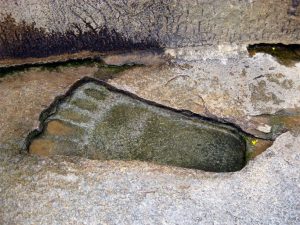
Legends add color to the narrative: one says God gave men and women separate languages to avoid quarrels; another claims it was a wartime tactic to confuse enemies. A giant footprint on a local mountain is believed to mark this divine intervention a sacred symbol still revered today.
Culture and Community
The dual-language system is deeply intertwined with Ubang’s social and cultural life. Boys undergo a rite of passage as they transition into male speech, signaling their entry into adulthood.
Cultural societies, such as the Ekwo society, enforce gendered customs women do not participate in certain rituals, highlighting distinct social roles alongside linguistic differences.
Residents also take pride in Ubang’s agricultural heritage. Ochui noted that Ubang introduced cocoa to Obudu and leads in palm oil, bananas, pear, groundnuts, and timber production. Lorries come from across Nigeria to transport the community’s produce, cementing its economic as well as cultural significance.
Challenges and Preservation
Modern life poses challenges to this unique tradition. Many youths move to cities; schools emphasize English, and Nigerian Pidgin increasingly dominates. Fewer boys undergo the full “language shift,” threatening the continuity of this linguistic heritage.
To counter this, community leaders have begun documenting both male and female vocabularies and holding informal classes to preserve the languages for future generations. Scholars have catalogued over 400 core words with gender-specific variants roughly one in four everyday terms making Ubang one of the world’s most unique linguistic communities.
A Living Cultural Miracle
For the people of Ubang, the dual-language tradition is not a curiosity – it is life itself. Mary Ale, a young woman from the village, said: “I was born into it. I speak the female language fluently and understand the male language. It is God’s gift.”
Visitors, like Calabar-based broadcaster Ursula Ikpali, have been struck by the village’s charm and diversity. “The people live happily, speaking their two languages. But they lack basic amenities like schools, hospitals, and roads. With attention, Ubang could become a major cultural and tourist attraction,” she noted.
Sandwiched between the Obudu Mountain Resort and nearby peaks, Ubang is a vivid reminder that Nigeria’s cultural heritage is full of wonders waiting to be discovered.
Here, language wears gender, history is spoken daily, and every conversation is a testament to a community’s enduring identity.

Amanze Chinonye is a Staff Correspondent at Prime Business Africa, a rising star in the literary world, weaving captivating stories that transport readers to the vibrant landscapes of Nigeria and the rest of Africa. With a unique voice that blends with the newspaper's tradition and style, Chinonye's writing is a masterful exploration of the human condition, delving into themes of identity, culture, and social justice. Through her words, Chinonye paints vivid portraits of everyday African life, from the bustling markets of Nigeria's Lagos to the quiet villages of South Africa's countryside . With a keen eye for detail and a deep understanding of the complexities of Nigerian society, Chinonye's writing is both a testament to the country's rich cultural heritage and a powerful call to action for a brighter future. As a writer, Chinonye is a true storyteller, using her dexterity to educate, inspire, and uplift readers around the world.
- Amanze Chinonye
- Amanze Chinonye
- Amanze Chinonye
- Amanze Chinonye
- Amanze Chinonye
- Amanze Chinonye
- Amanze Chinonye
- Amanze Chinonye
- Amanze Chinonye
- Amanze Chinonye
- Amanze Chinonye
- Amanze Chinonye
- Amanze Chinonye
- Amanze Chinonye
- Amanze Chinonye
- Amanze Chinonye
- Amanze Chinonye
- Amanze Chinonye
- Amanze Chinonye
- Amanze Chinonye
- Amanze Chinonye
- Amanze Chinonye
- Amanze Chinonye
- Amanze Chinonye
- Amanze Chinonye
- Amanze Chinonye
- Amanze Chinonye
- Amanze Chinonye
- Amanze Chinonye
- Amanze Chinonye
- Amanze Chinonye
- Amanze Chinonye
- Amanze Chinonye
- Amanze Chinonye
- Amanze Chinonye
- Amanze Chinonye
- Amanze Chinonye
- Amanze Chinonye
- Amanze Chinonye
- Amanze Chinonye
- Amanze Chinonye
- Amanze Chinonye
- Amanze Chinonye
- Amanze Chinonye
- Amanze Chinonye
- Amanze Chinonye
- Amanze Chinonye
- Amanze Chinonye
- Amanze Chinonye
- Amanze Chinonye
- Amanze Chinonye
- Amanze Chinonye
- Amanze Chinonye
- Amanze Chinonye
- Amanze Chinonye
- Amanze Chinonye
- Amanze Chinonye
- Amanze Chinonye
- Amanze Chinonye
- Amanze Chinonye
- Amanze Chinonye
- Amanze Chinonye
- Amanze Chinonye
- Amanze Chinonye
- Amanze Chinonye
- Amanze Chinonye
- Amanze Chinonye
- Amanze Chinonye
- Amanze Chinonye
- Amanze Chinonye
- Amanze Chinonye
- Amanze Chinonye
- Amanze Chinonye
- Amanze Chinonye
- Amanze Chinonye
- Amanze Chinonye
- Amanze Chinonye
- Amanze Chinonye
- Amanze Chinonye
- Amanze Chinonye
- Amanze Chinonye
- Amanze Chinonye
- Amanze Chinonye
- Amanze Chinonye
- Amanze Chinonye
- Amanze Chinonye
- Amanze Chinonye
- Amanze Chinonye
- Amanze Chinonye
- Amanze Chinonye
- Amanze Chinonye
- Amanze Chinonye
- Amanze Chinonye
- Amanze Chinonye
- Amanze Chinonye
- Amanze Chinonye
- Amanze Chinonye
- Amanze Chinonye
- Amanze Chinonye
- Amanze Chinonye
- Amanze Chinonye
- Amanze Chinonye
- Amanze Chinonye
- Amanze Chinonye
- Amanze Chinonye
- Amanze Chinonye
- Amanze Chinonye
- Amanze Chinonye
- Amanze Chinonye
- Amanze Chinonye
- Amanze Chinonye
- Amanze Chinonye
- Amanze Chinonye
- Amanze Chinonye
- Amanze Chinonye
- Amanze Chinonye
- Amanze Chinonye
- Amanze Chinonye
- Amanze Chinonye
- Amanze Chinonye
- Amanze Chinonye
- Amanze Chinonye
- Amanze Chinonye
- Amanze Chinonye
- Amanze Chinonye
- Amanze Chinonye
- Amanze Chinonye
- Amanze Chinonye
- Amanze Chinonye
- Amanze Chinonye
- Amanze Chinonye
- Amanze Chinonye
- Amanze Chinonye
- Amanze Chinonye
- Amanze Chinonye
- Amanze Chinonye
- Amanze Chinonye
- Amanze Chinonye
- Amanze Chinonye
- Amanze Chinonye
- Amanze Chinonye
- Amanze Chinonye
- Amanze Chinonye
- Amanze Chinonye
- Amanze Chinonye
- Amanze Chinonye
- Amanze Chinonye
- Amanze Chinonye
- Amanze Chinonye
- Amanze Chinonye