Admin
Admin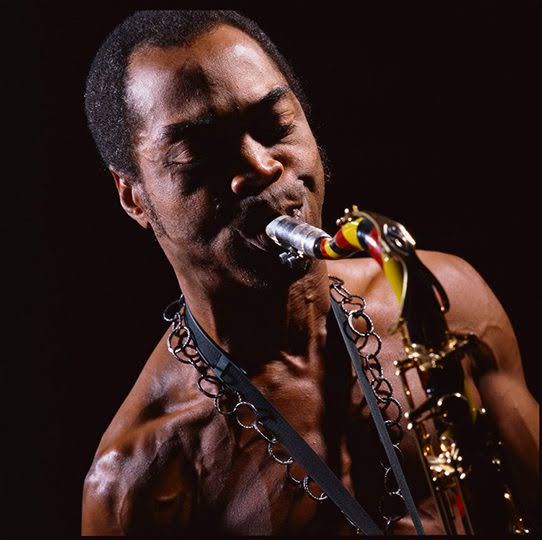
By Promise Adiele
In the title of this essay, I have carefully avoided mentioning any Nigerian musician with Fela’s name. It is deliberate. I cannot, in good conscience, insert the name of any Nigerian or African musician alongside Fela’s name.
Doing so is tantamount to blasphemy and further desecrates the name Fela Kuti. Anyone comparing Fela Kuti with any Nigerian or African musician, dead or alive, commits sacrilege and profanes the African cultural canvas which inspired Afrobeat as a music genre. I sympathize with those who compare Fela to any Nigerian musician. Such people revive the Biblical assertion by the Son of Man in Luke 23:24, “father forgive them, for they know not what they do”.
Join our WhatsApp ChannelWe must not let the affront of comparing Fela to a kid musician slide. Those committing this abomination should, without failing, gather at the nearest _babalawo_ or _dibia_ for immediate rites of exorcism from tormenting demons. We must not dismiss this event, in which people have compared Fela with upstarts.
Its source or origin is attributable to some form of mental paralysis, either from such people’s village or deliberate abuse of some substances, which easily leads to acute cognitive impairment.
I always approach issues about Fela with trepidation because he belongs in the league of pantheons. Let us be clear. I am a writer. I recently released a collection of short stories, “ _My Encounter with a Prostitute and Other Stories”._ It is my first published prose work. If the book sells fifty million copies and I make millions of dollars from it, it would never qualify my name to be mentioned in the same sentence with Chinua Achebe.
Achebe was not just a storyteller. He was something more profound. I am writing a play. If, when I publish it, and it sells fifty million copies, it would never qualify my name to be mentioned in the same sentence with Wole Soyinka. Soyinka is not just a playwright. He is the spirit of dramatic artistry.
If I win the Nobel Laureate, I would never aspire to sit at the same table with Femi Osofisan, a literary genius who has not won the Laureate. There must be a limit to schizophrenia and all its corollaries. It is sheer self-delusion for anyone to attempt to ascend the throne of the gods simply because of financial success. It is in the blighted mindset of supposed modernity to equate success with overflowing materiality while treating legacy with contempt and impudence.
Legacy is sacred and must be honoured.
Nigeria has produced many talented musicians who won awards locally and internationally. While some musicians are entertainers, some combine entertainment with social commitment, which distinguishes them. South African Lucky Dube was a musician, but was he just a musician? He was more. His social commitment and the politics of his lyrical intensity contributed to the dismantling of the edifice of apartheid in South Africa.
Ngugi wa’ Thiongo was a Kenyan writer, but beyond his creative ingenuity, he contributed to the realignment of social consciousness through historical revalidation and cultural retooling.
To call Achebe, Soyinka, wa’ Thiongo, Buchi Emecheta, and Femi Osofisan mere writers is to challenge the muse to a wrestling match. I do not have a problem with comparison because nothing is too big or too small except by comparison.
Through comparison, we can draw an equitable line between excellence and mediocrity. Therefore, I have no issues with comparison. However, comparison must never be skewed to denigrate legacy. We must eschew erecting parallel structures that challenge the omnipotence of divinity. To those who have abused legacies through mindless comparison, I encourage them to repent and be born twice.
Fela Anikulapo Kuti was a musician and entertainer. Beyond his music and entertainment proclivities, he was a poet, philosopher, cultural ambassador, political activist, storyteller, and a committed evangelist of the black race.
After studying music at the Trinity College of Music in London from 1958 to 1963, he was intentional and focused on his brand of art. He was not solely about fame or materiality, but a consummate artist whose music penetrated African social spaces. Through his music, he challenged tyranny, dictatorship and abuse of power within the continent’s political corridors. He embarked on a constant re-orientation of the African psyche eroded by neo-colonial mentality, opposing the disparagement of the black identity.
His music was a global campaign against injustice, oppression, and political rascality among the ruling class. He sought to awaken the black populace from lethargy and rouse them into consciousness about their desperate, deplorable living conditions. In doing so, he rehabilitated Augusto Boal’s Theatre of the Oppressed, using theatre to create social awareness. His music flourished during the military era when he challenged military authorities and questioned their suitability as a response to Africa’s political misdirection.
_Abami Eda,_ as he was popularly called, exported a brand of music unmatched in the annals of global Musical provenance. He threw himself into the fire for the masses and suffered multiple injuries in the process. He lost his mother and his residence. He was jailed many times, too. Not because he broke the law, but because he chose to orchestrate a revolutionary imperative through his music.
Fela’s music recalibrates his native Yoruba cultural antecedents, which draw on local instruments and performance. In addition, he deployed social commentary, moral sermonizing, praise and critique of social ills. Yoruba music thrives on dance-drama, and Fela promoted his Afrobeat convictions from his Yoruba cultural inclinations. His Afrikan Shrine in Ikeja, Lagos, continually re-establishes the symbolism of the Yoruba traditional spiritual system, where gods and supernatural essences hold sway. He worshipped Sango, the Yoruba god of thunder and rainfall. He also paid tribute to Esu, the Yoruba god of chance, uncertainty and indeterminacy.
As a cultural and spiritual ambassador, he didn’t dispense with his roots but propagated a revival of the people’s tradition badly battered by Eurocentric posturing. He took a swipe at religious imperialism and questioned why the Pope and Imam, two iconic figures in two major foreign religions, should frolic in luxury in London and Mecca while the ordinary, impoverished people wallowed in misery. As an iconoclast, Fela’s dedication to the challenges of the masses earned him widespread love, even from heads of state and major political figures.
Fela’s songs utilise the vast resources of the theatre, such as drama, costume, dance, improvisation and folklore to advance his political messages. His music is not a closed art but an artistic outlay that accommodates various components of social realities. As a poet, his lyrical blend of English, Yoruba and Pidgin English creates a hypnotic sense of immediacy which enables him relate to all classes of the masses. He deliberately shunned promoting the bourgeois class orientations but chose to identify with the common people as his constituency.
Fela’s use of language in his songs is deliberate – he entertains and at the same time educates. His musical symphony and instrumental ensembles easily mingle with the rhythm of the soul. His songs are spiritual in a different way; they provoke, challenge, inspire, and yet entertain.
Although many people questioned his choice of personal life characterized by smoking and women, the consequences of his message and social engineering far outweigh his lifestyle. Fela promoted audience participation to an honorific level.
Through his queries and chants, he drew the people into his art, thus redefining musical composition and live performance to suit his radical ideologies. The social realistic penetration of his songs keeps the government and its officials uncomfortable, so that wherever his music is played, it addresses a major global concern – corruption and irresponsible leadership.
READ ALSO : Wizkid Clashes with Seun Kuti on Fela Legacy
Fela’s music has attracted academic attention worldwide. From Harvard to Cambridge and all the major universities, scholars have researched Fela and his music. BSc, BA, MSc, and MA theses have been written on Fela. PhD theses have also been written on him. Millions of academic papers in Literature, Music, Politics, Philosophy, Political Science, Sociology, Cultural Studies, and Fine Arts have all been written on him. Major libraries worldwide reserve sections dedicated to Fela’s musical and cultural philosophy.
According to Fela, “music is a weapon of the future”. Unfortunately, those who pretend to have inherited his art have not advanced music as a weapon of the future.
Fela does not have an accomplished successor yet. What you find these days are pretenders who hardly engage with social realities or confront various social contradictions, which emphasise the continual oppression of the masses. Nigeria’s contemporary music lacks ideology and focus. The lyrics are populated by immoral phrases about sex, boy-girl relationships and love.
Expectedly, Gen Z, in their usual superfluous attitude, align with these songs with empty lyrics. Compare Fela Kuti and Bob Marley, and then we can have a conversation. These men redefined music. Even in death, they belong to the realm of the gods.
Adieu, Fela Kuti, the greatest‼!
Promise Adiele PhD.
Mountain Top University.
Promee01@yahoo.com
X: @drpee4

Amanze Chinonye is a Staff Correspondent at Prime Business Africa, a rising star in the literary world, weaving captivating stories that transport readers to the vibrant landscapes of Nigeria and the rest of Africa. With a unique voice that blends with the newspaper's tradition and style, Chinonye's writing is a masterful exploration of the human condition, delving into themes of identity, culture, and social justice. Through her words, Chinonye paints vivid portraits of everyday African life, from the bustling markets of Nigeria's Lagos to the quiet villages of South Africa's countryside . With a keen eye for detail and a deep understanding of the complexities of Nigerian society, Chinonye's writing is both a testament to the country's rich cultural heritage and a powerful call to action for a brighter future. As a writer, Chinonye is a true storyteller, using her dexterity to educate, inspire, and uplift readers around the world.
- Amanze Chinonye
- Amanze Chinonye
- Amanze Chinonye
- Amanze Chinonye
- Amanze Chinonye
- Amanze Chinonye
- Amanze Chinonye
- Amanze Chinonye
- Amanze Chinonye
- Amanze Chinonye
- Amanze Chinonye
- Amanze Chinonye
- Amanze Chinonye
- Amanze Chinonye
- Amanze Chinonye
- Amanze Chinonye
- Amanze Chinonye
- Amanze Chinonye
- Amanze Chinonye
- Amanze Chinonye
- Amanze Chinonye
- Amanze Chinonye
- Amanze Chinonye
- Amanze Chinonye
- Amanze Chinonye
- Amanze Chinonye
- Amanze Chinonye
- Amanze Chinonye
- Amanze Chinonye
- Amanze Chinonye
- Amanze Chinonye
- Amanze Chinonye
- Amanze Chinonye
- Amanze Chinonye
- Amanze Chinonye
- Amanze Chinonye
- Amanze Chinonye
- Amanze Chinonye
- Amanze Chinonye
- Amanze Chinonye
- Amanze Chinonye
- Amanze Chinonye
- Amanze Chinonye
- Amanze Chinonye
- Amanze Chinonye
- Amanze Chinonye
- Amanze Chinonye
- Amanze Chinonye
- Amanze Chinonye
- Amanze Chinonye
- Amanze Chinonye
- Amanze Chinonye
- Amanze Chinonye
- Amanze Chinonye
- Amanze Chinonye
- Amanze Chinonye
- Amanze Chinonye
- Amanze Chinonye
- Amanze Chinonye
- Amanze Chinonye
- Amanze Chinonye
- Amanze Chinonye
- Amanze Chinonye
- Amanze Chinonye
- Amanze Chinonye
- Amanze Chinonye
- Amanze Chinonye
- Amanze Chinonye
- Amanze Chinonye
- Amanze Chinonye
- Amanze Chinonye
- Amanze Chinonye
- Amanze Chinonye
- Amanze Chinonye
- Amanze Chinonye
- Amanze Chinonye
- Amanze Chinonye
- Amanze Chinonye
- Amanze Chinonye
- Amanze Chinonye
- Amanze Chinonye
- Amanze Chinonye
- Amanze Chinonye
- Amanze Chinonye
- Amanze Chinonye
- Amanze Chinonye
- Amanze Chinonye
- Amanze Chinonye
- Amanze Chinonye
- Amanze Chinonye
- Amanze Chinonye
- Amanze Chinonye
- Amanze Chinonye
- Amanze Chinonye
- Amanze Chinonye
- Amanze Chinonye
- Amanze Chinonye
- Amanze Chinonye
- Amanze Chinonye
- Amanze Chinonye
- Amanze Chinonye
- Amanze Chinonye
- Amanze Chinonye
- Amanze Chinonye
- Amanze Chinonye
- Amanze Chinonye
- Amanze Chinonye
- Amanze Chinonye
- Amanze Chinonye
- Amanze Chinonye
- Amanze Chinonye
- Amanze Chinonye
- Amanze Chinonye
- Amanze Chinonye
- Amanze Chinonye
- Amanze Chinonye
- Amanze Chinonye
- Amanze Chinonye
- Amanze Chinonye
- Amanze Chinonye
- Amanze Chinonye
- Amanze Chinonye
- Amanze Chinonye
- Amanze Chinonye
- Amanze Chinonye
- Amanze Chinonye
- Amanze Chinonye
- Amanze Chinonye
- Amanze Chinonye
- Amanze Chinonye
- Amanze Chinonye
- Amanze Chinonye
- Amanze Chinonye
- Amanze Chinonye
- Amanze Chinonye
- Amanze Chinonye
- Amanze Chinonye
- Amanze Chinonye
- Amanze Chinonye
- Amanze Chinonye
- Amanze Chinonye
- Amanze Chinonye
- Amanze Chinonye
- Amanze Chinonye
- Amanze Chinonye
- Amanze Chinonye
- Amanze Chinonye
- Amanze Chinonye
- Amanze Chinonye