Admin
Admin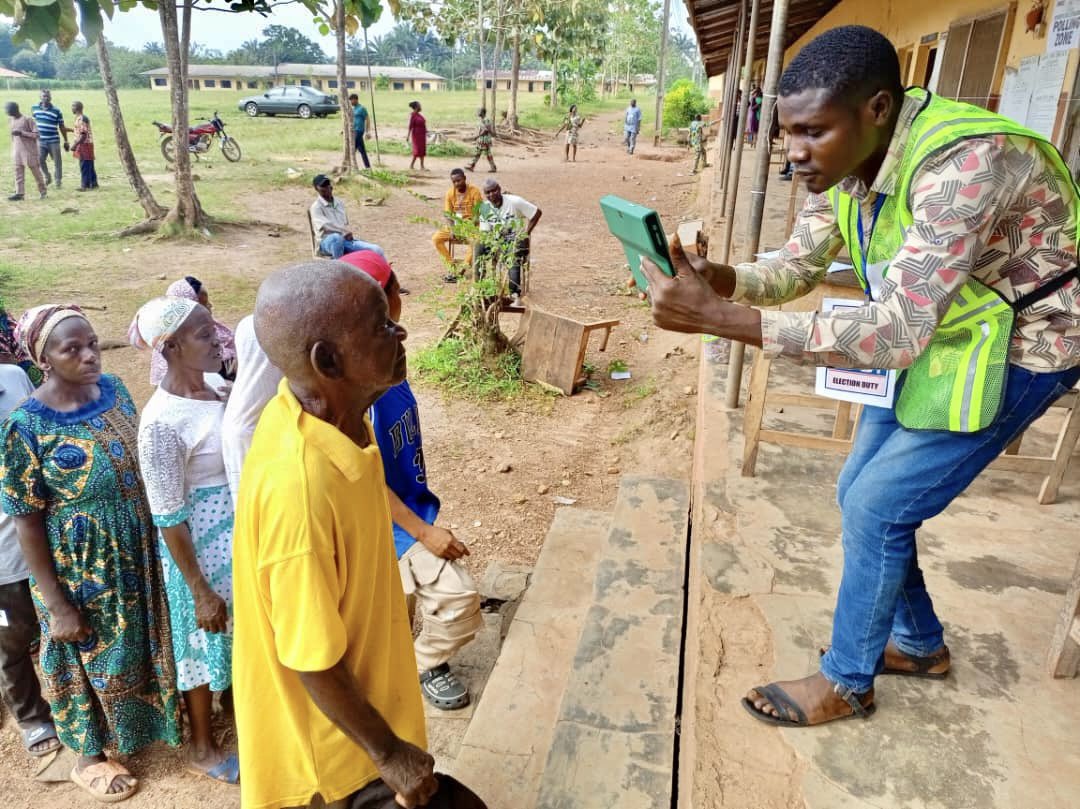
By Sheriff P. Bulus
Local elections often act as a political weather forecast of future occurrences. They don’t necessarily announce the future; they give a hint.
Join our WhatsApp Channel
Under INEC’s revised timetable, the 2027 general elections are still about a year away. Yet the recent council polls in the FCT and the by-elections in Rivers and Kano already tell an important story. The APC’s sweeping victories were no accident. They point to an early endorsement of President Bola Ahmed Tinubu and the ruling APC as Nigeria edges closer to 2027.
Despite the low voter turnout in the FCT, which stood at about 14.2 per cent — an improvement on 2022, the direction of voter choice matters. Mid-cycle elections often function as referendums on incumbency. And local elections in a federal capital and two politically strategic states matter in Nigeria’s broader political theatre.
The outcome suggests renewed confidence among Nigerians in the reform-driven leadership of the President.
Abuja is not just the FCT — it is Nigeria’s political and administrative mirror. The APC’s 5–1 sweep of area council chairmanships — Abaji, Bwari, Kuje, Kwali, and AMAC, with only Gwagwalada going to the PDP — clearly indicated voter sentiment in favour of the ruling party. It was a decisive victory, despite heightened opposition mobilisation heading into election day.
The APC’s dominance was most significant in AMAC, the FCT’s most populous and politically strategic council, where it recorded almost thrice the votes of its nearest rival. These victories suggest growing acceptance for the federal government’s tough but necessary reforms, inclusive governance approach, and its commitment to long-term national stability over short-term political expediency. The wide margin also showed that in Abuja, where the federal government’s reforms are most visible, the electorate was leaning towards continuity.
READ ALSO : How Wike Undermined Smooth Local Council Poll: by HURIWA
Understanding Free, Fair Elections in Nigeria
The results in Rivers and Kano emphasised this point. In Rivers, the APC won the two state constituencies contested, while it secured the vacant two State House of Assembly seats in Kano. Both states are politically heavyweight, with long histories of keenly contested elections. The verdict is telling. The by-elections highlighted a resurgence of the APC not seen in years. It also points to President Tinubu’s widening influence across strategic blocs — including the FCT, Rivers, Kano, and other pivotal states — demonstrating his capacity to build consensus across regions.
Tinubu’s leadership style – building on coalition and inclusion – has contributed significantly to this resurgence. By reaching out to different political actors and building cooperation across divides, the President has created more alignment around key national priorities. The outcomes in the FCT, Rivers, and Kano are vital signals that most voters now respond to performance, not just promises. As 2027 draws closer, this trend suggests that governance outcomes — more than rhetoric — are shaping voter decisions.
Call it a political reset.
Since 2023, President Tinubu has pursued tough reforms, such as the removal of fuel subsidies and the unification of the exchange rate. At the onset, they imposed visible pain on Nigerians, but the results, though gradual, are evident, and have shown that they were necessary for long-term growth. The naira has experienced periods of relative stability. Investor sentiment, once cautious, has shown signs of recalibration. Food prices have eased considerably in several markets, and Nigeria’s food inflation has dropped significantly to single digits, reportedly the lowest in over a decade. These positive developments are not lost on voters, who appear to be reading clear direction.
The ruling party’s electoral wins in the FCT, Rivers and Kano also suggest that Tinubu’s long-standing reputation as a coalition builder is finding more expression across strategic voting blocs. This growing influence may well translate into broader electoral success in 2027.
INEC’s new timetable for the 2027 elections means campaigns will start earlier than usual. A shorter calendar favours parties with strong structures and clear records, but it leaves less time to adjust policies and punishes trial-and-error politics.
Still, electoral victories should not breed complacency. Low participation rates are reminders that legitimacy must be cultivated continuously and reform must remain inclusive. Nationwide endorsement is not proclaimed; it is earned – through government policies, programmes and strong institutions that improve the lives and livelihood of citizenry.
As 2027 approaches, the question is not whether competition will intensify — it will. The question is whether Nigeria’s political elites can distinguish between rivalry and destabilisation. Economic recovery requires policy continuity. Security reform requires coordination across levels of government. These are national obligations.
The FCT, Rivers and Kano have offered early signals. They suggest that, despite economic strain and political noise, there is a growing willingness to reward reform sustained with discipline. They indicate that the governing coalition retains national reach. And the evidence points to 2027 being shaped less by rhetoric than by record.
The responsibility now extends beyond the APC. Nigeria’s political elite across party lines must realise the significance of these moments in Nigeria’s democratic journey: consensus where the national interest demands it is not political weakness; it is maturity.
President Tinubu has chosen a path defined by structural adjustment rather than short-term applause. The recent elections indicate that many Nigerians understand the stakes and are more enlightened, judging by sustained outcomes rather than political noise.
The die is cast for 2027.
Bulus is of the Hope Alive Initiative (HAI), an Abuja-based good governance advocacy group

Amanze Chinonye is a Staff Correspondent at Prime Business Africa, a rising star in the literary world, weaving captivating stories that transport readers to the vibrant landscapes of Nigeria and the rest of Africa. With a unique voice that blends with the newspaper's tradition and style, Chinonye's writing is a masterful exploration of the human condition, delving into themes of identity, culture, and social justice. Through her words, Chinonye paints vivid portraits of everyday African life, from the bustling markets of Nigeria's Lagos to the quiet villages of South Africa's countryside . With a keen eye for detail and a deep understanding of the complexities of Nigerian society, Chinonye's writing is both a testament to the country's rich cultural heritage and a powerful call to action for a brighter future. As a writer, Chinonye is a true storyteller, using her dexterity to educate, inspire, and uplift readers around the world.
- Amanze Chinonye
- Amanze Chinonye
- Amanze Chinonye
- Amanze Chinonye
- Amanze Chinonye
- Amanze Chinonye
- Amanze Chinonye
- Amanze Chinonye
- Amanze Chinonye
- Amanze Chinonye
- Amanze Chinonye
- Amanze Chinonye
- Amanze Chinonye
- Amanze Chinonye
- Amanze Chinonye
- Amanze Chinonye
- Amanze Chinonye
- Amanze Chinonye
- Amanze Chinonye
- Amanze Chinonye
- Amanze Chinonye
- Amanze Chinonye
- Amanze Chinonye
- Amanze Chinonye
- Amanze Chinonye
- Amanze Chinonye
- Amanze Chinonye
- Amanze Chinonye
- Amanze Chinonye
- Amanze Chinonye
- Amanze Chinonye
- Amanze Chinonye
- Amanze Chinonye
- Amanze Chinonye
- Amanze Chinonye
- Amanze Chinonye
- Amanze Chinonye
- Amanze Chinonye
- Amanze Chinonye
- Amanze Chinonye
- Amanze Chinonye
- Amanze Chinonye
- Amanze Chinonye
- Amanze Chinonye
- Amanze Chinonye
- Amanze Chinonye
- Amanze Chinonye
- Amanze Chinonye
- Amanze Chinonye
- Amanze Chinonye
- Amanze Chinonye
- Amanze Chinonye
- Amanze Chinonye
- Amanze Chinonye
- Amanze Chinonye
- Amanze Chinonye
- Amanze Chinonye
- Amanze Chinonye
- Amanze Chinonye
- Amanze Chinonye
- Amanze Chinonye
- Amanze Chinonye
- Amanze Chinonye
- Amanze Chinonye
- Amanze Chinonye
- Amanze Chinonye
- Amanze Chinonye
- Amanze Chinonye
- Amanze Chinonye
- Amanze Chinonye
- Amanze Chinonye
- Amanze Chinonye
- Amanze Chinonye
- Amanze Chinonye
- Amanze Chinonye
- Amanze Chinonye
- Amanze Chinonye
- Amanze Chinonye
- Amanze Chinonye
- Amanze Chinonye
- Amanze Chinonye
- Amanze Chinonye
- Amanze Chinonye
- Amanze Chinonye
- Amanze Chinonye
- Amanze Chinonye
- Amanze Chinonye
- Amanze Chinonye
- Amanze Chinonye
- Amanze Chinonye
- Amanze Chinonye
- Amanze Chinonye
- Amanze Chinonye
- Amanze Chinonye
- Amanze Chinonye
- Amanze Chinonye
- Amanze Chinonye
- Amanze Chinonye
- Amanze Chinonye
- Amanze Chinonye
- Amanze Chinonye
- Amanze Chinonye
- Amanze Chinonye
- Amanze Chinonye
- Amanze Chinonye
- Amanze Chinonye
- Amanze Chinonye
- Amanze Chinonye
- Amanze Chinonye
- Amanze Chinonye
- Amanze Chinonye
- Amanze Chinonye
- Amanze Chinonye
- Amanze Chinonye
- Amanze Chinonye
- Amanze Chinonye
- Amanze Chinonye
- Amanze Chinonye
- Amanze Chinonye
- Amanze Chinonye
- Amanze Chinonye
- Amanze Chinonye
- Amanze Chinonye
- Amanze Chinonye
- Amanze Chinonye
- Amanze Chinonye
- Amanze Chinonye
- Amanze Chinonye
- Amanze Chinonye
- Amanze Chinonye
- Amanze Chinonye
- Amanze Chinonye
- Amanze Chinonye
- Amanze Chinonye
- Amanze Chinonye
- Amanze Chinonye
- Amanze Chinonye
- Amanze Chinonye
- Amanze Chinonye
- Amanze Chinonye
- Amanze Chinonye