 Amanze Chinonye
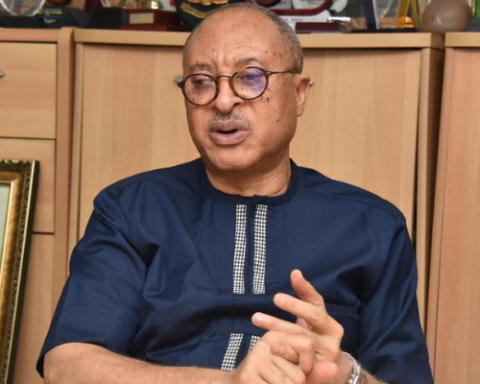
Professor Pat Utomi has said Nigeria’s deepening insecurity, ethnic fractures and democratic setbacks are direct consequences of a failed and self-serving elite class that “lost its humanity” and abandoned the nation’s founding mission of unity and progress.
Utomi made the remarks while delivering the First Tony Uranta Memorial Lecture titled “Finding Unity and Progress in Nigeria’s Diversity.”
In a wide-ranging, reflective address, he honoured the late Niger Delta activist Tony Uranta, describing him as a man “whose pain had redemptive value” for the causes he fought social justice, federalism and constitutional reform.
Join our WhatsApp Channel“The Problem is Us” – Utomi Faults Nigeria’s Elite
Utomi said Nigeria’s crises were long predicted but allowed to fester by a political elite consumed by ego, ethnic manipulation and the pursuit of power without purpose.
“The problem is not in them. The problem can be found in the mirror.
An elite unworthy of the treasure it was gifted… became a wrecking crew,” he said.
He argued that the elite’s inability to feel the pain of ordinary Nigerians, as captured in Leo Tolstoy’s writing, explains why deadly insecurity hardly moves the political class.
Failure Of Consensus And Weaponisation Of Differences
Drawing from decades of activism from the June 12 struggle to Niger Delta negotiations – Utomi warned that politicians have deepened ethnic and religious divides for electoral gain.
He noted that earlier generations managed diversity better, citing examples of political opponents like Zik and H.O. Davies who maintained friendships outside partisan contests.
“How did we get from there to here?” he asked, lamenting a social climate where young Nigerians now trade ethnic insults on social media.
Utomi referenced Robert Kaplan’s The Coming Anarchy as an early warning Nigeria ignored. He also cited UC Berkeley historian Carlo Cipolla’s theory on the dominance of “stupid people” in society to explain Nigeria’s leadership choices.
According to him, when leaders lack reflective thinking and weaponise emotion over reason, societies drift toward anarchy.
READ ALSO : When Truth Knocks – Pat Utomi
Remembering Uranta : Niger Delta Struggle, Constitutional Reforms
Utomi narrated his long friendship with Uranta dating back to 1977 and their work on Niger Delta advocacy, federalism, and the 2014 National Conference.
He recounted how key constitutional consensus points were lost due to politics, leaving Nigerians to “continue paying the price.”
He also recalled tense moments during the Niger Delta agitation, including bomb blasts during a summit in Warri, and the years of Sunday meetings at his home to strategise on peace efforts.
Identity Politics And The Threat To National Unity
Comparing Nigeria’s rising hostility with his own diverse upbringing across Kaduna, Jos, Kano, Maiduguri and Gusau, Utomi blamed politicians for reopening old wounds and deepening insecurities.
He suggested that even a breakup of Nigeria similar to the Malaysia–Singapore split might force a rediscovery of values that could inspire renewed partnership in the future:
“If people hate each other that much… maybe that is what Nigeria needs.
I know I will cry more than Lee Kuan Yew did.”
“We Tried, But We Failed” – Utomi’s Message To Uranta
In a poignant closing, Utomi delivered a symbolic message to the late Uranta:
“Bro, we tried. But to talk true, we failed.
The ego-blinded stupid tribesmen won…
Justice is in the dustbin.”
He lamented eroding shame in public life, corruption in judicial processes, and worsening insecurity, but concluded with hope that justice and mercy still remain possible.
Tony Uranta, who passed in 2021, was a prominent activist, Pan-Nigerian advocate and member of several national committees on Niger Delta peace and constitutional reform. The memorial lecture was instituted to honour his legacy of justice, dialogue and national integration.

Amanze Chinonye is a Staff Correspondent at Prime Business Africa, a rising star in the literary world, weaving captivating stories that transport readers to the vibrant landscapes of Nigeria and the rest of Africa. With a unique voice that blends with the newspaper's tradition and style, Chinonye's writing is a masterful exploration of the human condition, delving into themes of identity, culture, and social justice. Through her words, Chinonye paints vivid portraits of everyday African life, from the bustling markets of Nigeria's Lagos to the quiet villages of South Africa's countryside . With a keen eye for detail and a deep understanding of the complexities of Nigerian society, Chinonye's writing is both a testament to the country's rich cultural heritage and a powerful call to action for a brighter future. As a writer, Chinonye is a true storyteller, using her dexterity to educate, inspire, and uplift readers around the world.
- Amanze Chinonye
- Amanze Chinonye
- Amanze Chinonye
- Amanze Chinonye
- Amanze Chinonye
- Amanze Chinonye
- Amanze Chinonye
- Amanze Chinonye
- Amanze Chinonye
- Amanze Chinonye
- Amanze Chinonye
- Amanze Chinonye
- Amanze Chinonye
- Amanze Chinonye
- Amanze Chinonye
- Amanze Chinonye
- Amanze Chinonye
- Amanze Chinonye
- Amanze Chinonye
- Amanze Chinonye
- Amanze Chinonye
- Amanze Chinonye
- Amanze Chinonye
- Amanze Chinonye
- Amanze Chinonye
- Amanze Chinonye
- Amanze Chinonye
- Amanze Chinonye
- Amanze Chinonye
- Amanze Chinonye
- Amanze Chinonye
- Amanze Chinonye
- Amanze Chinonye
- Amanze Chinonye
- Amanze Chinonye
- Amanze Chinonye
- Amanze Chinonye
- Amanze Chinonye
- Amanze Chinonye
- Amanze Chinonye
- Amanze Chinonye
- Amanze Chinonye
- Amanze Chinonye
- Amanze Chinonye
- Amanze Chinonye
- Amanze Chinonye
- Amanze Chinonye
- Amanze Chinonye
- Amanze Chinonye
- Amanze Chinonye
- Amanze Chinonye
- Amanze Chinonye
- Amanze Chinonye
- Amanze Chinonye
- Amanze Chinonye
- Amanze Chinonye
- Amanze Chinonye
- Amanze Chinonye
- Amanze Chinonye
- Amanze Chinonye
- Amanze Chinonye
- Amanze Chinonye
- Amanze Chinonye
- Amanze Chinonye
- Amanze Chinonye
- Amanze Chinonye
- Amanze Chinonye
- Amanze Chinonye
- Amanze Chinonye
- Amanze Chinonye
- Amanze Chinonye
- Amanze Chinonye
- Amanze Chinonye
- Amanze Chinonye
- Amanze Chinonye
- Amanze Chinonye
- Amanze Chinonye
- Amanze Chinonye
- Amanze Chinonye
- Amanze Chinonye
- Amanze Chinonye
- Amanze Chinonye
- Amanze Chinonye
- Amanze Chinonye
- Amanze Chinonye
- Amanze Chinonye
- Amanze Chinonye
- Amanze Chinonye
- Amanze Chinonye
- Amanze Chinonye
- Amanze Chinonye
- Amanze Chinonye
- Amanze Chinonye
- Amanze Chinonye
- Amanze Chinonye
- Amanze Chinonye
- Amanze Chinonye
- Amanze Chinonye
- Amanze Chinonye
- Amanze Chinonye
- Amanze Chinonye
- Amanze Chinonye
- Amanze Chinonye
- Amanze Chinonye
- Amanze Chinonye
- Amanze Chinonye
- Amanze Chinonye
- Amanze Chinonye
- Amanze Chinonye
- Amanze Chinonye
- Amanze Chinonye
- Amanze Chinonye
- Amanze Chinonye
- Amanze Chinonye
- Amanze Chinonye
- Amanze Chinonye
- Amanze Chinonye
- Amanze Chinonye
- Amanze Chinonye
- Amanze Chinonye
- Amanze Chinonye
- Amanze Chinonye
- Amanze Chinonye
- Amanze Chinonye
- Amanze Chinonye
- Amanze Chinonye
- Amanze Chinonye
- Amanze Chinonye
- Amanze Chinonye
- Amanze Chinonye
- Amanze Chinonye
- Amanze Chinonye
- Amanze Chinonye
- Amanze Chinonye
- Amanze Chinonye
- Amanze Chinonye
- Amanze Chinonye
- Amanze Chinonye
- Amanze Chinonye
- Amanze Chinonye
- Amanze Chinonye
- Amanze Chinonye
- Amanze Chinonye
- Amanze Chinonye
- Amanze Chinonye
- Amanze Chinonye
- Amanze Chinonye