 Amanze Chinonye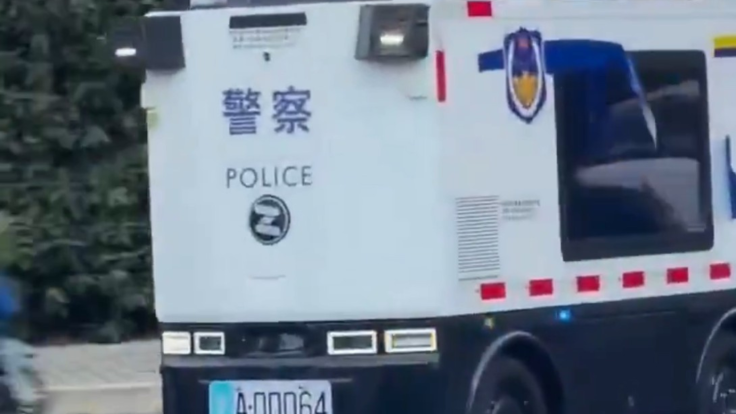
China has expanded its push into automated law-enforcement with the deployment of AI-driven police patrol vehicles capable of operating round-the-clock using facial-recognition technology, panoramic cameras and multi-sensor systems to monitor urban environments.
Verified reports from Chinese state media and international outlets indicate that the initiative marks one of the most advanced real-world applications of autonomous policing technologies anywhere in the world.
According to recent disclosures, the vehicles are equipped with 360-degree cameras, high-precision sensors and real-time video analytics that enable them to identify individuals on security watchlists, detect fraudulent licence plates and flag a range of traffic or public-safety violations. The systems are designed to run autonomously while feeding live data to central command platforms through high-speed 5G networks.
Join our WhatsApp ChannelREAD ALSO : Leaked Documents Reveal Hamas’ Systematic Manipulation of International Aid in Gaza
Not Politics – 5 Nigerian Actors And Their Side Hustles You Never Knew
A major hub for the rollout is Beijing’s Economic-Technological Development Area (BDA), where authorities earlier this year launched what they described as a “next-generation intelligent patrol system.” The initiative includes 18 Level-4 autonomous police vehicles, 15 traditional patrol cars enhanced with AI tools, and robotic patrol dogs integrated into a citywide monitoring network. Chinese state media reports state that the new system “triples efficiency” of conventional patrols while reducing surveillance blind spots.
The vehicles used in the BDA zone are built to operate with minimal human intervention. They feature multi-sensor fusion perception systems, allowing them to scan for abnormal behaviour, fire hazards and evolving security risks. Public-security agencies say the platform is part of a broader national strategy to integrate artificial intelligence, robotics and big-data analytics into urban governance.
China has been testing self-driving police patrol cars on public roads since early 2024, when 15 such vehicles first appeared in Beijing’s autonomous-driving demonstration area. Those vehicles were capable of battery swaps in as little as 30 seconds and had a driving range of about 100 kilometres per charge.
Officials later expanded the national testing framework to include more than 16,000 autonomous-vehicle licences and over 32,000 kilometres of open-test roads across the country.
International reporting on the latest phase highlights growing concern from rights advocates about the implications of continuous biometric surveillance in public spaces. Critics warn that the scale and automation of the system particularly the use of facial recognition raise questions about privacy, data protection, and the potential for misuse in the absence of clear oversight mechanisms.
Chinese authorities, however, frame the deployment as an essential part of “smart city” development, aimed at improving rapid-response capabilities and overall public safety.
While details on the full nationwide rollout remain limited, the December 2025 reports suggest that the AI-based patrol cars are now operating in multiple urban areas, signalling a significant leap toward fully automated policing systems.
Prime Business Africa will continue monitoring developments as China accelerates its adoption of AI-driven security technologies and as global debates intensify over the balance between innovation and civil liberties.

Amanze Chinonye is a Staff Correspondent at Prime Business Africa, a rising star in the literary world, weaving captivating stories that transport readers to the vibrant landscapes of Nigeria and the rest of Africa. With a unique voice that blends with the newspaper's tradition and style, Chinonye's writing is a masterful exploration of the human condition, delving into themes of identity, culture, and social justice. Through her words, Chinonye paints vivid portraits of everyday African life, from the bustling markets of Nigeria's Lagos to the quiet villages of South Africa's countryside . With a keen eye for detail and a deep understanding of the complexities of Nigerian society, Chinonye's writing is both a testament to the country's rich cultural heritage and a powerful call to action for a brighter future. As a writer, Chinonye is a true storyteller, using her dexterity to educate, inspire, and uplift readers around the world.
- Amanze Chinonye
- Amanze Chinonye
- Amanze Chinonye
- Amanze Chinonye
- Amanze Chinonye
- Amanze Chinonye
- Amanze Chinonye
- Amanze Chinonye
- Amanze Chinonye
- Amanze Chinonye
- Amanze Chinonye
- Amanze Chinonye
- Amanze Chinonye
- Amanze Chinonye
- Amanze Chinonye
- Amanze Chinonye
- Amanze Chinonye
- Amanze Chinonye
- Amanze Chinonye
- Amanze Chinonye
- Amanze Chinonye
- Amanze Chinonye
- Amanze Chinonye
- Amanze Chinonye
- Amanze Chinonye
- Amanze Chinonye
- Amanze Chinonye
- Amanze Chinonye
- Amanze Chinonye
- Amanze Chinonye
- Amanze Chinonye
- Amanze Chinonye
- Amanze Chinonye
- Amanze Chinonye
- Amanze Chinonye
- Amanze Chinonye
- Amanze Chinonye
- Amanze Chinonye
- Amanze Chinonye
- Amanze Chinonye
- Amanze Chinonye
- Amanze Chinonye
- Amanze Chinonye
- Amanze Chinonye
- Amanze Chinonye
- Amanze Chinonye
- Amanze Chinonye
- Amanze Chinonye
- Amanze Chinonye
- Amanze Chinonye
- Amanze Chinonye
- Amanze Chinonye
- Amanze Chinonye
- Amanze Chinonye
- Amanze Chinonye
- Amanze Chinonye
- Amanze Chinonye
- Amanze Chinonye
- Amanze Chinonye
- Amanze Chinonye
- Amanze Chinonye
- Amanze Chinonye
- Amanze Chinonye
- Amanze Chinonye
- Amanze Chinonye
- Amanze Chinonye
- Amanze Chinonye
- Amanze Chinonye
- Amanze Chinonye
- Amanze Chinonye
- Amanze Chinonye
- Amanze Chinonye
- Amanze Chinonye
- Amanze Chinonye
- Amanze Chinonye
- Amanze Chinonye
- Amanze Chinonye
- Amanze Chinonye
- Amanze Chinonye
- Amanze Chinonye
- Amanze Chinonye
- Amanze Chinonye
- Amanze Chinonye
- Amanze Chinonye
- Amanze Chinonye
- Amanze Chinonye
- Amanze Chinonye
- Amanze Chinonye
- Amanze Chinonye
- Amanze Chinonye
- Amanze Chinonye
- Amanze Chinonye
- Amanze Chinonye
- Amanze Chinonye
- Amanze Chinonye
- Amanze Chinonye
- Amanze Chinonye
- Amanze Chinonye
- Amanze Chinonye
- Amanze Chinonye
- Amanze Chinonye
- Amanze Chinonye
- Amanze Chinonye
- Amanze Chinonye
- Amanze Chinonye
- Amanze Chinonye
- Amanze Chinonye
- Amanze Chinonye
- Amanze Chinonye
- Amanze Chinonye
- Amanze Chinonye
- Amanze Chinonye
- Amanze Chinonye
- Amanze Chinonye
- Amanze Chinonye
- Amanze Chinonye
- Amanze Chinonye
- Amanze Chinonye
- Amanze Chinonye
- Amanze Chinonye
- Amanze Chinonye
- Amanze Chinonye
- Amanze Chinonye
- Amanze Chinonye
- Amanze Chinonye
- Amanze Chinonye
- Amanze Chinonye
- Amanze Chinonye
- Amanze Chinonye
- Amanze Chinonye
- Amanze Chinonye
- Amanze Chinonye
- Amanze Chinonye
- Amanze Chinonye
- Amanze Chinonye
- Amanze Chinonye
- Amanze Chinonye
- Amanze Chinonye
- Amanze Chinonye
- Amanze Chinonye
- Amanze Chinonye
- Amanze Chinonye
- Amanze Chinonye
- Amanze Chinonye
- Amanze Chinonye
- Amanze Chinonye
- Amanze Chinonye