 Amanze Chinonye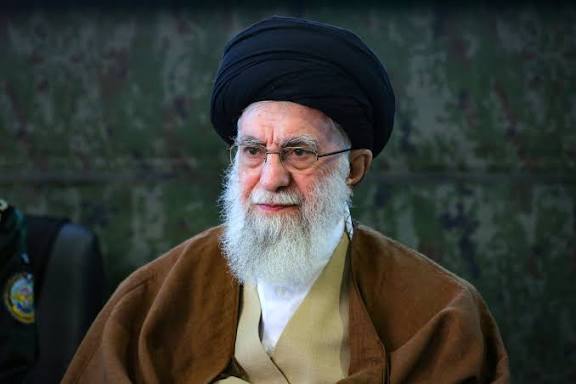
When Ali Khamenei died, Iran faced one of the most consequential moments in its post-revolutionary history.
Serving as Supreme Leader from 1989 until his death, Khamenei had become the most powerful figure in the Islamic Republic, commanding the armed forces, security services, and state institutions.
For nearly four decades, he shaped Iran’s domestic and foreign policies, social norms, and ideological identity.
Join our WhatsApp ChannelHis passing closed a chapter defined by ideological rigidity, regional confrontation, and strict social rules. Understanding the life, beliefs, and policies of Ali Khamenei is essential to understanding modern Iran.
A Life Forged in Revolution
Born on April 19, 1939, in Mashhad, Khamenei grew up in a religious household. He pursued Islamic studies in Qom, where he aligned himself with the revolutionary teachings of Ruhollah Khomeini.
As a young cleric, he was repeatedly imprisoned by the Shah’s security services for his opposition to the monarchy. During the Iranian Revolution, he emerged as a loyal figure within the new order. After the revolution, he became a key member of the Revolutionary Council, served as deputy defence minister, and briefly commanded the Islamic Revolutionary Guard Corps an institution that later grew under his leadership into a cornerstone of Iran’s political and military apparatus.
In 1981, a bombing injured him severely, leaving his right arm permanently disabled. Later that year, he became President of Iran and served until 1989 during the devastating Iran-Iraq War.
Following Khomeini’s death in 1989, Khamenei was selected by the Assembly of Experts to succeed him as Supreme Leader consolidating political and religious authority in his hands.
Rise to Power
Khamenei’s ascent in the new Islamic Republic was swift.
He served as:
- Deputy defence minister
- Member of parliament
- Tehran’s Friday prayer leader
In 1981, amid the turbulence of the revolution’s early years, Khamenei survived an assassination attempt that left his right arm partially paralysed.
That same year he became President of Iran, serving from 1981 to 1989 during the devastating Iran–Iraq War.
Following the death of Ayatollah Khomeini in 1989, Iran’s clerical establishment selected Khamenei as Supreme Leader, the highest authority in the country.
The position placed him above elected institutions, giving him ultimate control over the military, judiciary, state broadcasting, and key aspects of national policy.
Ideology
Khamenei’s worldview was rooted in three central pillars:
- Islamic governance: He supported Velayat-e Faqih, the principle that Islamic jurists must rule society to ensure policies align with Islamic law.
- Resistance to Western influence: Khamenei frequently described Western powers, particularly the United States, as threats to Iran’s sovereignty and Islamic identity.
- Cultural and moral control: He believed that Western culture promoted moral decay and sought to protect Iranian society through strict cultural regulations.
Khamenei’s Views on Women
One of the most scrutinized aspects of Khamenei’s ideology was his stance on women.
He consistently rejected Western notions of feminism, arguing that they reduced women to objects and undermined traditional family structures. Instead, he promoted what he termed an “Islamic model of womanhood,” emphasizing modesty, motherhood, and religious devotion.
Khamenei repeatedly defended compulsory hijab laws, describing them as essential to preserving societal morality. In one widely cited statement, he remarked:
“The issue of hijab is not a minor matter. It protects the dignity and identity of women in Islamic society.”
While he acknowledged that women could participate in education and certain professions, he maintained that their primary role should remain within the family. His policies and public statements on women became a defining feature of his rule, shaping social norms and fueling domestic debates and protests, including the Woman, Life, Freedom movement in 2022 triggered by the death of Mahsa Amini in custody.
READ ALSO : Khamenei’s Death Brings Hope, Instability — EU
CIA-Guided US-Israeli Strikes Killed Khamenei — Report
Books and Intellectual Work
Beyond his political and religious leadership, Khamenei was a prolific writer and translator.
Among the works associated with him were:
- Palestine : a book outlining his views on the Palestinian struggle.
- Celestial Songs : reflections on Islamic spirituality.
- The Future of This Religion : a translation of writings by Sayyid Qutb, the Egyptian Islamist thinker.
- Collections of speeches and essays on Islamic governance, culture, and social values.
His writings frequently blended religious philosophy with political commentary, emphasizing resistance to Western influence and the preservation of Islamic civilization.
These texts were widely circulated within Iran and used to reinforce his ideological vision during his decades in power.
Policies That Defined His Rule
Over the decades, Khamenei oversaw policies that left a lasting impact on modern Iran:
- He expanded the Islamic Revolutionary Guard Corps into a dominant military, political, and economic force.
- He strictly enforced Islamic dress codes and public morality regulations.
- He oversaw the development of Iran’s nuclear program, framing it as essential to national sovereignty.
- He supported regional allied groups, including Hezbollah, to extend Iran’s influence across the Middle East.
- He maintained heavy control over political dissent, protests, and civil society.
- He expanded state surveillance and cyber oversight to monitor communications and information flow.
These policies reflected his vision of Iran as a revolutionary Islamic state, resilient against Western political, cultural, and ideological influence.
Social and Political Rules Under Khamenei
During his rule, Khamenei oversaw the enforcement of strict social and political regulations rooted in conservative interpretations of Islamic law.
These rules shaped public life and reinforced his ideological vision for the Islamic Republic:
- Mandatory hijab for women in all public spaces.
- Segregation of men and women in many educational institutions and social settings.
- Censorship of films, books, and journalism that were deemed un-Islamic.
- Criminal penalties for insulting Islam or clerical authorities.
- Restrictions on protests and public demonstrations without government approval.
- Monitoring of internet activity and digital communications by state authorities.
- Limits on Western cultural influences, including music, fashion, and media.
- Prohibition of alcohol consumption.
- Enforcement of Islamic dress codes for both men and women.
- Gender-based limitations in certain professions and workplaces.
- Tight control of social media platforms and online content.
- Religious oversight of school curricula and educational materials.
- Regulation of public entertainment, including theater, cinema, and art.
- Compulsory religious education in schools.
- Punishment for public dancing or gatherings deemed “immodest.”
- Deployment of morality policing to enforce public behaviour.
- Restrictions on foreign NGOs, cultural organizations, and influences.
- Vetting and approval of political candidates before elections.
- Punishment for participation in unapproved religious or cultural activities.
- Maintenance of sex segregation in schools, universities, and certain workplaces.
These rules became a defining feature of Khamenei’s leadership, reflecting his insistence on social discipline, religious conformity, and political control.
A Controversial Legacy
Supporters regarded Khamenei as the guardian of the Islamic Revolution a leader who preserved Iran’s independence and religious identity in the face of international pressure.
Critics, however, argued that his rule entrenched authoritarian governance, curtailed civil liberties, and imposed strict social controls on everyday life.
Few figures shaped modern Iran as profoundly as he did. Through ideology, policy, and personal authority, Ali Khamenei was not only the Supreme Leader of the Islamic Republic but also the central architect of the country’s political and cultural trajectory for more than a generation, leaving a legacy that continues to influence the nation even after his death.

Amanze Chinonye is a Staff Correspondent at Prime Business Africa, a rising star in the literary world, weaving captivating stories that transport readers to the vibrant landscapes of Nigeria and the rest of Africa. With a unique voice that blends with the newspaper's tradition and style, Chinonye's writing is a masterful exploration of the human condition, delving into themes of identity, culture, and social justice. Through her words, Chinonye paints vivid portraits of everyday African life, from the bustling markets of Nigeria's Lagos to the quiet villages of South Africa's countryside . With a keen eye for detail and a deep understanding of the complexities of Nigerian society, Chinonye's writing is both a testament to the country's rich cultural heritage and a powerful call to action for a brighter future. As a writer, Chinonye is a true storyteller, using her dexterity to educate, inspire, and uplift readers around the world.
- Amanze Chinonye
- Amanze Chinonye
- Amanze Chinonye
- Amanze Chinonye
- Amanze Chinonye
- Amanze Chinonye
- Amanze Chinonye
- Amanze Chinonye
- Amanze Chinonye
- Amanze Chinonye
- Amanze Chinonye
- Amanze Chinonye
- Amanze Chinonye
- Amanze Chinonye
- Amanze Chinonye
- Amanze Chinonye
- Amanze Chinonye
- Amanze Chinonye
- Amanze Chinonye
- Amanze Chinonye
- Amanze Chinonye
- Amanze Chinonye
- Amanze Chinonye
- Amanze Chinonye
- Amanze Chinonye
- Amanze Chinonye
- Amanze Chinonye
- Amanze Chinonye
- Amanze Chinonye
- Amanze Chinonye
- Amanze Chinonye
- Amanze Chinonye
- Amanze Chinonye
- Amanze Chinonye
- Amanze Chinonye
- Amanze Chinonye
- Amanze Chinonye
- Amanze Chinonye
- Amanze Chinonye
- Amanze Chinonye
- Amanze Chinonye
- Amanze Chinonye
- Amanze Chinonye
- Amanze Chinonye
- Amanze Chinonye
- Amanze Chinonye
- Amanze Chinonye
- Amanze Chinonye
- Amanze Chinonye
- Amanze Chinonye
- Amanze Chinonye
- Amanze Chinonye
- Amanze Chinonye
- Amanze Chinonye
- Amanze Chinonye
- Amanze Chinonye
- Amanze Chinonye
- Amanze Chinonye
- Amanze Chinonye
- Amanze Chinonye
- Amanze Chinonye
- Amanze Chinonye
- Amanze Chinonye
- Amanze Chinonye
- Amanze Chinonye
- Amanze Chinonye
- Amanze Chinonye
- Amanze Chinonye
- Amanze Chinonye
- Amanze Chinonye
- Amanze Chinonye
- Amanze Chinonye
- Amanze Chinonye
- Amanze Chinonye
- Amanze Chinonye
- Amanze Chinonye
- Amanze Chinonye
- Amanze Chinonye
- Amanze Chinonye
- Amanze Chinonye
- Amanze Chinonye
- Amanze Chinonye
- Amanze Chinonye
- Amanze Chinonye
- Amanze Chinonye
- Amanze Chinonye
- Amanze Chinonye
- Amanze Chinonye
- Amanze Chinonye
- Amanze Chinonye
- Amanze Chinonye
- Amanze Chinonye
- Amanze Chinonye
- Amanze Chinonye
- Amanze Chinonye
- Amanze Chinonye
- Amanze Chinonye
- Amanze Chinonye
- Amanze Chinonye
- Amanze Chinonye
- Amanze Chinonye
- Amanze Chinonye
- Amanze Chinonye
- Amanze Chinonye
- Amanze Chinonye
- Amanze Chinonye
- Amanze Chinonye
- Amanze Chinonye
- Amanze Chinonye
- Amanze Chinonye
- Amanze Chinonye
- Amanze Chinonye
- Amanze Chinonye
- Amanze Chinonye
- Amanze Chinonye
- Amanze Chinonye
- Amanze Chinonye
- Amanze Chinonye
- Amanze Chinonye
- Amanze Chinonye
- Amanze Chinonye
- Amanze Chinonye
- Amanze Chinonye
- Amanze Chinonye
- Amanze Chinonye
- Amanze Chinonye
- Amanze Chinonye
- Amanze Chinonye
- Amanze Chinonye
- Amanze Chinonye
- Amanze Chinonye
- Amanze Chinonye
- Amanze Chinonye
- Amanze Chinonye
- Amanze Chinonye
- Amanze Chinonye
- Amanze Chinonye
- Amanze Chinonye
- Amanze Chinonye
- Amanze Chinonye
- Amanze Chinonye
- Amanze Chinonye