Admin
Admin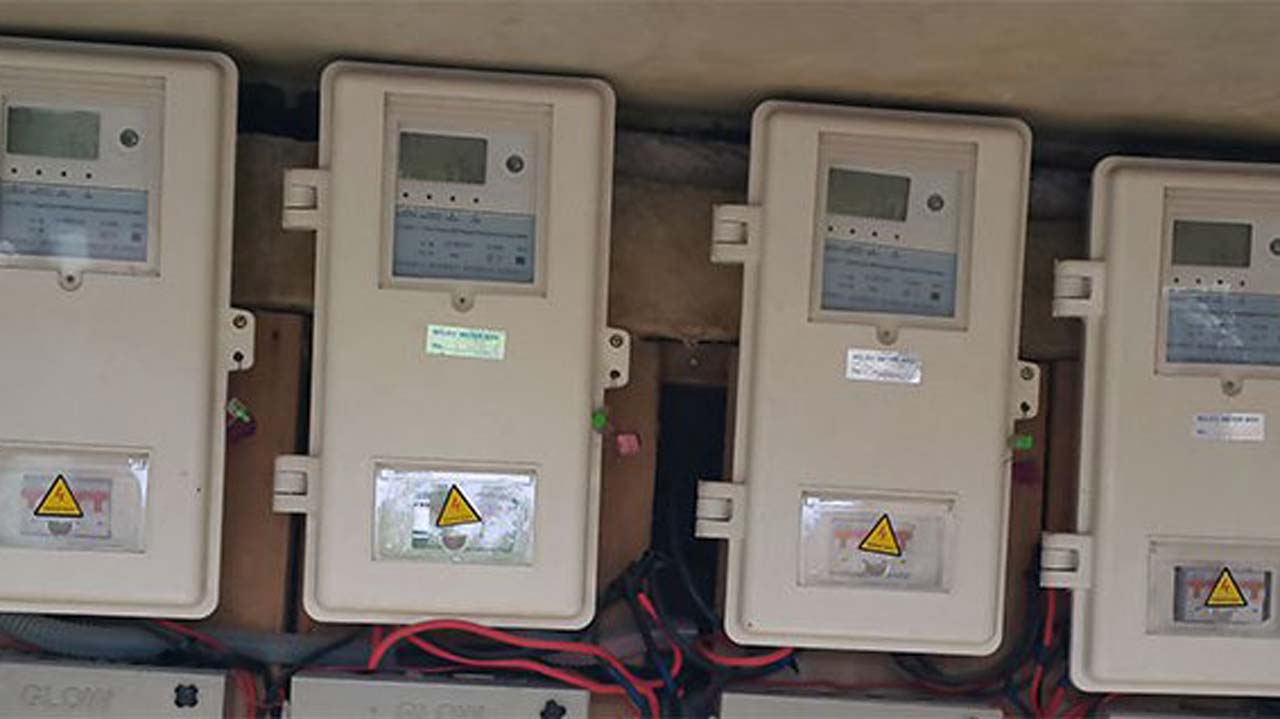
By Emmanuel Nnadozie Onwubiko
One of the subsectors of the national economy that the president Bola Ahmed Tinubu’s government has failed to revive from its hitherto moribund status is the electricity power.
Nigeria has had energy poverty as one of the severest challenges tearing apart the Prosperity of millions of Nigerians for decades. Electricity poverty is one of the causes of underdevelopment in Nigeria.
Join our WhatsApp ChannelPresident Tinubu promised during his presidential campaign to deliver uninterrupted electricity supply to Nigerians within the first two years after his inauguration. He has failed spectacularly to achieve that and infact consumers of electricity are now scammed of their hard earned money by way of the imposition of the exploitative BAND A, BAND B and BAND C classification of consumers.
The lack of electricity power for over 80 percent of Nigerians is one of the causes of multidimensional poverty in Nigeria.
The lack of affordable and regular electricity power supply to homes, offices and businesses have precipitated the collapse of millions of small and medium enterprises and have churned out millions of unemployed Nigerians.
By estimates from different experts and global finance institutions like World bank, there are over 130 million multidimensionally poor households in the present day Nigeria. This figures demonstrate the massive poverty situation facing Nigerians.
One of the immediate and fundamental cause of this persistent poor electricity supply to Nigerians is poor governance structures, corruption and bureaucratic bottlenecks in government.
One of the solutions suggested and implemented by the Nigerian state is the privatisation of the Electricity power sector which was one of the tasks that the Bureau of Privatisation and commercialisation was burdened to actualise as its mandate and this was done around 2014/2015.
The electricity power distribution and generation were decentralised and sold to private companies even as the business of dustribution was awarded to private companies set up mostly by stooges of politicians. Transmission was left for government managed by Transmision company of Nigeria.
The electricity distribution companies are identified as DISCOS and since they took over the task, the managers have been dancing discos (disco in everyday language means clubbing) and have never focused on achieving efficiency.
However, since this so-called privatisation of electricity power distribution kick-started, it has been one story of corruption to the other and this hasn’t abated.
Successive administrations claimed over $50 billion investments into improving the capacity of Nigeria to generate, transmit and distribute electricity but my suspicion is that the ministry of power is a conduit for corruption by government officials and politicians. So, Nigeria can’t even boost of generating over 5, 000 megawatts of electricity whereas South Africa has over 50, 000 Megawatts which means whereas South Africans enjoy 24/7 electricity supply, households and companies in Nigeria stay in perpetual darkness even when they pay massive bills, they don’t get services for their ha4d earned money.
As aforementioned, the Transmission company of Nigeria remains a cesspool of corruption and a theatre of managerial inefficiency sustained by the federal government.
Also, ministers of Power, since 2014, have been persons devoted to working for themselves and to elevate their political profile rather than render selfless services to Nigerian electricity consumers.
Several past ministers of power are facing criminal charges of heists of billions of dollars belonging to Nigerians and if you look at the cases against them by the EFCC, it would become clear why we suffer perennial darkness even whilst governments claim that they are investing our commonwealth to improve electricity generation, transmission and distribution.
The current minister of power is not different. He has focused all his attention towards running for the office of governor of Oyo state and he left electricity consumers to be ON YOUR OWN(OYO).
The experiences of cruel maltreatment from the heartless distributors of electricity that citizens are subjected to by the private companies running the electricity power distribution system is none of his business of the Federal minister of power. Minister of power powers the mistreatment of electricity consumers by the shylock electricity suppliers.
The ministers of power since 2015 have behaved like representatives of the private electricity distributors and generation companies inside of the government of the day.
A report in one of Nigeria’s newspapers graphically tells the story of the state of electricity supply in Nigeria since after the so-called privatisation programme was achieved.
The inability of the privatised power sector to meet the demands of electricity users nationwide is causing pain and anger among power consumers, as they express disgust over the privatisation exercise.
Many industries, small businesses, companies, among others, have collapsed as a result of the poor supply of electricity in Nigeria. This is despite the privatisation of the successor power generation and distribution companies in November 2013.
Nigeria’s power firms generate and supply between 3,500 megawatts and 5,500MW of electricity to over 200 million citizens across the country. On December 28, 2023, for instance, power generation on the national grid was 4,690.07MW. The National Grid has constantly collapsed thus throwing Nigeria into absolute darkness and providing businesses for sellers of generators who are making a kill from Nigerians. It’s like a vicious circle.
This poor level of power supply is seen as worrisome by various electricity consumer groups, as they stress that the privatisation has not impacted positively on the sector.
“We cannot feel the impact of that privatisation because we still have darkness in many parts of Nigeria,” the President, Nigeria Consumer Protection Network, who served in the National Technical Investigative Panel on Power System Collapses/System Stability and Reliability (June 2013), Kunle Olubiyo, said.
The power sector privatisation was an initiative of the Federal Government to transfer ownership and management of power assets to private entities. It aimed to improve efficiency, attract investments, and enhance overall electricity supply.
The process started in 2013, with the sale of distribution and generation companies. However, challenges like regulatory issues and infrastructure constraints have impacted negatively on the desired outcomes.
A total of 11 electricity distribution companies and six generation companies were formed after the sector was privatised in November 2013. The power distributors include Abuja, Benin, Eko, Enugu, Ibadan, Ikeja, Jos, Kaduna, Kano, Port Harcourt, and Yola Discos.
Some of the generation companies include Transcorp Power Limited, Shiroro Hydroelectric Power Station, Sapele Power Plc, Ughelli Power Plc, Geregu Power Plc, and Kainji Hydroelectric Power Station.
About $2.5bn was the total amount earned by the Federal Government from the entire first phase of privatisation in 2013, involving both the generation companies and distribution companies.
While earnings from the privatisation, through the sale of stakes and concessioning of six of the generation companies, garnered about $1.269bn (N460.7bn) for the government, data for individual Disco sales could not be readily accessed, but the total for all 11 Discos is included in the $2.5bn figure.
“It is important to note that due to the absence of cost-reflective tariffs across all Discos, the government incurred a subsidy obligation of N204.59bn in 2023/Q3 (average of N68.20bn per month), which is an increase of N69.37bn (+51.3 per cent).
Government unfortunately supports the private owners of privatised electricity power companies in their inordinate quest for increased tariff regime which inevitably means that millions of households can’t afford to remain connected to these channels of electricity due to poverty that afflicts over 70 percent of Nigerians even by the estimates of global finance institutions like World Bank.
The National Electricity Regulatory Commission then authorised the so-called costs reflective tariffs but ever since this was actually implemented with the coming of the current administration, Nigerians pay for darkness especially those categorised as Band A that must buy recharge cards without any transparent way of knowing how these ‘419 recharge cards’ loaded into their metres are calculated by the distrubuting companies who make a kill whilst consumers wallow in darkness and exploitative tarriffs.
Besides, the federal government agency which is the National Electricity Regulatory Commission argued as follows as published on its website: “Service-Based Tariff (SBT) is a scheme introduced by the Commission on the 1st of November 2020 to improve service delivery to end-user Customers and ensure that electricity tariffs paid by end-user Customers are a reflection of the services delivered by the Distribution Companies based on the number of hours of electricity supply per day. The regulatory scheme is also designed to support investments towards the improvement of power infrastructure and consequently improvement in quality of supply.
Under the SBT, consumers are classified in Bands A to E as follows:
Band A: Minimum of 20 Hours
Band B: Minimum of 16 Hours
Band C: Minimum of 12 Hours
Band D: Minimum of 8 Hours
Band E: Minimum of 4 Hours
How do I know my electricity tariff?
Your electricity tariff is indicated on your electricity bills issued by the DisCo or electricity vending receipts for customers on prepaid meters.
The quality of supply in my area is not in accordance with the minimum number of hours of service stipulated in the service-based tariff. What will the Commission do about this?
The Commission has made requisite provisions in the SBT order to ensure that customers enjoy supply in accordance with their service bands. Where there is failure by the DisCo to deliver on the approved minimum hours of supply, the performance of the DisCo will be evaluated over a period of 60 days. Upon verification by the Commission, the rates payable by all customers in that cluster (area) will be adjusted in line with the quality of service delivered over the period.”
This isn’t done because Abuja electricity company has persistently failed to keep to the requirement of the number of hours of electricity that they must provide to consumers. NERC must wake up from institutional slumber and protect consumers.
The truth is that these private electricity supply companies owed majorly by friends of top government officials, have since the coming of President Tinubu, being licensed to fleece Nigerians anyhow they so desired and going by very ineffective remedial mechanisms by NERC or National Electricity Regulatory Commission, Nigerian on these strange categorisation of Band A most especially, are constantly scammed just as the tariff paid by these Nigerians are at best voodoo since they don’t ever get 20 hours of regular power supply as expected, yet they are categorised as Band A.
The other side of the government’s sanctioned scam especially by the private electricity supply company in Abuja is that, once you buy a recharge card of say N50,000 and then switch off all heavy power consuming household equipment such as deep freezers for almost 18 hours out of the 24 hours, the N50,000 recharge constantly gets drained just as within 6 days, it would run out.
The question is who is milking Nigerians on Band A dry? Why is the company in Abuja responsible for electricity power distribution and supply not being subjected to the principles of accountability and transparency? Why is NERC in existence when it can’t protect electricity consumers who are being scammed by private actors in the electricity supply chain? Why this voodoo tariff scheme and why is nothing being done to provide redress to Nigerians who are being scammed?
I suggest that electricity consumers should form associations to defend their collective interest and they should experiment with going to court for redress in as much as the justice sector of Nigeria has become cash and carry, but a few of the judges, are men and women of good consciences.
So, I say to oppressed electricity consumers in the FCT to GO TO COURT.
EMMANUEL NNADOZIE ONWUBIKO is the founder of the HUMAN RIGHTS WRITERS ASSOCIATION OF NIGERIA and was NATIONAL COMMISSIONER OF THE NATIONAL HUMAN RIGHTS COMMISSION OF NIGERIA.

Amanze Chinonye is a Staff Correspondent at Prime Business Africa, a rising star in the literary world, weaving captivating stories that transport readers to the vibrant landscapes of Nigeria and the rest of Africa. With a unique voice that blends with the newspaper's tradition and style, Chinonye's writing is a masterful exploration of the human condition, delving into themes of identity, culture, and social justice. Through her words, Chinonye paints vivid portraits of everyday African life, from the bustling markets of Nigeria's Lagos to the quiet villages of South Africa's countryside . With a keen eye for detail and a deep understanding of the complexities of Nigerian society, Chinonye's writing is both a testament to the country's rich cultural heritage and a powerful call to action for a brighter future. As a writer, Chinonye is a true storyteller, using her dexterity to educate, inspire, and uplift readers around the world.
- Amanze Chinonye
- Amanze Chinonye
- Amanze Chinonye
- Amanze Chinonye
- Amanze Chinonye
- Amanze Chinonye
- Amanze Chinonye
- Amanze Chinonye
- Amanze Chinonye
- Amanze Chinonye
- Amanze Chinonye
- Amanze Chinonye
- Amanze Chinonye
- Amanze Chinonye
- Amanze Chinonye
- Amanze Chinonye
- Amanze Chinonye
- Amanze Chinonye
- Amanze Chinonye
- Amanze Chinonye
- Amanze Chinonye
- Amanze Chinonye
- Amanze Chinonye
- Amanze Chinonye
- Amanze Chinonye
- Amanze Chinonye
- Amanze Chinonye
- Amanze Chinonye
- Amanze Chinonye
- Amanze Chinonye
- Amanze Chinonye
- Amanze Chinonye
- Amanze Chinonye
- Amanze Chinonye
- Amanze Chinonye
- Amanze Chinonye
- Amanze Chinonye
- Amanze Chinonye
- Amanze Chinonye
- Amanze Chinonye
- Amanze Chinonye
- Amanze Chinonye
- Amanze Chinonye
- Amanze Chinonye
- Amanze Chinonye
- Amanze Chinonye
- Amanze Chinonye
- Amanze Chinonye
- Amanze Chinonye
- Amanze Chinonye
- Amanze Chinonye
- Amanze Chinonye
- Amanze Chinonye
- Amanze Chinonye
- Amanze Chinonye
- Amanze Chinonye
- Amanze Chinonye
- Amanze Chinonye
- Amanze Chinonye
- Amanze Chinonye
- Amanze Chinonye
- Amanze Chinonye
- Amanze Chinonye
- Amanze Chinonye
- Amanze Chinonye
- Amanze Chinonye
- Amanze Chinonye
- Amanze Chinonye
- Amanze Chinonye
- Amanze Chinonye
- Amanze Chinonye
- Amanze Chinonye
- Amanze Chinonye
- Amanze Chinonye
- Amanze Chinonye
- Amanze Chinonye
- Amanze Chinonye
- Amanze Chinonye
- Amanze Chinonye
- Amanze Chinonye
- Amanze Chinonye
- Amanze Chinonye
- Amanze Chinonye
- Amanze Chinonye
- Amanze Chinonye
- Amanze Chinonye
- Amanze Chinonye
- Amanze Chinonye
- Amanze Chinonye
- Amanze Chinonye
- Amanze Chinonye
- Amanze Chinonye
- Amanze Chinonye
- Amanze Chinonye
- Amanze Chinonye
- Amanze Chinonye
- Amanze Chinonye
- Amanze Chinonye
- Amanze Chinonye
- Amanze Chinonye
- Amanze Chinonye
- Amanze Chinonye
- Amanze Chinonye
- Amanze Chinonye
- Amanze Chinonye
- Amanze Chinonye
- Amanze Chinonye
- Amanze Chinonye
- Amanze Chinonye
- Amanze Chinonye
- Amanze Chinonye
- Amanze Chinonye
- Amanze Chinonye
- Amanze Chinonye
- Amanze Chinonye
- Amanze Chinonye
- Amanze Chinonye
- Amanze Chinonye
- Amanze Chinonye
- Amanze Chinonye
- Amanze Chinonye
- Amanze Chinonye
- Amanze Chinonye
- Amanze Chinonye
- Amanze Chinonye
- Amanze Chinonye
- Amanze Chinonye
- Amanze Chinonye
- Amanze Chinonye
- Amanze Chinonye
- Amanze Chinonye
- Amanze Chinonye
- Amanze Chinonye
- Amanze Chinonye
- Amanze Chinonye
- Amanze Chinonye
- Amanze Chinonye
- Amanze Chinonye
- Amanze Chinonye
- Amanze Chinonye