 Amanze Chinonye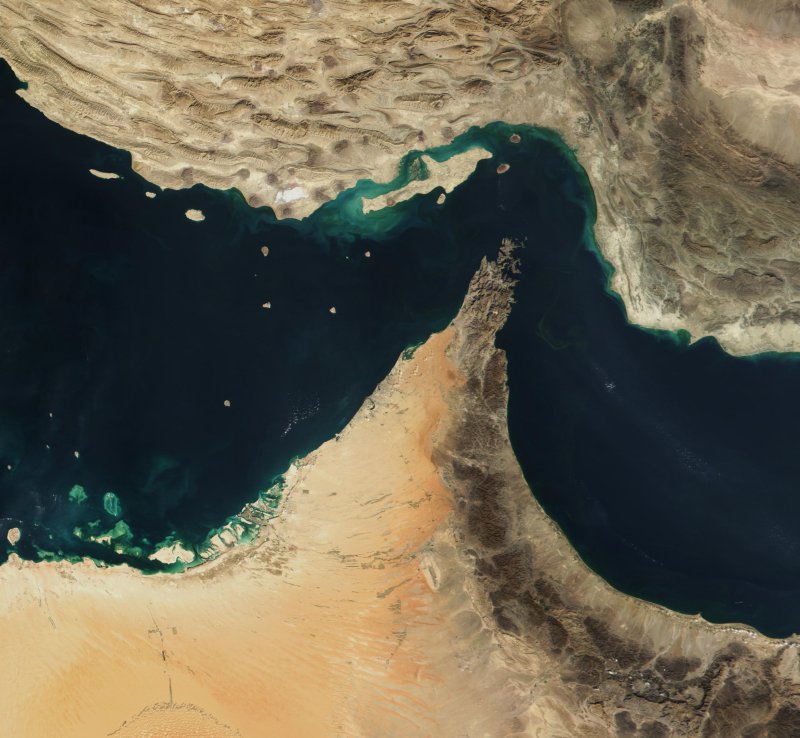
Traffic through the Strait of Hormuz the narrow, strategically vital waterway linking the Persian Gulf to the Gulf of Oman has slowed sharply amid escalating regional tensions, threatening one of the world’s most critical energy arteries.
The passage carries roughly a fifth of global oil and liquefied natural gas flows, making it central to global energy security.
Energy markets are already pricing in significant disruption. J.P. Morgan estimates that in a prolonged closure, losses could escalate to 3.8 million barrels per day by around day 15 and reach 4.7 million barrels per day by day 18. Such reductions would materially tighten global supply and intensify price volatility.
Join our WhatsApp ChannelThe strain is immediate for producers. Two Iraqi oil officials told Reuters that Iraq would be forced to cut oil production by more than 3 million barrels per day within days if tankers cannot move freely through the Strait and access export terminals.
Amid the disruption, China the largest buyer of Iranian crude has called for de-escalation and the restoration of safe navigation. Beijing’s economic exposure is substantial: China purchases the majority of Iran’s seaborne oil exports under a long-term strategic cooperation framework valued at roughly $400 billion over 25 years.
READ ALSO : Iran Strikes Gulf Oil Facilities, Putting Global Markets on Edge
However, according to analyst Shanaka Anslem, the core mechanism constraining traffic is not a formal sovereign decree from Iran but the withdrawal of war-risk and reinsurance capacity from London-based markets. He argues that while China may hold significant leverage over Tehran, it has “zero leverage” over global marine insurers, particularly the London market including Lloyd’s of London.
Anslem contends that several insurance and reinsurance firms backing protection and indemnity (P&I) clubs which collectively cover the vast majority of global shipping tonnage have withdrawn or sharply repriced Gulf war-risk cover.
Without active insurance, most commercial tanker operators cannot legally or financially transit the waterway, effectively producing a de facto closure.
“Iran did not order those firms to withdraw. Iran cannot order them to reinstate. Neither can China,” Anslem argues, adding that even a political stand-down by Tehran would not immediately restore coverage.
Reinstatement would require recalibrated risk models, voyage-by-voyage re-underwriting, repriced treaty capacity and a demonstrably reduced threat environment processes driven by actuarial assessment rather than diplomatic assurances.
His assessment underscores a structural constraint: while geopolitical pressure may influence state behaviour, the operational reopening of the Strait depends heavily on private-sector risk calculations. Insurers, not governments, ultimately determine whether tankers are covered to sail.
Oil prices have surged, freight rates have climbed and refiners including in China have begun adjusting operations in response to tightening supply.
The unfolding crisis illustrates how the stability of the world’s most important maritime chokepoint now hinges not only on diplomacy and military posture, but also on whether insurers judge the risk environment quantifiable and insurable.

Amanze Chinonye is a Staff Correspondent at Prime Business Africa, a rising star in the literary world, weaving captivating stories that transport readers to the vibrant landscapes of Nigeria and the rest of Africa. With a unique voice that blends with the newspaper's tradition and style, Chinonye's writing is a masterful exploration of the human condition, delving into themes of identity, culture, and social justice. Through her words, Chinonye paints vivid portraits of everyday African life, from the bustling markets of Nigeria's Lagos to the quiet villages of South Africa's countryside . With a keen eye for detail and a deep understanding of the complexities of Nigerian society, Chinonye's writing is both a testament to the country's rich cultural heritage and a powerful call to action for a brighter future. As a writer, Chinonye is a true storyteller, using her dexterity to educate, inspire, and uplift readers around the world.
- Amanze Chinonye
- Amanze Chinonye
- Amanze Chinonye
- Amanze Chinonye
- Amanze Chinonye
- Amanze Chinonye
- Amanze Chinonye
- Amanze Chinonye
- Amanze Chinonye
- Amanze Chinonye
- Amanze Chinonye
- Amanze Chinonye
- Amanze Chinonye
- Amanze Chinonye
- Amanze Chinonye
- Amanze Chinonye
- Amanze Chinonye
- Amanze Chinonye
- Amanze Chinonye
- Amanze Chinonye
- Amanze Chinonye
- Amanze Chinonye
- Amanze Chinonye
- Amanze Chinonye
- Amanze Chinonye
- Amanze Chinonye
- Amanze Chinonye
- Amanze Chinonye
- Amanze Chinonye
- Amanze Chinonye
- Amanze Chinonye
- Amanze Chinonye
- Amanze Chinonye
- Amanze Chinonye
- Amanze Chinonye
- Amanze Chinonye
- Amanze Chinonye
- Amanze Chinonye
- Amanze Chinonye
- Amanze Chinonye
- Amanze Chinonye
- Amanze Chinonye
- Amanze Chinonye
- Amanze Chinonye
- Amanze Chinonye
- Amanze Chinonye
- Amanze Chinonye
- Amanze Chinonye
- Amanze Chinonye
- Amanze Chinonye
- Amanze Chinonye
- Amanze Chinonye
- Amanze Chinonye
- Amanze Chinonye
- Amanze Chinonye
- Amanze Chinonye
- Amanze Chinonye
- Amanze Chinonye
- Amanze Chinonye
- Amanze Chinonye
- Amanze Chinonye
- Amanze Chinonye
- Amanze Chinonye
- Amanze Chinonye
- Amanze Chinonye
- Amanze Chinonye
- Amanze Chinonye
- Amanze Chinonye
- Amanze Chinonye
- Amanze Chinonye
- Amanze Chinonye
- Amanze Chinonye
- Amanze Chinonye
- Amanze Chinonye
- Amanze Chinonye
- Amanze Chinonye
- Amanze Chinonye
- Amanze Chinonye
- Amanze Chinonye
- Amanze Chinonye
- Amanze Chinonye
- Amanze Chinonye
- Amanze Chinonye
- Amanze Chinonye
- Amanze Chinonye
- Amanze Chinonye
- Amanze Chinonye
- Amanze Chinonye
- Amanze Chinonye
- Amanze Chinonye
- Amanze Chinonye
- Amanze Chinonye
- Amanze Chinonye
- Amanze Chinonye
- Amanze Chinonye
- Amanze Chinonye
- Amanze Chinonye
- Amanze Chinonye
- Amanze Chinonye
- Amanze Chinonye
- Amanze Chinonye
- Amanze Chinonye
- Amanze Chinonye
- Amanze Chinonye
- Amanze Chinonye
- Amanze Chinonye
- Amanze Chinonye
- Amanze Chinonye
- Amanze Chinonye
- Amanze Chinonye
- Amanze Chinonye
- Amanze Chinonye
- Amanze Chinonye
- Amanze Chinonye
- Amanze Chinonye
- Amanze Chinonye
- Amanze Chinonye
- Amanze Chinonye
- Amanze Chinonye
- Amanze Chinonye
- Amanze Chinonye
- Amanze Chinonye
- Amanze Chinonye
- Amanze Chinonye
- Amanze Chinonye
- Amanze Chinonye
- Amanze Chinonye
- Amanze Chinonye
- Amanze Chinonye
- Amanze Chinonye
- Amanze Chinonye
- Amanze Chinonye
- Amanze Chinonye
- Amanze Chinonye
- Amanze Chinonye
- Amanze Chinonye
- Amanze Chinonye
- Amanze Chinonye
- Amanze Chinonye
- Amanze Chinonye
- Amanze Chinonye