 Amanze Chinonye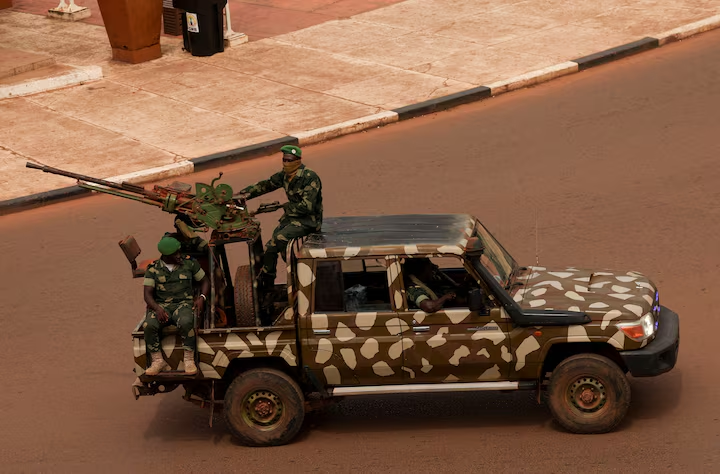
Guinea-Bissau’s military has seized power in a swift and coordinated coup, deposing President Umaro Sissoco Embaló, suspending the country’s electoral process and swearing in General Horta Inta-A Na Man as transitional head of state.
Heavy gunfire erupted across Bissau late Wednesday around the presidential palace, the national electoral-commission headquarters and the interior-ministry complex, sending residents fleeing indoors as soldiers took control of major state institutions.
By dawn, a group of senior officers identifying themselves as the High Military Command for the Restoration of National Security and Public Order appeared on state television, announcing that they had assumed full authority, shuttered land, sea and air borders, imposed a nationwide curfew and suspended all political activities.
Join our WhatsApp ChannelREAD ALSO : Doumbouya Enters Guinea’s Presidential Race as New Constitution Clears Path
President Embaló was arrested and taken into custody at the military general staff headquarters, hours before the electoral commission was expected to release provisional results from the weekend’s presidential election.
Both Embaló and opposition frontrunner Fernando Dias had claimed early victory, heightening tensions as the announcement approached. The military also detained several senior officials, including the head of the electoral commission, opposition figures and a former prime minister.
On Thursday morning, the junta swore in General Horta Inta-A Na Man as transitional president during a ceremony broadcast nationwide. The military said the transition would last one year, though it has not provided a clear timetable for elections or a return to civilian rule.
In its justification, the junta claimed it acted to prevent what it described as a plot involving politicians, drug traffickers and foreign actors to manipulate the vote and destabilise the country, although no evidence of such a plot has been made public.
The coup has drawn sharp condemnation from ECOWAS, the African Union and international observer missions, which demanded the release of detained political figures and the restoration of constitutional order. The sudden border closures left several foreign dignitaries and election observers stranded in the capital.
The development marks yet another episode in Guinea-Bissau’s long history of political instability, marked by frequent coups, attempted coups and deep-seated military involvement in governance.
Businesses, banks and public offices in Bissau remained closed Thursday as heavily armed soldiers patrolled the streets. With the election process suspended, the fate of votes cast over the weekend remains uncertain, and there is no clarity on whether results will ever be released.
As the junta consolidates control, international pressure is expected to intensify for a credible transition plan, but for now the country enters another uncertain period under military rule, its democratic future once again in limbo.

Amanze Chinonye is a Staff Correspondent at Prime Business Africa, a rising star in the literary world, weaving captivating stories that transport readers to the vibrant landscapes of Nigeria and the rest of Africa. With a unique voice that blends with the newspaper's tradition and style, Chinonye's writing is a masterful exploration of the human condition, delving into themes of identity, culture, and social justice. Through her words, Chinonye paints vivid portraits of everyday African life, from the bustling markets of Nigeria's Lagos to the quiet villages of South Africa's countryside . With a keen eye for detail and a deep understanding of the complexities of Nigerian society, Chinonye's writing is both a testament to the country's rich cultural heritage and a powerful call to action for a brighter future. As a writer, Chinonye is a true storyteller, using her dexterity to educate, inspire, and uplift readers around the world.