 Amanze Chinonye
A heated exchange has erupted on social media over comparisons between Nigeria and Venezuela, following a public disagreement between former presidential aide Bashir Ahmad and international activist Elias Gerasolius.
The debate began after Ahmad argued that Nigeria cannot be likened to Venezuela under any circumstance, citing fundamental differences in their political systems, institutions and geopolitical positioning. He maintained that attempts to draw parallels between both countries ignore the realities of international politics and global power relations.
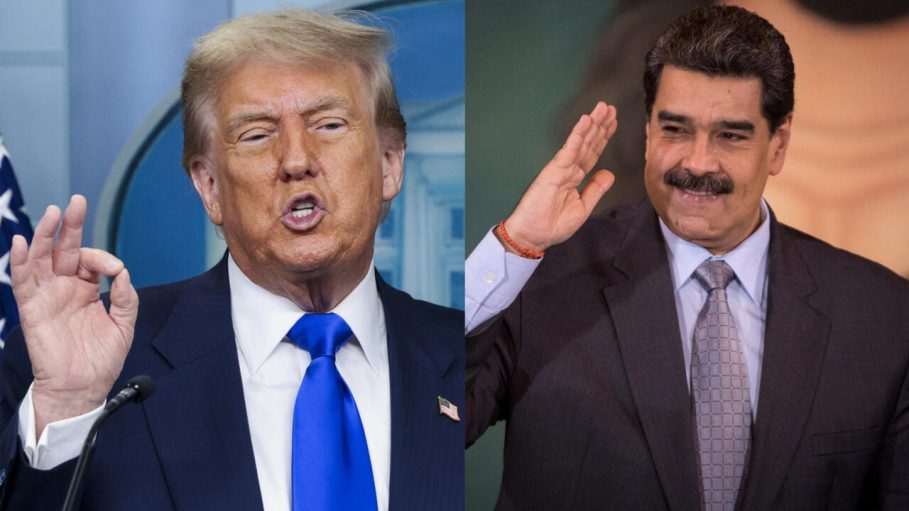
Gerasolius, who identifies himself as an international freedom fighter, countered the claim by asserting that Nigeria’s situation is more troubling than Venezuela’s. He argued that the United States could, in theory, take decisive action against Nigeria’s leadership similar to its recent handling of Venezuelan President Nicolás Maduro, whom Washington took into custody.
Join our WhatsApp ChannelREAD ALSO : ‘Hegemonic Acts’: China Blasts U.S. Over Maduro’s Capture
Ahmad dismissed the argument as a flawed interpretation of global diplomacy, stressing that Nigeria’s strategic alliances and international standing make such scenarios unrealistic. He urged a broader analysis of international relations rather than what he described as emotionally driven comparisons.
The exchange intensified when Gerasolius doubled down on his position, making sweeping and controversial allegations against Nigeria’s leadership while portraying Venezuela’s crisis as comparatively less severe. His remarks sparked sharp reactions online, drawing both condemnation and support from different segments of the public.
The back-and-forth has since triggered wider conversations on Nigeria’s governance, international image and diplomatic leverage.
While Venezuela has endured years of sanctions, diplomatic isolation and open confrontation with the United States, analysts point out that Nigeria continues to maintain strong strategic ties with Western powers, particularly in the areas of security cooperation, energy supply and regional stability.
Observers say the exchange underscores growing public frustration and political polarisation, as debates over leadership performance increasingly spill onto global platforms, reflecting deeper anxieties about Nigeria’s role in the shifting international order.

Amanze Chinonye is a Staff Correspondent at Prime Business Africa, a rising star in the literary world, weaving captivating stories that transport readers to the vibrant landscapes of Nigeria and the rest of Africa. With a unique voice that blends with the newspaper's tradition and style, Chinonye's writing is a masterful exploration of the human condition, delving into themes of identity, culture, and social justice. Through her words, Chinonye paints vivid portraits of everyday African life, from the bustling markets of Nigeria's Lagos to the quiet villages of South Africa's countryside . With a keen eye for detail and a deep understanding of the complexities of Nigerian society, Chinonye's writing is both a testament to the country's rich cultural heritage and a powerful call to action for a brighter future. As a writer, Chinonye is a true storyteller, using her dexterity to educate, inspire, and uplift readers around the world.
- Amanze Chinonye
- Amanze Chinonye
- Amanze Chinonye
- Amanze Chinonye
- Amanze Chinonye
- Amanze Chinonye
- Amanze Chinonye
- Amanze Chinonye
- Amanze Chinonye
- Amanze Chinonye
- Amanze Chinonye
- Amanze Chinonye
- Amanze Chinonye
- Amanze Chinonye
- Amanze Chinonye
- Amanze Chinonye
- Amanze Chinonye
- Amanze Chinonye
- Amanze Chinonye
- Amanze Chinonye
- Amanze Chinonye
- Amanze Chinonye
- Amanze Chinonye
- Amanze Chinonye
- Amanze Chinonye
- Amanze Chinonye
- Amanze Chinonye
- Amanze Chinonye
- Amanze Chinonye
- Amanze Chinonye
- Amanze Chinonye
- Amanze Chinonye
- Amanze Chinonye
- Amanze Chinonye
- Amanze Chinonye
- Amanze Chinonye
- Amanze Chinonye
- Amanze Chinonye
- Amanze Chinonye
- Amanze Chinonye
- Amanze Chinonye
- Amanze Chinonye
- Amanze Chinonye
- Amanze Chinonye
- Amanze Chinonye
- Amanze Chinonye
- Amanze Chinonye
- Amanze Chinonye
- Amanze Chinonye
- Amanze Chinonye
- Amanze Chinonye
- Amanze Chinonye
- Amanze Chinonye
- Amanze Chinonye
- Amanze Chinonye
- Amanze Chinonye
- Amanze Chinonye
- Amanze Chinonye
- Amanze Chinonye
- Amanze Chinonye
- Amanze Chinonye
- Amanze Chinonye
- Amanze Chinonye
- Amanze Chinonye
- Amanze Chinonye
- Amanze Chinonye
- Amanze Chinonye
- Amanze Chinonye
- Amanze Chinonye
- Amanze Chinonye
- Amanze Chinonye
- Amanze Chinonye
- Amanze Chinonye
- Amanze Chinonye
- Amanze Chinonye
- Amanze Chinonye
- Amanze Chinonye
- Amanze Chinonye
- Amanze Chinonye
- Amanze Chinonye
- Amanze Chinonye
- Amanze Chinonye
- Amanze Chinonye
- Amanze Chinonye
- Amanze Chinonye
- Amanze Chinonye
- Amanze Chinonye
- Amanze Chinonye
- Amanze Chinonye
- Amanze Chinonye
- Amanze Chinonye
- Amanze Chinonye
- Amanze Chinonye
- Amanze Chinonye
- Amanze Chinonye
- Amanze Chinonye
- Amanze Chinonye
- Amanze Chinonye
- Amanze Chinonye
- Amanze Chinonye
- Amanze Chinonye
- Amanze Chinonye
- Amanze Chinonye
- Amanze Chinonye
- Amanze Chinonye
- Amanze Chinonye
- Amanze Chinonye
- Amanze Chinonye
- Amanze Chinonye
- Amanze Chinonye
- Amanze Chinonye
- Amanze Chinonye
- Amanze Chinonye
- Amanze Chinonye
- Amanze Chinonye
- Amanze Chinonye
- Amanze Chinonye
- Amanze Chinonye
- Amanze Chinonye
- Amanze Chinonye
- Amanze Chinonye
- Amanze Chinonye
- Amanze Chinonye
- Amanze Chinonye
- Amanze Chinonye