 Amanze Chinonye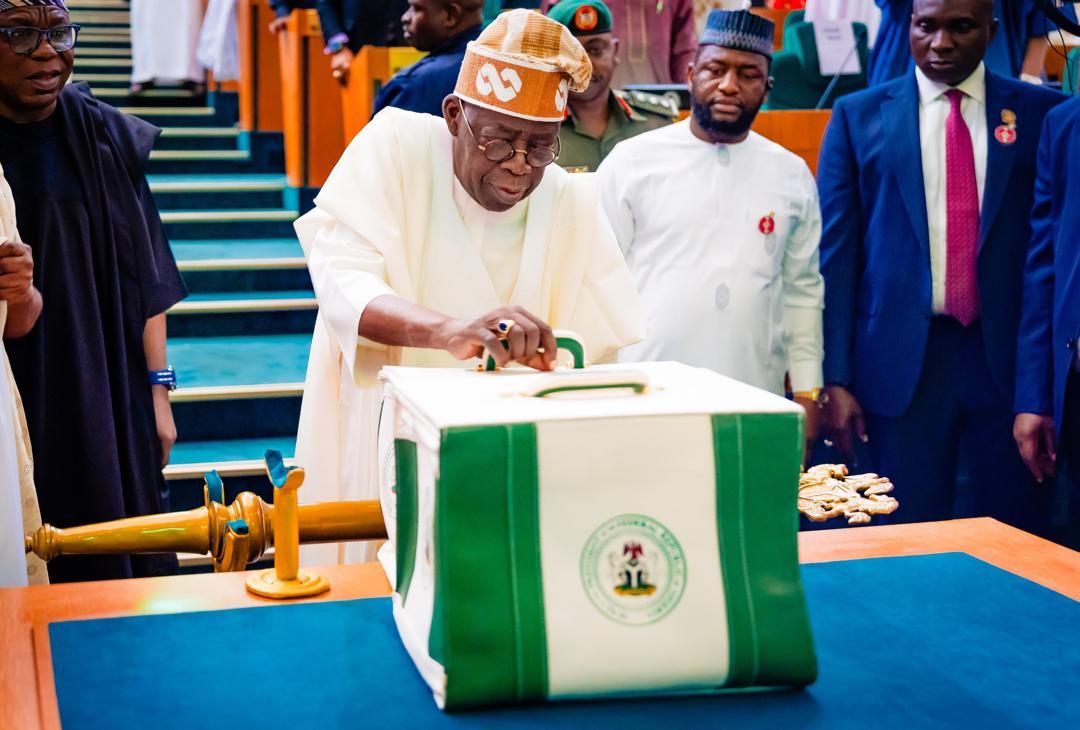
The Federal Government has released the 2026 budget allocations for Ministries, Departments, and Agencies (MDAs), revealing a multi-trillion-naira distribution aligned with national priorities in security, infrastructure, human capital, and economic growth.
The 2026 budget, titled the “Budget of Consolidation, Renewed Resilience, and Shared Prosperity,” totals ₦58.18 trillion, with an estimated revenue of ₦34.33 trillion and a projected deficit of ₦23.85 trillion, or about 4.28 percent of GDP.
The largest allocation went to the Federal Ministry of Finance, which received ₦16.78 trillion, reflecting the government’s focus on fiscal management, revenue mobilization, and debt servicing.
Join our WhatsApp ChannelREAD ALSO : Budget Office Clarifies Legality of 2024–2025 Appropriation Repeal, Pledges Greater Transparency
Tinubu Presents N58.18trn 2026 Budget, Promises Stronger Discipline in Execution
The Ministry of Defence followed with ₦3.15 trillion, highlighting national security as a top priority. The Federal Ministry of Works was allocated ₦3.49 trillion for roads and infrastructure, while the Federal Ministries of Education and Health received ₦2.4 trillion and ₦2.15 trillion respectively, signaling continued investment in human capital and social welfare.
Other key allocations include:
- Independent National Electoral Commission (INEC): ₦1.01 trillion
- Federal Ministry of Police Affairs: ₦1.33 trillion
- Federal Ministry of Agriculture and Food Security: ₦1.45 trillion
- Ministry of Interior: ₦696.4 billion
- National Security Adviser’s Office: ₦664.1 billion
- Federal Ministry of Power: ₦1.11 trillion
- Federal Ministry of Niger Delta Affairs: ₦1.35 trillion
- Presidency: ₦355.1 billion
- National Assembly: ₦344.85 billion
- Federal Capital Territory Administration: ₦460.7 billion
- Ministry of Foreign Affairs: ₦344.2 billion
- Federal Ministry of Women Affairs: ₦154.3 billion
- Federal Ministry of Youth Development: ₦518.4 billion
- Federal Ministry of Humanitarian Affairs and Poverty Alleviation: ₦462.7 billion
- Federal Ministry of Information & National Orientation: ₦98.16 billion
Combined allocations to security-related MDAs including Defence, Police Affairs, Interior, and the National Security Adviser total over ₦5.8 trillion, underscoring the administration’s focus on tackling internal and external threats.
Infrastructure and energy sectors, including Works, Transport, Power, and Niger Delta Affairs, collectively receive over ₦6.5 trillion, reflecting continued investment in connectivity, electricity access, and regional development.
Social services and human capital development, covering Education, Health, Youth, and Humanitarian Affairs, total roughly ₦5.5 trillion, indicating ongoing commitment to welfare, skills development, and poverty alleviation.
The Federal Ministry of Budget and Economic Planning has directed MDAs to roll over 70 percent of their 2025 capital budgets into 2026 to ensure continuity of ongoing projects. This is part of a broader effort to improve budget execution and reduce wastage, even as Nigeria navigates revenue shortfalls and high debt obligations.
Civil society groups have welcomed the focus on infrastructure, security, and fiscal prudence, but caution that allocations for social services may still fall short of targets set by international benchmarks and Sustainable Development Goals.
Analysts note that while the figures reflect strategic priorities, the success of the budget will ultimately depend on timely release of funds, strict monitoring, and transparency in implementation.
As the National Assembly considers the budget, public and institutional oversight will be crucial to ensuring that these allocations translate into tangible improvements in the lives of Nigerians.

Amanze Chinonye is a Staff Correspondent at Prime Business Africa, a rising star in the literary world, weaving captivating stories that transport readers to the vibrant landscapes of Nigeria and the rest of Africa. With a unique voice that blends with the newspaper's tradition and style, Chinonye's writing is a masterful exploration of the human condition, delving into themes of identity, culture, and social justice. Through her words, Chinonye paints vivid portraits of everyday African life, from the bustling markets of Nigeria's Lagos to the quiet villages of South Africa's countryside . With a keen eye for detail and a deep understanding of the complexities of Nigerian society, Chinonye's writing is both a testament to the country's rich cultural heritage and a powerful call to action for a brighter future. As a writer, Chinonye is a true storyteller, using her dexterity to educate, inspire, and uplift readers around the world.
- Amanze Chinonye
- Amanze Chinonye
- Amanze Chinonye
- Amanze Chinonye
- Amanze Chinonye
- Amanze Chinonye
- Amanze Chinonye
- Amanze Chinonye
- Amanze Chinonye
- Amanze Chinonye
- Amanze Chinonye
- Amanze Chinonye
- Amanze Chinonye
- Amanze Chinonye
- Amanze Chinonye
- Amanze Chinonye
- Amanze Chinonye
- Amanze Chinonye
- Amanze Chinonye
- Amanze Chinonye
- Amanze Chinonye
- Amanze Chinonye
- Amanze Chinonye
- Amanze Chinonye
- Amanze Chinonye
- Amanze Chinonye
- Amanze Chinonye
- Amanze Chinonye
- Amanze Chinonye
- Amanze Chinonye
- Amanze Chinonye
- Amanze Chinonye
- Amanze Chinonye
- Amanze Chinonye
- Amanze Chinonye
- Amanze Chinonye
- Amanze Chinonye
- Amanze Chinonye
- Amanze Chinonye
- Amanze Chinonye
- Amanze Chinonye
- Amanze Chinonye
- Amanze Chinonye
- Amanze Chinonye
- Amanze Chinonye
- Amanze Chinonye
- Amanze Chinonye
- Amanze Chinonye
- Amanze Chinonye
- Amanze Chinonye
- Amanze Chinonye
- Amanze Chinonye
- Amanze Chinonye
- Amanze Chinonye
- Amanze Chinonye
- Amanze Chinonye
- Amanze Chinonye
- Amanze Chinonye
- Amanze Chinonye
- Amanze Chinonye
- Amanze Chinonye
- Amanze Chinonye
- Amanze Chinonye
- Amanze Chinonye
- Amanze Chinonye
- Amanze Chinonye
- Amanze Chinonye
- Amanze Chinonye
- Amanze Chinonye
- Amanze Chinonye
- Amanze Chinonye
- Amanze Chinonye
- Amanze Chinonye
- Amanze Chinonye
- Amanze Chinonye
- Amanze Chinonye
- Amanze Chinonye
- Amanze Chinonye
- Amanze Chinonye
- Amanze Chinonye
- Amanze Chinonye
- Amanze Chinonye
- Amanze Chinonye
- Amanze Chinonye
- Amanze Chinonye
- Amanze Chinonye
- Amanze Chinonye
- Amanze Chinonye
- Amanze Chinonye
- Amanze Chinonye
- Amanze Chinonye
- Amanze Chinonye
- Amanze Chinonye
- Amanze Chinonye
- Amanze Chinonye
- Amanze Chinonye
- Amanze Chinonye
- Amanze Chinonye
- Amanze Chinonye
- Amanze Chinonye
- Amanze Chinonye
- Amanze Chinonye
- Amanze Chinonye
- Amanze Chinonye
- Amanze Chinonye
- Amanze Chinonye
- Amanze Chinonye
- Amanze Chinonye
- Amanze Chinonye
- Amanze Chinonye
- Amanze Chinonye
- Amanze Chinonye
- Amanze Chinonye
- Amanze Chinonye
- Amanze Chinonye
- Amanze Chinonye
- Amanze Chinonye
- Amanze Chinonye
- Amanze Chinonye
- Amanze Chinonye
- Amanze Chinonye
- Amanze Chinonye
- Amanze Chinonye
- Amanze Chinonye
- Amanze Chinonye
- Amanze Chinonye
- Amanze Chinonye
- Amanze Chinonye
- Amanze Chinonye
- Amanze Chinonye
- Amanze Chinonye
- Amanze Chinonye