Admin
Admin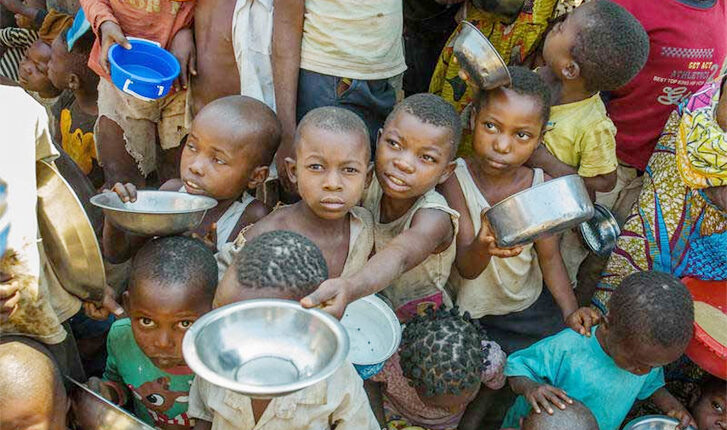
By Emmanuel Nnadozie Onwubiko
For Nigerians, there is a generally agreed principle that the government and the people must always be on different lanes in the making of any claim concerning development, redistribution of wealth and the poverty rates. Whereas government officials live in a world of utopia, the people live in the real world.
Join our WhatsApp Channel
It is always true that whereas the people who wield political power often spread the propaganda that life is good or that life will inevitably be good for most citizens in the shortest possible period given that they, the government officials are doing everything in their power to right the wrongs and make economic prosperity to fall like heavy rains on the people, the other side of the real story is pathetic.
However, if an observer looks very closely at these government officials, how they live, how they are conveyed to their offices in many convoys of mostly newly purchased special utility vehicles that are changed virtually after every other yearly budget rituals are conducted at the National and state assemblies, and then a look at the weltanschauung or living situations of a generality of the people, the high rates of unemployment, consequences of rapidly collapsing national infrastructures, effects of extensive unemployment and the dwindling life expectancy of Nigerians, that objective observer is sure to see a very unimaginable chasm that is too complex to mend.
In other word, government officials and the people of Nigeria who are out of government, live in two different world characterised by opulence, unmerited wealth stolen from the people’s commonwealth by government officials who are custodians of the public till and on the other hand, you would have steering you on the face, a vast numbers of people seemingly afflicted by mass hunger, absolute and multidimensional poverty and destitution.
I give you another example: if you take a drive to the central business district of Abuja that is dominated by the skyline of five star hotels and flamboyant conference centres, you will see Nigerian government officials, politicians, lawmakers and their mistresses attending conferences or simply catching fun.
Some of these conferees are actually not going to make any meaningful contributions or ideas even when such publicly funded meetings are made to look like they are to proffer concrete solutions to life situations. Most of these conferences are of the nature that the media covering the events are deceived into believing that solutions to the economic adversities affecting a majority of Nigerians would be worked out.
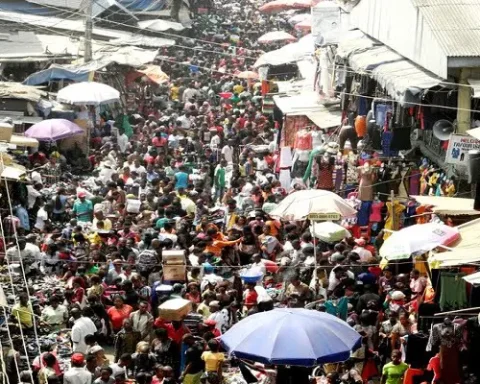
However, the underlying reason is simply to allocate and redistribute public resources to a few friends of the government and the mistresses of the government officials. Ask yourself how come that since 1999, with well over a million economic conferences in Abuja and the economically struggling states of the Federation, the economic situations of the largest percentage of Nigerians have become unbearable? On the other hand, navigating through the hot sunny weather around the markets of Utako, Garki two, Gwagwalada or Nyanya, you will see thousands of Nigerians who are living marginally and are just hustling to be able put two square meals at the most on the tables of their overcrowded homes.
Something satanic has now happened in such a way that government statisticians are cooking up numbers to make it look like the economic climate of Nigeria is improving. This artificial trends of rating the economic status of Nigeria started notoriously with the coming of the current administration in May 2023 and especially when the consequences of the thoughtless withdrawal of subsidy in petrol and the floating of the exchange rate of the Naira which made the Naira as one of the most worthless currencies of the world at the moment. Worried by the growing hunger, government statisticians came under unethical pressures by politicians to cook up the books and glamourise the national economic policies of the government.
READ ALSO : What Nigeria’s 15.10% Inflation Rate Drop Means
The hard fact is that, the more the government appointed statisticians roll out heavily made up statistics of economic outlooks, the more hunger, poverty and destitution are expanding, especially if you move around the streets and market places whereby the real citizens operate.
This is the truth. I will show you subsequently how the National Bureau of statistics has dazzled us with a report of reduced inflation in January 2026, but economic experts have repeatedly told us that poverty, hunger and destitution would increase in the year that we are in which is 2026.
Besides as I go to work everyday as a social justice and human rights advocate, I see many hungry faces of Nigerians on the streets searching for survival.
Last week, a campaign group supporting the second term ambition of president Tinubu which has the backing of the son of the president, Mr.Seyi, was shown in the popular mainstream and social media, distributing loaves of bread and small packages of foodstuffs to hundreds of poverty stricken Lagos residents even when government statisticians announced that the living conditions of Nigerians have improved and that prices of essential foodstuffs have crashed.
I then asked, do these statisticians churning out fake rating of inflation live amongst Nigerians in Garki, Aba, Oshogbo, Akure, Auchi, Itigidi or Damaturu or do they live with President Tinubu in Asorock mansion that has just set up its unique source of electricity supply by cutting off from the increasingly inefficient national grid?
The truth the government isn’t telling anyone is that only very few Nigerians are economically engaged in economic activities that can comfortably put bread and butter on their dining tables whereas the rest of the population are engaged in daily life battles of survival of the fittest.
Also, due to increased crime rate and the dwindling capacity of law enforcement agents to catch up with criminals, it is looking like in Nigeria, might is becoming right.
But let us demonstrate this chasm between government claims and the real life situations of most Nigerians.
Last week, newspapers including Reuters without any shreds of investigation, reported just as the politicians told them that Nigeria’s annual inflation rate slowed slightly to 15.10% in January from 15.15% in December, the statistics office said on Monday, marking the tenth straight monthly decline. This version was churned out as a report by Reuters shamelessly.
At the previous release the National Bureau of Statistics (NBS) adopted a revamped methodology that it said better reflects real-world prices.
The methodology uses a 12-month reference period where the average Consumer Price Index for the 12 months of 2024 is equated to 100, whereas previously the agency used a single-month reference period with December 2024 set to 100.
Food inflation, a key driver of the headline rate, stood at 8.89% year on year in January, down from 10.84% in December, the NBS said on Monday.
However, experts who are independent of the government have made their investigation based on empirical evidence and have returned a distressing report that at least 141million Nigerians are expected to be living in poverty this year, according to PwC’s Nigeria Economic Outlook 2026.
The report titled: “Turning macroeconomic stability into sustainable growth,” projected deteriorating poverty levels of about 62% of the population in the year preceding the election year 2027.
The report shows that despite recent policy adjustments aimed at economic stabilisation, weak real income growth and elevated living costs are likely to push more households into poverty over the next two years.
PwC estimates that Nigeria’s poverty rate will rise to 62% by 2026, reflecting the combined effects of sluggish income growth and persistent inflationary pressures.
According to the report, most Nigerians are unlikely to experience income increases that meaningfully offset rising costs, especially in the short term.
“Poverty is projected to rise to 62% (141 million people) by 2026, reflecting weak real income growth and lingering inflation effects,” PwC noted.
While inflation may gradually moderate, PwC notes that the underlying cost structure of the economy suggests that affordability gains for households will remain limited.
A major contributor to worsening poverty, PwC explains, is the consumption pattern of low-income households.
Food accounts for up to 70% of total consumption among poorer Nigerians, leaving them highly exposed to food price increases.
With food inflation remaining elevated, these households are disproportionately affected by price shocks.
The firm added that even if headline inflation eases slightly, energy costs, logistics expenses, and exchange rate pass-through effects will continue to keep food and essential goods prices high.
According to experts, rising poverty levels pose significant risks to Nigeria’s economic stability and growth prospects.
For some of us, we don’t even need to read these reports from either the government’s funded statisticians or the independent researchers to determine that the costs of living crisis is not abating.
Most of us engaged in one daily routine or the other, and obviously, we are confronted with physical evidence of the growing poverty rates amongst Nigerians.
There is little doubt that the unaffordable costs of electricity power has made a lot of small scale entrepreneurs to close shops.
How does government think small time traders or barbers can afford to pay electricity bill of over one hundred thousand naira per week when their turnover each month is not more than two hundred and fifty thousand Naira? Mund you, the government will soon inflict the severe pain of a new taxation regime which will inevitably make millions of Nigerians poorer.
So when I see the government agencies shoot down the inflation rate artificially, it makes no sense to me because in real life, the costs of living is increasing whilst poverty keep millions of Nigerians in a vicious circle of hunger, poor health and destitution.
EMMANUEL NNADOZIE ONWUBIKO is the founder of the HUMAN RIGHTS WRITERS ASSOCIATION OF NIGERIA (HURIWA).

Amanze Chinonye is a Staff Correspondent at Prime Business Africa, a rising star in the literary world, weaving captivating stories that transport readers to the vibrant landscapes of Nigeria and the rest of Africa. With a unique voice that blends with the newspaper's tradition and style, Chinonye's writing is a masterful exploration of the human condition, delving into themes of identity, culture, and social justice. Through her words, Chinonye paints vivid portraits of everyday African life, from the bustling markets of Nigeria's Lagos to the quiet villages of South Africa's countryside . With a keen eye for detail and a deep understanding of the complexities of Nigerian society, Chinonye's writing is both a testament to the country's rich cultural heritage and a powerful call to action for a brighter future. As a writer, Chinonye is a true storyteller, using her dexterity to educate, inspire, and uplift readers around the world.
- Amanze Chinonye
- Amanze Chinonye
- Amanze Chinonye
- Amanze Chinonye
- Amanze Chinonye
- Amanze Chinonye
- Amanze Chinonye
- Amanze Chinonye
- Amanze Chinonye
- Amanze Chinonye
- Amanze Chinonye
- Amanze Chinonye
- Amanze Chinonye
- Amanze Chinonye
- Amanze Chinonye
- Amanze Chinonye
- Amanze Chinonye
- Amanze Chinonye
- Amanze Chinonye
- Amanze Chinonye
- Amanze Chinonye
- Amanze Chinonye
- Amanze Chinonye
- Amanze Chinonye
- Amanze Chinonye
- Amanze Chinonye
- Amanze Chinonye
- Amanze Chinonye
- Amanze Chinonye
- Amanze Chinonye
- Amanze Chinonye
- Amanze Chinonye
- Amanze Chinonye
- Amanze Chinonye
- Amanze Chinonye
- Amanze Chinonye
- Amanze Chinonye
- Amanze Chinonye
- Amanze Chinonye
- Amanze Chinonye
- Amanze Chinonye
- Amanze Chinonye
- Amanze Chinonye
- Amanze Chinonye
- Amanze Chinonye
- Amanze Chinonye
- Amanze Chinonye
- Amanze Chinonye
- Amanze Chinonye
- Amanze Chinonye
- Amanze Chinonye
- Amanze Chinonye
- Amanze Chinonye
- Amanze Chinonye
- Amanze Chinonye
- Amanze Chinonye
- Amanze Chinonye
- Amanze Chinonye
- Amanze Chinonye
- Amanze Chinonye
- Amanze Chinonye
- Amanze Chinonye
- Amanze Chinonye
- Amanze Chinonye
- Amanze Chinonye
- Amanze Chinonye
- Amanze Chinonye
- Amanze Chinonye
- Amanze Chinonye
- Amanze Chinonye
- Amanze Chinonye
- Amanze Chinonye
- Amanze Chinonye
- Amanze Chinonye
- Amanze Chinonye
- Amanze Chinonye
- Amanze Chinonye
- Amanze Chinonye
- Amanze Chinonye
- Amanze Chinonye
- Amanze Chinonye
- Amanze Chinonye
- Amanze Chinonye
- Amanze Chinonye
- Amanze Chinonye
- Amanze Chinonye
- Amanze Chinonye
- Amanze Chinonye
- Amanze Chinonye
- Amanze Chinonye
- Amanze Chinonye
- Amanze Chinonye
- Amanze Chinonye
- Amanze Chinonye
- Amanze Chinonye
- Amanze Chinonye
- Amanze Chinonye
- Amanze Chinonye
- Amanze Chinonye
- Amanze Chinonye
- Amanze Chinonye
- Amanze Chinonye
- Amanze Chinonye
- Amanze Chinonye
- Amanze Chinonye
- Amanze Chinonye
- Amanze Chinonye
- Amanze Chinonye
- Amanze Chinonye
- Amanze Chinonye
- Amanze Chinonye
- Amanze Chinonye
- Amanze Chinonye
- Amanze Chinonye
- Amanze Chinonye
- Amanze Chinonye
- Amanze Chinonye
- Amanze Chinonye
- Amanze Chinonye
- Amanze Chinonye
- Amanze Chinonye
- Amanze Chinonye
- Amanze Chinonye
- Amanze Chinonye
- Amanze Chinonye
- Amanze Chinonye
- Amanze Chinonye
- Amanze Chinonye