Admin
Admin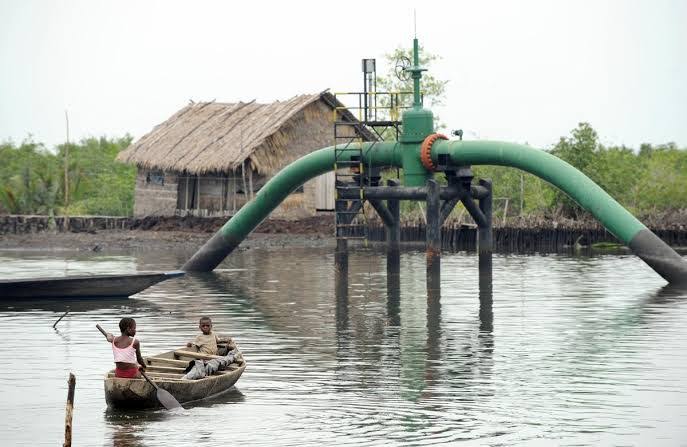
By ETIM ETIM
Gov. Bassey Otu of Cross River State arrived Margaret Ekpo Airport, Calabar, from an official trip to Abuja last week and addressed a large crowd of APC members and supporters who have been waiting for hours for him.
Join our WhatsApp ChannelThey carried banners with various inscriptions, including ‘’Bassey Otu for 2027’’; ‘’76 oil wells are for Cross River State’’; ‘’Cross River is an oil-producing state, give us our rights’’, etc. Otu told the crowd that he had been in Abuja to ensure that all the oil wells that were taken from Cross River are returned. ‘’Enough of this nonsense; Cross River will not be cheated any longer; what nonsense!’’, the governor said to the cheering crowd. He then boarded an open-roof car, pumping fists in the air as the long motorcade snaked out of the airport, driving through major roads in the city.
The scene had the trappings of an election campaign, and for a governor who is up for a reelection in just a year, the resurgent dispute between Cross River and Akwa Ibom State over the ownership of 76 oil wells (I understand it is 245 now, according to some documents) has handed Otu an early campaign talking point. Some Akwa Ibom people became nervous and asked their governor not to relent in fighting to keep the oil resources.
The state currently earns between N60 billion and N70 billion in revenue monthly from oil, making it among the highest earner, while Cross River, eking out a tenth of that, is managing to meet its obligations.
A few days later, Gov. Umo Eno of Akwa Ibom returned to Uyo from a trip and addressed the press at the airport. ‘’The Supreme Court has given two judgments on the 76 oil wells, affirming that they belong to Akwa Ibom State. We shall not join issues with other side, even as it seems that they have turned the matter into a campaign issue’’, Eno said, refraining from mentioning his counterpart in Calabar by name. He then repeated the government’s official position which had been stated many times: On the Supreme Court judgment, we stand, and that Akwa Ibom would never cede the oil wells to Cross River State under any guise and circumstances. ‘’We are also in APC. We shall enter wherever they enter; we shall go to any extent to protect our resources’’, Eno said. Before now, the governor had refrained from making a public statement on the matter, preferring, instead, to work behind the scenes. It’s a different approach from Cross River’s tactics of addressing rallies, inserting statements in the media that seem to suggest that the oil wells have been returned to Cross River and sending surrogates to talk shows to canvass its position.
The whole of Akwa Ibom people and the elites in particular have been well mobilized and sensitized to support their government on this matter, reminiscent of the battle for the abrogation of the onshore-offshore oil dichotomy which Gov. Victor Attah waged against the Obasanjo administration between 1999 and 2004 when it was eventually abrogated. That struggle was pivotal to the reelection of Attah in 2003 and turned him into the folk hero of his people. In 2021, I wrote a book in which I celebrated Attah and 12 others as the main warriors of the abrogation struggle. Gov. Eno now has the weight of history on his shoulders as he contemplates his place in the evolving Akwa Ibom story and Nigeria’s oil politics and the potential role of the 76 oil wells in the 2027 politics.
The politicization of the oil wells issue and the constant publication of unsubstantiated stories that highlight Cross River’s argument have put undue pressure on Akwa Ibom government. It took a different dimension over the weekend when Senator John James Akpanudoedehe, the leader of ADC in Akwa Ibom, made a video broadcast in which he addressed Gov. Eno directly. Akpanudoedehe said the the governor must do everything to ensure that the oil wells are not seized from Akwa Ibom State, ‘’otherwise you would be seen as a weak governor’’. It is clearly a dress rehearsal for 2027.
Akpanudoedehe is ADC’s putative governorship candidate next year, and that would be his fifth run for the job. The video is his first public statement on any issue since 2023 when he ran for governor on the platform of NNPP. He got only 12, 509 votes, coming a distant fourth. Just like Bassey Otu of Cross River, the oil well controversy has landed him a big campaign material. But many Akwa Ibom people are wondering why Akpandoedehe would be taking such a public stance at a time the government needs all the support.
Gov. Eno is taking a different approach. He’s assembled some of the best legal minds and is talking to the people that matter. Senate President Godswill Akpabio, a former governor of the state under whom Cross River lost the 76 wells, is also pulling all the strings to support the state. Eno’s legal team consists of senior lawyers who were all involved in the onshore-offshore battle and the ensuing legal fight over the 76 wells during the Obasanjo: Chief Assam Assam, SAN, former Attorney General of the State; Mr. Paul Usoro, SAN, former NBA President; Mr. Uko Udom, SAN, incumbent Attorney General and Commissioner for Justice and Mr. Emmanuel Enoidem, SAN, a private legal practitioner who was in Eno’s post-election legal team in 2023. Assisted by the Commissioner for Information, Aniekan Umanah, the team has carefully avoided making political commentaries, focusing more on strategic engagements with the media and other key stakeholders. In a recent statement, Attorney General Uko Udom, debunked recent media speculations that the oil wells may be “returned” to Cross River State following the submission of a “report” by a Federal Government Inter-Agency Committee to the Revenue Mobilization Allocation and Fiscal Commission (RMAFC). He described the rumours as ‘’misinformation and deliberate distortion of constitutional realities’’.
READ ALSO : Akwa Ibom APC: Two Secretariats, Many Troubles
Part of the statement reads: ‘’Firstly, RMAFC has publicly clarified that what it received on 13th February 2026 is a draft report — not a decision, not an approved recommendation, and certainly not a reallocation of oil wells. The Commission has described the circulating claims as speculative and not reflective of any final position. Beyond this procedural clarification lies a more fundamental issue — the binding authority of the Supreme Court of Nigeria and the settled history of this dispute.
In Suit No. 124/1999, Cross River State sued Akwa Ibom State over two principal matters:
1. The northern non-estuarine boundary involving 24 villages of Oku, Itu, and Ayadehe in Itu Local Government Area of Akwa Ibom State; and
2. The southern estuarine boundary where the oil wells are located.
‘’On 24th June 2005, the Supreme Court ruled in favour of Cross River State only with respect to portions of the northern boundary. The Court dismissed Cross River’s claim over the estuarine southern territory, where all the oil wells are situated. In its landmark pronouncement, the Court made it clear that the October 10, 2002 judgment of the International Court of Justice on the land and maritime boundary between Nigeria and Cameroon had fundamentally altered Cross River State’s coastal status. The Court held that the ICJ decision effectively eliminated Cross River’s estuarine sector, with the legal implication that Cross River no longer possessed a seaward boundary. Subsequently, despite Akwa Ibom State’s efforts to promote peaceful engagement and preserve kinship and harmony, further litigation was initiated by Cross River State seeking clarification on offshore entitlements.
‘’On 10th July 2012, the Supreme Court again ruled decisively in favour of Akwa Ibom State, holding that:
• Cross River State was no longer a littoral state entitled to offshore derivation;
• Its case was founded on a legally unsustainable assumption; and
• Akwa Ibom State’s entitlement to the oil wells was fully recognized. The legal position therefore stands firmly established: following the cession of the Bakassi Peninsula pursuant to the 2002 ICJ judgment, Cross River State ceased to have a seaward boundary and lost its status as a littoral state for purposes of offshore oil derivation.
‘’Under Section 235 of the 1999 Constitution of the Federal Republic of Nigeria, the decisions of the Supreme Court are final and binding on all authorities and persons throughout the Federation. There is no higher court. There is no supervisory committee. There is no administrative override.
No inter-agency committee, no technical panel, and no institutional process can alter, amend, reinterpret, or sit in appeal over a judgment of the Supreme Court. Any action inconsistent with a subsisting judgment of the apex court would be unconstitutional, null, and void. All the oil wells in question, whether existing or newly referenced, lie within Akwa Ibom State’s recognized maritime and littoral boundaries based on established hydrographic coordinates and legally enforceable boundary adjudications. Their attribution followed due process and relied on empirical geographic data.
‘’Let it therefore be clearly stated that No oil well has been ceded; no Supreme Court judgment has been overturned, and no constitutional provision has been amended. To the good people of Akwa Ibom State, we say this with utmost clarity and confidence: your Government is vigilant, engaged, and fully committed to protecting the economic interests of our State. We are following every institutional process closely, participating where required, and asserting our rights lawfully and firmly. Akwa Ibom State will not surrender its God-given resources. We will not relinquish what rightfully belongs to our people under the Constitution and under binding judicial authority.
Our resources are held in trust for present and future generations, and this Government will defend them responsibly, peacefully, and resolutely. We urge our citizens to remain calm, united, and confident. The foundation of our position is law. The strength of our case is geography. The shield of our rights is the Constitution of the Federal Republic of Nigeria’’.
Undoubtedly, politics has muddied up the fight between the two sister-states who have over the centuries shared many consanguine and cultural bonds. It is now up to the Tinubu Presidency to manage the delicate situation carefully without tempering with all the decisions long settled by the Supreme Court and the Constitution.

Amanze Chinonye is a Staff Correspondent at Prime Business Africa, a rising star in the literary world, weaving captivating stories that transport readers to the vibrant landscapes of Nigeria and the rest of Africa. With a unique voice that blends with the newspaper's tradition and style, Chinonye's writing is a masterful exploration of the human condition, delving into themes of identity, culture, and social justice. Through her words, Chinonye paints vivid portraits of everyday African life, from the bustling markets of Nigeria's Lagos to the quiet villages of South Africa's countryside . With a keen eye for detail and a deep understanding of the complexities of Nigerian society, Chinonye's writing is both a testament to the country's rich cultural heritage and a powerful call to action for a brighter future. As a writer, Chinonye is a true storyteller, using her dexterity to educate, inspire, and uplift readers around the world.
- Amanze Chinonye
- Amanze Chinonye
- Amanze Chinonye
- Amanze Chinonye
- Amanze Chinonye
- Amanze Chinonye
- Amanze Chinonye
- Amanze Chinonye
- Amanze Chinonye
- Amanze Chinonye
- Amanze Chinonye
- Amanze Chinonye
- Amanze Chinonye
- Amanze Chinonye
- Amanze Chinonye
- Amanze Chinonye
- Amanze Chinonye
- Amanze Chinonye
- Amanze Chinonye
- Amanze Chinonye
- Amanze Chinonye
- Amanze Chinonye
- Amanze Chinonye
- Amanze Chinonye
- Amanze Chinonye
- Amanze Chinonye
- Amanze Chinonye
- Amanze Chinonye
- Amanze Chinonye
- Amanze Chinonye
- Amanze Chinonye
- Amanze Chinonye
- Amanze Chinonye
- Amanze Chinonye
- Amanze Chinonye
- Amanze Chinonye
- Amanze Chinonye
- Amanze Chinonye
- Amanze Chinonye
- Amanze Chinonye
- Amanze Chinonye
- Amanze Chinonye
- Amanze Chinonye
- Amanze Chinonye
- Amanze Chinonye
- Amanze Chinonye
- Amanze Chinonye
- Amanze Chinonye
- Amanze Chinonye
- Amanze Chinonye
- Amanze Chinonye
- Amanze Chinonye
- Amanze Chinonye
- Amanze Chinonye
- Amanze Chinonye
- Amanze Chinonye
- Amanze Chinonye
- Amanze Chinonye
- Amanze Chinonye
- Amanze Chinonye
- Amanze Chinonye
- Amanze Chinonye
- Amanze Chinonye
- Amanze Chinonye
- Amanze Chinonye
- Amanze Chinonye
- Amanze Chinonye
- Amanze Chinonye
- Amanze Chinonye
- Amanze Chinonye
- Amanze Chinonye
- Amanze Chinonye
- Amanze Chinonye
- Amanze Chinonye
- Amanze Chinonye
- Amanze Chinonye
- Amanze Chinonye
- Amanze Chinonye
- Amanze Chinonye
- Amanze Chinonye
- Amanze Chinonye
- Amanze Chinonye
- Amanze Chinonye
- Amanze Chinonye
- Amanze Chinonye
- Amanze Chinonye
- Amanze Chinonye
- Amanze Chinonye
- Amanze Chinonye
- Amanze Chinonye
- Amanze Chinonye
- Amanze Chinonye
- Amanze Chinonye
- Amanze Chinonye
- Amanze Chinonye
- Amanze Chinonye
- Amanze Chinonye
- Amanze Chinonye
- Amanze Chinonye
- Amanze Chinonye
- Amanze Chinonye
- Amanze Chinonye
- Amanze Chinonye
- Amanze Chinonye
- Amanze Chinonye
- Amanze Chinonye
- Amanze Chinonye
- Amanze Chinonye
- Amanze Chinonye
- Amanze Chinonye
- Amanze Chinonye
- Amanze Chinonye
- Amanze Chinonye
- Amanze Chinonye
- Amanze Chinonye
- Amanze Chinonye
- Amanze Chinonye
- Amanze Chinonye
- Amanze Chinonye
- Amanze Chinonye
- Amanze Chinonye
- Amanze Chinonye
- Amanze Chinonye
- Amanze Chinonye
- Amanze Chinonye
- Amanze Chinonye
- Amanze Chinonye
- Amanze Chinonye
- Amanze Chinonye