Admin
AdminBy Favour Ibekwe Chinecherem
With the recent media reports highlighting incidents of missing people, mostly females, often followed up with their deaths and discovery of their badly mutilated bodies, one is convinced that Nigeria has a femicide problem.
Femicide, a term that describes the killing of women and girls, has claimed multiple lives in the past year, and over five cases since the New Year began. From intimate partners to random strangers, women suffer from gender-based assaults like rape, physical assault, and femicide.
Join our WhatsApp Channel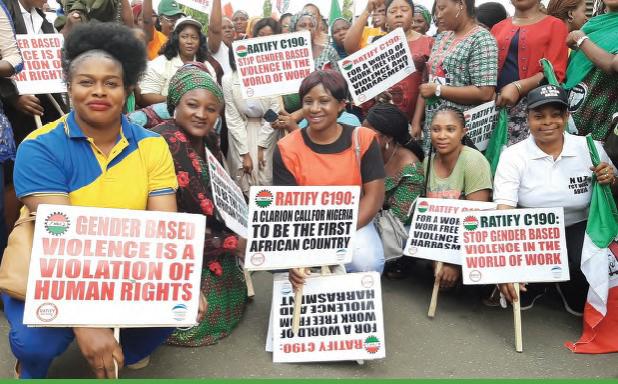
Statistics have shown that one out of three women has experienced some form of gender-based violence in their lifetime. In 2023, the UN reported a 50% increase in gender-based violence from the previous year, most of which escalates to femicide, and is usually committed by intimate partners or family members.
When a woman is killed, it is usually dismissed as a ritual killing, followed by blame of the victim. There are instances of people trying to rationalize and even downplay the violence women suffer, when the perpetrator is male, as opposed to the outrage when the roles are reversed. When a woman speaks up about sexual assault, people tend to want to know what she was wearing, where she was, and the perpetrator’s side of the story, in an effort to discredit the victim’s claim. It is then followed by a lot of advice and warnings for women, the sufferers of this abuse. “Don’t dare a yahoo boy o!” “Don’t go out late.” Dress modestly.” “Don’t go to a man’s house.” “Don’t refuse to give a man your number.” “Send your location to your friends if you’re going to see a man.” These are safety advices given to women in dealing with cases of rape.
The indifference of the majority when discussing gender-based violence against women stems from what I believe is the view of women as inferior to men, and by extension, less valuable.
On the 12th of January 2025, news broke about the murder of Salome Aidadu by Timilehin Ajayi, who is said to be a gospel musician. Upon a search, his confession, and subsequent arrest by law enforcement agents, it was discovered that he had saws and daggers in his apartment, and had chopped her body neatly into pieces, all of which do not point to what the suspect alleged was a crime of passion in retaliation for cheating. Adversely, her family and friends alleged that she had been missing for over a week, and had no relationship whatsoever with Timilehin Ajayi.
READ ALSO: Ford Foundation, UN Women Seek Intervention Of Cultural, Faith Leaders In Tackling GBV In Nigeria
Not long after the news broke, Netizens opened a discourse into the case, with many claiming to “understand” his motive. It is always appalling to witness society choose to humanise a criminal such as this, given the nature of the crime.
His father also made appeals to the government, begging them to release his son, as though the victim wasn’t also a human being with family, friends, aspirations, and a life of her own.
There is also the matter of media framing in discussing the abuse women face in their day-to-day lives. Headlines usually place the focus on the woman and the alleged reason behind the abuse, and usually a picture of the victim, with little information about the culprit. The shame and stigma therefore centred on the victim, leaving almost none for the perpetrator.
In some cases, femicide is usually the end point of a culmination of domestic abuse. From my perspective, this is because women are socialized to aspire to marriage and motherhood, and enduring said marriage when it goes sour as proof of their endurance and womanhood. Society places a stigma on single mothers and divorced women, and so women are encouraged and advised to stay for the kids and to avoid the shame.
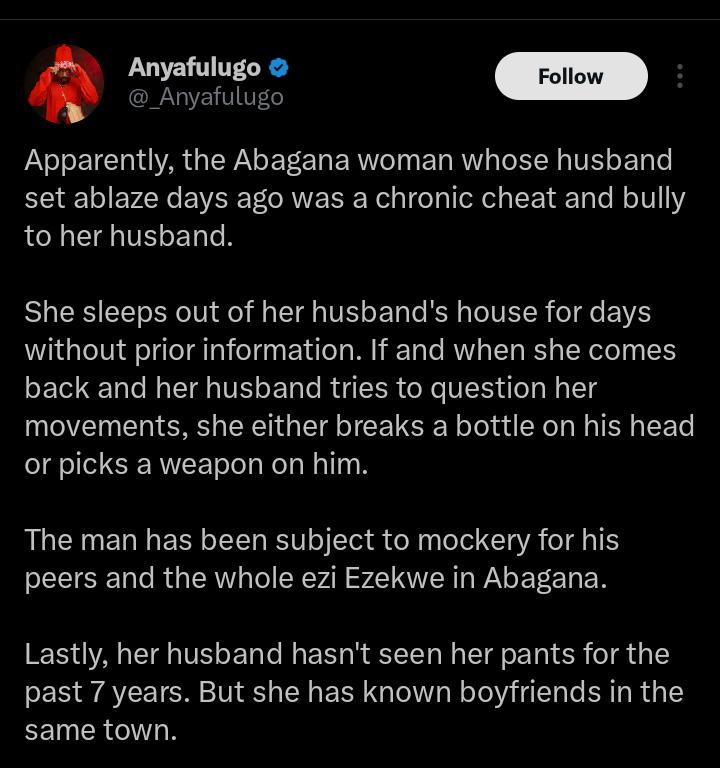
A prime example of this is the murder of Gospel singer Osinachi Nwachukwu by her husband, Peter Nwachukwu. Other recent examples for the year 2025 are the killings of Mutiat Sholola and Blessing Nwana, killed by their husbands Kazeem Sholola and Sunday Nwana in Ogun State and Anambra, respectively. Mutiat was stabbed in the head and set on fire, by her husband after which she succumbed to her injuries. Blessing was doused with hot cooking oil, by her husband.
There are many such cases, and there will be many more if measures are not put in place to protect women and girls in our society. For starters, legislation on femicide should be passed, because femicide differs from homicide because of the particularness of gender. Usually, when feminists and women based NGOs point this out, it is dismissed as a gender war by the demographic that perpetrates it and their sympathisers. Pointing out that it is femicide isn’t a gender war, because if it were, the casualties would be on both sides.
In addition to that, society needs structures outside of NGOs to enforce the femicide law, and the vast majority of us need to unlearn misogynistic stereotypes and collectively play our part in ending the stigma on single mothers and divorced women.
We could also stand to gain a lot from being more empathetic towards victims, instead of rationalising and sympathising with the perpetrators. Being a woman is not a crime worthy of a death sentence.


![Gender Activism An Economic Necessity In Africa [PBA Editorial]](https://www.primebusiness.africa/wp-content/uploads/2023/11/vaw-480x384.png)