Admin
Admin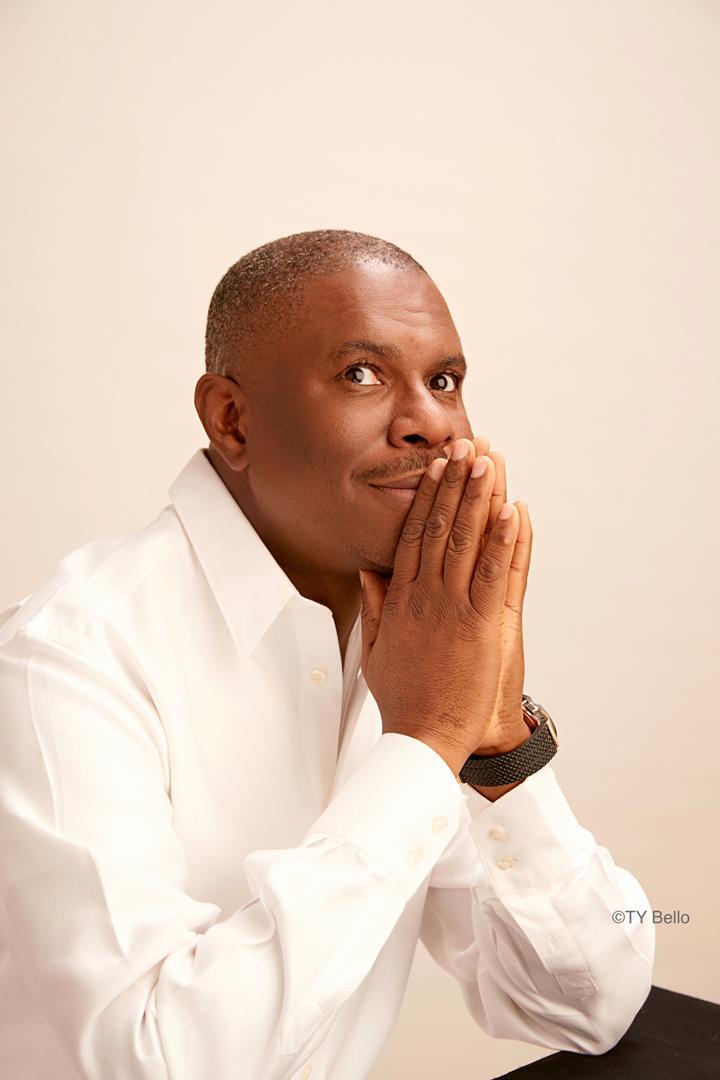
By Jeff Ukachukwu
Join our WhatsApp Channel
Some people live as though a nation is a background—a stage on which they pursue private ambitions. Others live as though a nation is a burden and a calling: something to be understood, shouldered, argued with, defended, corrected, and—above all—improved.
Dakuku Peterside belongs to this second tradition. His journey is best understood as one of thought and action united by a single purpose: demonstrating, through consistent engagement and integrity, that national progress requires more than ambition—it demands accountable, strategic, and disciplined leadership.
His mind is never idle, but not busy like the perpetually distracted—instead, it pursues ideas to uplift Nigeria. In a public debate often reduced to tribal reflexes and shallow righteousness, he sustains something rarer: strategic thinking anchored in morality. He is both a thought leader and a leadership philosopher, an advocate for accountability, and a reformer who insists national progress is achieved through discipline, not just desire.
READ ALSO : Dakuku Peterside’s New Book: A Guide to Navigating Crisis
Harvard Expert Recommends Dakuku’s “Leading in A Storm” For Public, Private Sector Leaders
That insistence is unfashionable. In Nigeria, cynicism is easier than construction, mocking easier than building, and diagnosing easier than reforming. Accountability is often pronounced but rarely practiced. Dakuku makes accountability central—more than a slogan, it is a system of consequences and practical governance. He centers on essentials: institutions must work, leadership must be measurable, the rule of law must be real, and public trust must be earned.
His wide engagement is often mistaken for variety, when it is better read as coherence. Building freight trains, developing large-scale farms, facilitating investor relations, executing infrastructure projects, offering leadership coaching, mentoring upcoming leaders, writing books, and engaging in politics all reflect a larger commitment: a Nigeria that is not merely populous, but productive; not merely hopeful, but capable; not merely loud, but competent—Nigeria as the pride of Africa, not by proclamation, but by performance.
Perhaps it helps to understand the kind of patriotism that animates such a life. Not the shallow patriotism that mistakes sentiment for strategy, nor the performative patriotism that loves the flag but avoids the hard work of reform. What you see here is practical patriotism—the kind that holds a country to higher standards precisely because it loves it, and that refuses to treat failure as culture.
It is patriotism expressed in questions: Why do reforms fail to be implemented? Why do good policies die in weak execution? Why do institutions collapse under the weight of politics? Why do we tolerate leadership without consequence? And what must be redesigned—in systems, incentives, and civic values—if we are serious about progress?
As we approach his birthday on the 31st of December, reflection becomes more than a polite ritual. A birthday, especially at the edge of a year, is an invitation to audit the meaning of a life. Dakuku’s journey prompts that audit not merely because he has achieved much, but because his life’s work insists on a crucial idea: Nigeria’s future is a matter of deliberate choice, built through discipline and institutional focus, not a product of fate or rhetoric.
His life unfolds in chapters bound by integrity, vision, and dedication. Integrity here means fidelity to principle even when it is costly. Vision is the capacity to see the system as a whole and insist that the future must be designed, not awaited. Dedication is the willingness to return to stubborn national questions with fresh seriousness.
His two latest books, Leading in a Storm and Beneath the Surface, capture the architecture of his intellect. They do not merely express opinions; they provide frameworks. Leading in a Storm is, in many ways, an argument against panic and performance in leadership. It treats crisis as revelation—an unforgiving moment that exposes whether institutions are resilient, whether leaders have the discipline to decide under pressure, and whether values are real or cosmetic. In a country where crisis often becomes our default climate, the book reads like a call to move from improvisation to preparedness, from reactive heroism to institutional strength.
Beneath the Surface, by contrast, reveals another habit: rejecting superficiality. Behind every national event are deeper forces—history, incentives, culture, power—that shape outcomes. The book reminds us: a society cannot solve what it won’t understand. Reform starts where surface explanations end.
If his books offer depth, his essays and commentary offer rhythm in Nigeria’s public square. Over time, his writing has shaped policy conversations, not with propaganda, but clarity. Drawing from government experience and theoretical discipline, he issues ideas that challenge the status quo and call for higher standards. His essays are not laments; they are civic memos pairing criticism with solutions and responsibility.
In Nigeria, public commentary often turns to entertainment. The greatest deficit is not in ideas but in execution. We lack not plans, but implementation discipline and a culture of consequences. Dakuku’s writing returns to this hinge—the point where governance becomes transformation or sinks into politics. By returning to it, he refocuses attention: development is not a speech; it is a system.
Recently, he has focused on using his network for development and advocacy, not just politics. This matters not because politics is unimportant, but because Nigeria mistakenly treats electoral contests as the most influential factor. Sometimes the deepest impact comes not from the office, but from building the capacity of officeholders, strengthening surrounding institutions, and uniting reform coalitions.
Networks in Nigeria are powerful tools. They can be deployed to extract and entrench privilege, or to build and democratise opportunity. The choice to use a network for development is a moral and strategic decision. It is the difference between influence as access and influence as public value. In that shift lies a quiet maturity: moving from the adrenaline of political struggle to the slower, harder discipline of national contribution.
This perhaps explains why leaders across the public and private sectors reach out to him for advice on a wide range of issues. In seasons of uncertainty—economic pressures, reputational risks, institutional fragility—many search for more than connections. They search for judgment: the ability to see the whole board, to understand trade-offs, to speak truth without malice, and to prioritise long-term outcomes over short-term applause. Judgment is rare, and it is often the most valuable currency in leadership.
Beyond his public profile, Dakuku’s journey sends a deeper message: intellect can serve, thought can build a nation. Nations rise when competence is contagious—when leadership improves by design, mentoring builds capable pipelines, conversations mature into responsibility, and institutions reward excellence while punishing misconduct.
This is the quiet work his life models: building seriousness into Nigeria’s DNA—through books framing crises as leadership tests, essays insisting on structure, mentorship investing in the future, projects as productivity models, and advocacy for the public good above private gain.
So, as we approach the 31st of December, this reflection is not merely a celebration. It is an invitation. It invites us to reconsider the kind of influence we admire, the kind of leadership we reward, and the kind of patriotism we practice. It invites leaders to ask whether they are building institutions or merely occupying offices. It invites citizens to ask whether they are contributing to the future or merely commenting on its absence.
In honouring Dakuku Peterside’s journey in thought and action, we are reminded of the central lesson: national transformation is not magic, but achievable work. It requires minds that refuse idleness, hearts that resist resignation, and lives—like his—that embody the daily, principled choice to be useful for the nation’s advance.
Jeff Ukachukwu is a Public Affairs analyst and writes from Lagos. (jeffuka@gmail.com)