 Victor Ezeja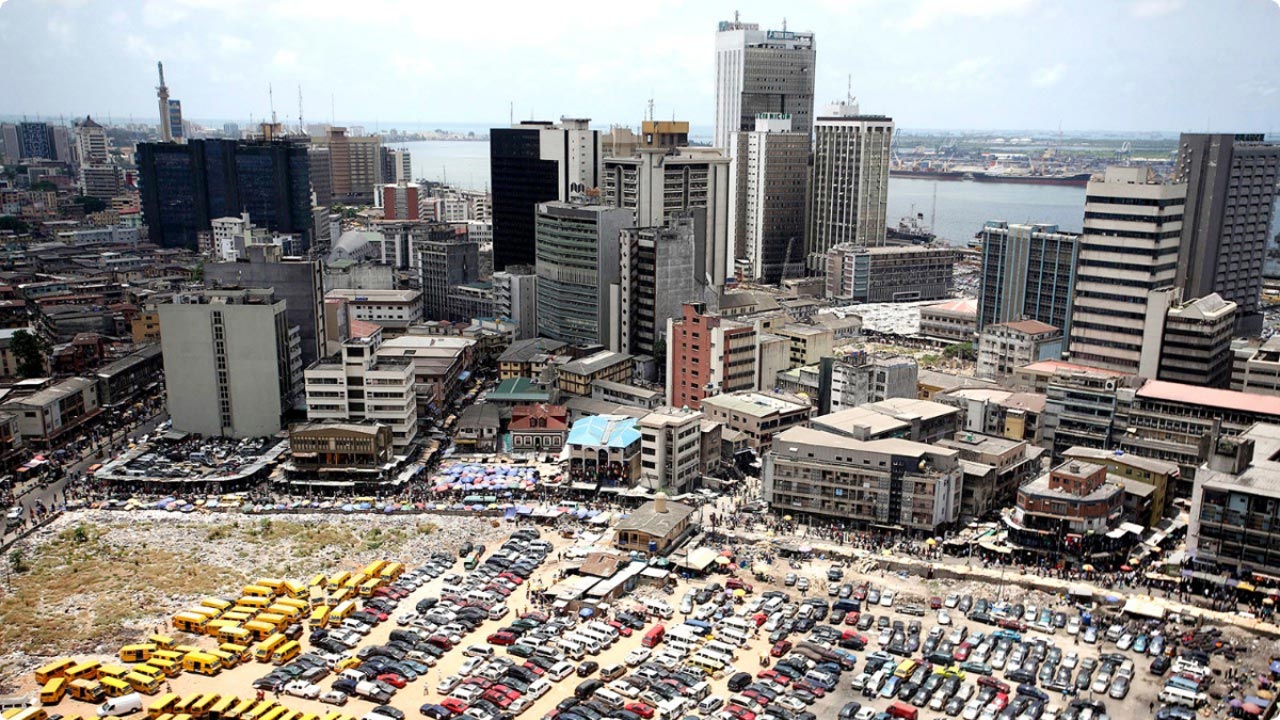
In the second quarter of 2023 just as the preceding quarter, foreign investment in Nigeria witnessed a significant downturn with 28 states of the federation missing out on foreign capital importation in the first half of 2023.
Latest data from the National Bureau of Statistics (NBS) indicates that the value of capital importation into Nigeria dropped by 30 per cent to $2.16 billion in the first half of 2023, from $3.11 billion in the same period last year.
Join our WhatsApp ChannelWhile $1.13 billion was imported in the first quarter, $1.03 billion came in as of Q2. And on a year-on-year basis, foreign capital inflow contracted by 32.90 per cent.
READ ALSO: Robust Data Service Centres Can Attract Millions Of Dollars Foreign Investments – NCC
According to the breakdown, Lagos State secured $1.48 billion, representing 69 per cent of total capital inflow into Nigeria in the first half of the year. The Federal Capital Territory is the second top investment destination with $604.55 million — representing 28 per cent. Akwa Ibom is next with $39.1 million), followed by Adamawa at $4.5 million, Anambra at $4 million. Ogun State follows the Niger Delta State above with $26.1 million. Niger made the list with $1.50 million, even as Ondo and Ekiti States had $200,000 and $25,500 respectively.
Prime Business Africa reports that the 28 states that failed to attract foreign investment in the first half of 2023 include:
* Abia
* Bauchi
* Bayelsa
* Benue
* Borno
* Cross River
* Delta
* Ebonyi
* Edo
* Enugu
* Gombe
* Imo
* Jigawa
* Kaduna
* Kano
* Katsina
* Kebbi
* Kogi
* Kwara
* Nasarawa
* Osun
* Oyo
* Plateau
* Rivers
* Sokoto
* Taraba
* Yobe
* Zamfara
The NBS release shows that distinct sectors such as accounting and finance, portfolio investment, and foreign direct investment were the dominant recipients of capital inflows. As per industry basis, the production sector received the lion’s share of capital, followed closely by the banking sector.
From a global perspective, the United States was the largest contributor of foreign capital to Nigeria, followed by Singapore and then South Africa. In terms of local establishments, the First Bank of Nigeria Limited attracted the highest capital inflow, followed by Citibank Nigeria Limited and Rand Merchant Bank.
The decline in foreign capital importation could have far-reaching implications for the nation’s economy. Apart from worsening unemployment, it undermines the economy’s growth prospects, constrains Nigeria’s ability to finance development projects, and exacerbates the current forex crisis. Moreover, it could lead to a depreciation of the Naira, inflationary pressures, and balance of payments difficulties.