Kayode Shopekan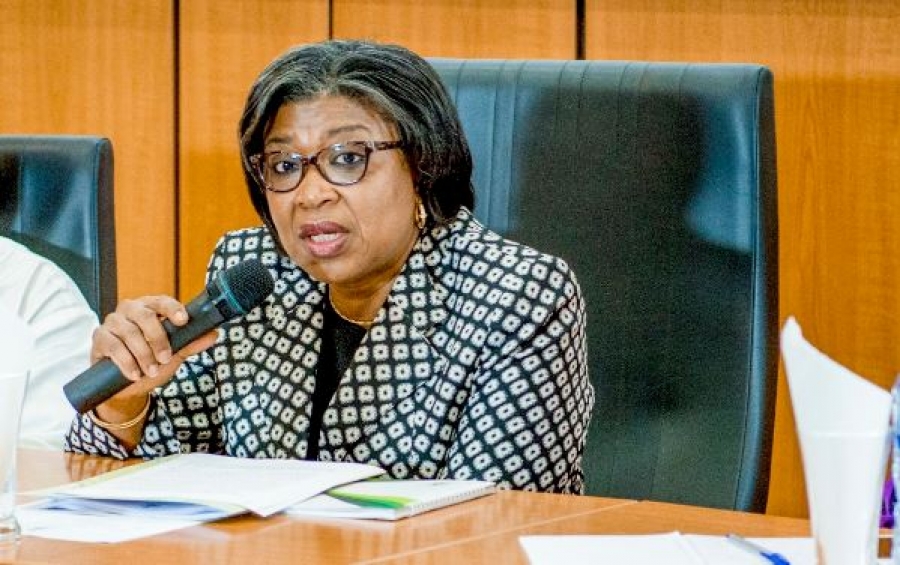
DIRECTOR-GENERAL of the Debt Management Office (DMO), Patience Oniha, has advised the Federal Government to quit the ongoing trend of borrowing to fund expenditure, urging government to explore viable options to generate revenue.
Oniha gave the admonition during a three-Day Interactive Session on the 2022-2024 Medium Term Expenditure Framework (MTEF) and Fiscal Responsibility Paper (FSP) at the National Assembly (NASS) on September 1, 2021.
Join our WhatsApp ChannelThe DMO DG warned that it was not advisable to fund the government with borrowings, suggesting that borrowing should be for special purposes.
She urged the government to do more about revenue generation drive as Nigeria’s debt stock continues to rise due to new borrowings in the annual budget and also approved under the Medium Term External Borrowing Plan.
She revealed that Nigeria’s borrowing was high when the country went into recession, and it was based on the Economic Growth and Recovery Plan (EGRP) with the goal to bring the economy out of recession.
Oniha noted that the level of borrowing was coming down, however, not very significant.
“In 2020, when the Budget was revised because of the socio-economic implications of COVID-19, the borrowings shot up, by about double. So the new borrowings in the first 2020 budget was about N1.6 trillion, the revised budget about N4.6 trillion,” she said.
The DMO Chief added that in the Medium to Long-term, it is not advisable to fund the government with borrowings.
“Further, Nigeria’s debt stock has been growing because of new borrowings in the annual budgets and new borrowings approved under the Medium Term External Borrowing Plan, both of which are duly approved as provided for in the DMO Act and the Fiscal Responsibility Act.”
She explained that increased revenues will reduce the level of New Borrowings and the Debt Service-to-Revenue ratio, adding that borrowing should only be for priority projects and for revenue-generating projects.
She recommended the adoption of Public-Private Partnerships (PPP) arrangements to finance capital projects as part of increasing reducing borrowing to fund government projects.
“In addition to increasing revenues, we can achieve a reduction in new borrowings by actively using Public-Private Partnerships (PPP) arrangements to finance capital projects. The DMO is happy to note that there is now a tolling policy that was approved recently by FEC. This is one way to generate revenue.
“If we want to borrow to develop the economy, let us keep a sharper focus on generating revenues so that we do not spend all our revenues on Debt Service or even borrow to service debt,” Oniha urged.