PBA Reporter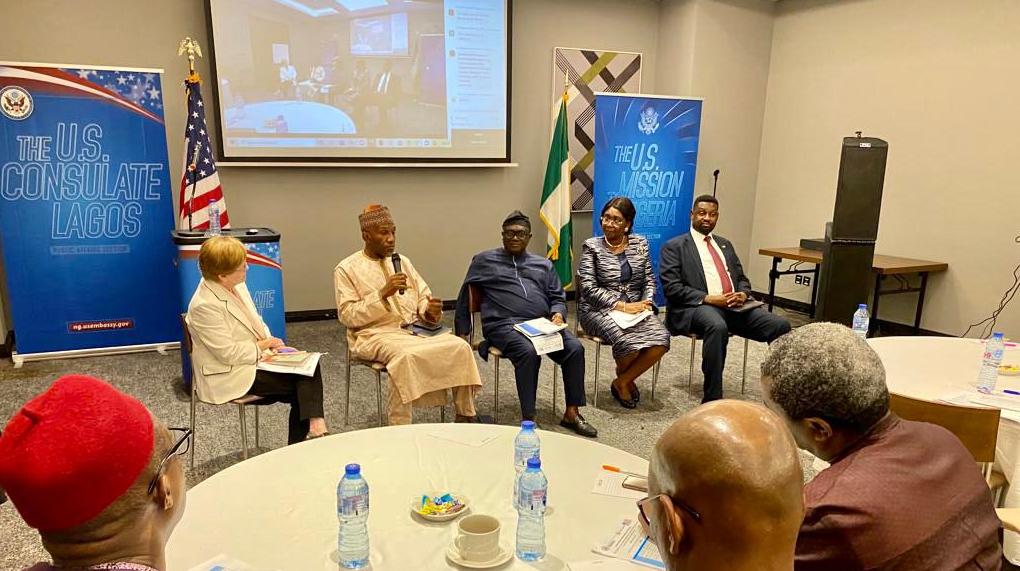
The U.S. Consulate General in Lagos mobilized key stakeholders to build long-term partnerships between U.S. and Nigeria institutions of higher education.
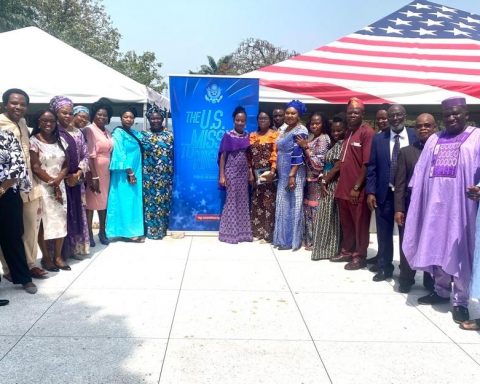
During a two-day conference, more than 30 vice-chancellors from Nigeria’s federal, state, and private universities, five U.S. higher education experts and representatives from the Nigeria Universities Commission (NUC) explored opportunities for building and sustaining institutional partnerships and ideas for joint degree programs.
Join our WhatsApp ChannelU.S. Consulate Public Affairs Officer Stephen Ibelli while delivering opening remarks at the conference, highlighted the U.S. Mission’s commitment to supporting initiatives that strengthen educational and cultural ties between Nigeria and the United States.
He explained that the overarching goal of the conference was to build on the longstanding U.S.-Nigeria educational ties by opening new frontiers of partnerships capable of enhancing quality of learning, teaching and research, as well as bolstering the global competitiveness of higher educational institutions in Nigeria.
“This is a giant step forward, bringing U.S. and Nigerian universities closer together, exploring future partnerships and discussing ideas for joint degrees with American experts were great outcomes of the higher education conference,” Ibelli stated.
One of the U.S. higher education experts, Dr. Patrick Bennett, Vice President of Academic Quality and Planning at Franklin University, Ohio, shared the U.S. perspective on higher education partnerships and funding.
Dr. Bennett discussed best practices in exploring potential revenue streams and resources outside of government funding for higher education and how universities can build and maintain productive relationships with alumni, private sector, and other donor institutions.
“There has been a deeper understanding of each other’s educational systems,” Dr. Bennett said. “Through technology, we have the opportunities to link more universities together in our increasingly globalized world.”
The U.S. Mission has a longstanding commitment to supporting educational institutions and strengthening an education system that enables students to access quality education throughout Nigeria.
One of the U.S. government-sponsored academic exchanges is the Fulbright programme which provides opportunities for Nigerian university students and faculty members to engage in collaborative research in U.S. institutions across various academic fields.
No fewer than 31 Nigerian universities are affiliated with the U.S. Mission on the Fulbright programme. In recent years, Nigeria has received more than 30 scholarships annually for university scholars including Ph.D. candidates to travel to U.S. universities to conduct research, exchange ideas and contribute to finding solutions to shared global challenges.

PBA Reporter
- PBA Reporter
- PBA Reporter
- PBA Reporter
- PBA Reporter
- PBA Reporter
- PBA Reporter
- PBA Reporter
- PBA Reporter
- PBA Reporter
- PBA Reporter
- PBA Reporter
- PBA Reporter
- PBA Reporter
- PBA Reporter
- PBA Reporter
- PBA Reporter
- PBA Reporter
- PBA Reporter
- PBA Reporter
- PBA Reporter
- PBA Reporter
- PBA Reporter
- PBA Reporter
- PBA Reporter
- PBA Reporter
- PBA Reporter
- PBA Reporter
- PBA Reporter