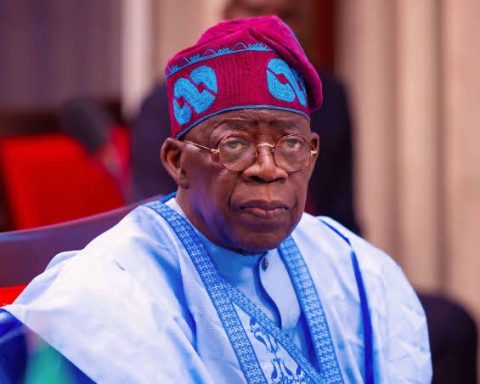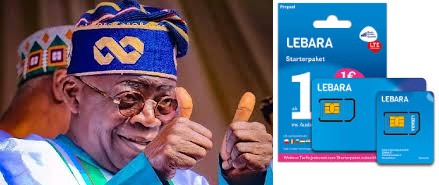
President Bola Ahmed Tinubu has welcomed the launch of Lebara Nigeria, describing it as a signal of investor confidence in the country’s digital economy, even as unemployment and underemployment continue to shape the outlook for millions of young Nigerians.
In a statement on Saturday signed by presidential spokesman Bayo Onanuga, Tinubu said the company’s entry reflects Nigeria’s potential as a technology and investment hub in Africa, with the telecoms sector seen as a key pathway for job creation and economic inclusion.
“I congratulate Lebara Nigeria on its official launch. This milestone reflects confidence in Nigeria’s digital economy and underscores the nation’s potential to lead in technology and investment across Africa,” the president said.
Join our WhatsApp ChannelNigeria’s telecommunications sector remains one of the country’s fastest-growing industries, recording a 5.78 per cent year-on-year growth in the third quarter of 2025 and contributing more than 14 per cent to gross domestic product, according to official data. Analysts say this growth contrasts sharply with persistent youth unemployment, which continues to drive interest in digital and technology-driven opportunities.
Tinubu said investments in telecoms and digital infrastructure could help bridge that gap by expanding access, supporting small businesses and enabling new forms of work in an increasingly digital economy.
He commended Lebara Nigeria’s leadership, led by Chief Executive Officer Teniola Stuffman, for its focus on expanding access and strengthening infrastructure, noting that such investments could support job creation and enterprise development.
“Investments of this nature are critical to deepening financial inclusion, enabling innovation, and accelerating economic growth,” he said.
The president also acknowledged the role of the British High Commission in supporting the launch, describing it as a reflection of ongoing economic ties between Nigeria and the United Kingdom.
Lebara Nigeria formally signalled its entry into Africa’s largest telecoms market earlier this week with a soft launch event in Lagos, held in partnership with the UK’s Department for Business and Trade.
The company had begun laying the groundwork in June last year, unveiling its 0724 number series and securing interconnectivity with existing mobile network operators ahead of a full commercial rollout.
READ ALSO:
Why Tinubu is Pushing to Establish State Police — Minister
Tinubu’s Oil Revenue Clampdown Stirs Relief at FAAC, Anxiety Inside NNPC
Speaking at the event, Stuffman said the company’s entry is aimed at addressing gaps in access and affordability in Nigeria’s digital space.
“Nigeria stands at a defining moment… yet millions require more inclusive, more affordable, more globally connected digital access,” she said.
For many young Nigerians facing limited formal employment opportunities, the expansion of digital infrastructure is increasingly seen as a potential route into work, whether through telecoms, remote services, or technology-driven enterprises.

Prosper Okoye is a Correspondent and Research Writer at Prime Business Africa, a Nigerian journalist with experience in development reporting, public affairs, and policy-focused storytelling across Africa