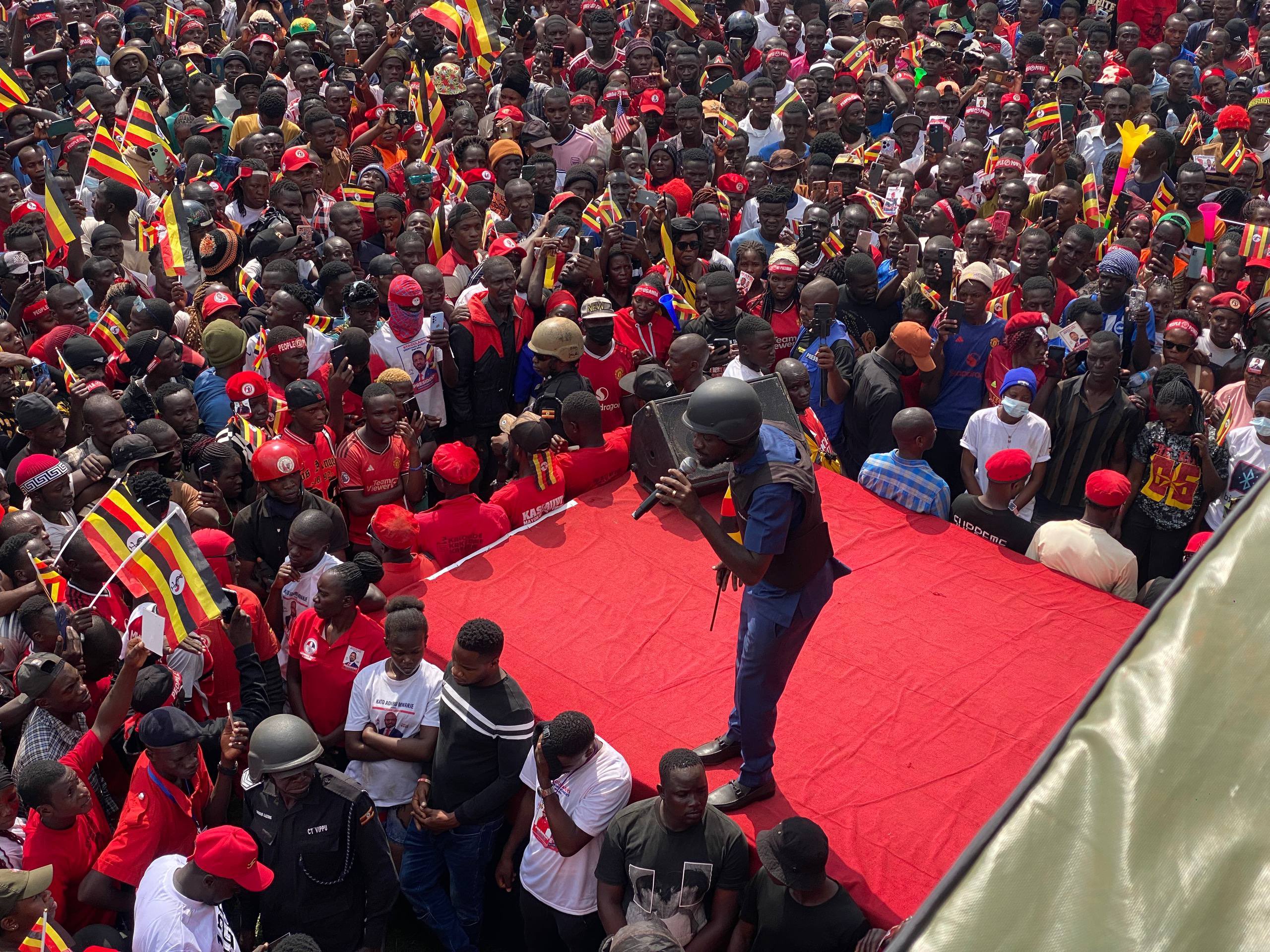
Ugandan pop star and opposition politician Bobi Wine, whose legal name is Robert Kyagulanyi, has alleged that he has been beaten, tasered, and attacked with teargas and pepper spray while campaigning against long-serving President Yoweri Museveni.
Wine, a rising political figure with strong support among young Ugandans, is facing a campaign marked by violence, arrests, and political intimidation.
Campaign Violence Escalates
“Every time we go through this treacherous atmosphere and we get to the people, it’s like a breath of fresh air. The regime is doing this to break my back, to demoralize us, but we deliberately continue, to show them we can keep going.” Bobi said.
Join our WhatsApp ChannelThe Ugandan government, however, said that security forces intervened only when Wine supporters allegedly violated campaign rules, such as blocking traffic or holding events outside permitted times.
During the campaign, security forces have fired live bullets and teargas, resulting in at least one death and hundreds of arrests.
Prime Business Africa gathered that Wine faced similar attacks during the 2021 election, when security forces killed more than 50 opposition supporters and detained him multiple times. After challenging the results in court, which credited Museveni with 58 percent of the vote, Wine withdrew, citing bias in the judiciary.
READ ALSO: Uganda Restricts Starlink Imports Ahead of January Elections, Sparking Internet Blackout Fears
The United States described the election as neither free nor fair, a claim Museveni’s government rejected.
Museveni’s Long Rule and Succession Plans
Museveni, 81, has been in power since 1986. Analysts say the 2026 election is crucial not only for the presidency but also for future succession, widely believed to involve his son and military chief, Muhoozi Kainerugaba.
Museveni has denied grooming his son to succeed him. Observers note that Museveni’s decades-long rule, combined with a loyal security apparatus, has made meaningful opposition difficult, heightening tensions around the vote.
Anti-Gay Law: World Bank Lifts Ban On Loan To Uganda
Bobi Wine’s Personal Story
Wine is the 20th child in a polygamous family of 33 siblings. He grew up in Kampala’s Kamwokya slum, where his mother sold street food to support the family. Wine says his experiences inspired both his music and his political activism.
He rose to fame in the early 2000s with songs addressing urban poverty and political oppression. His 2016 hit Situka, which means “Rise Up” in the local Luganda language, encouraged Ugandans to challenge leaders who “become misleaders and tormentors.”
Wine entered parliament in 2017, winning a seat near Kampala in a landslide and consolidating support among young Ugandans frustrated with the ruling party.
Youth Support and Political Agenda
Over 73 percent of Uganda’s population, about 46 million people, are under 30, and more than 42 percent of young people are unemployed or not in school, according to a 2024 census. Wine has mobilized millions of these young voters in his second presidential bid.
He says that if elected, he would focus on restoring the rule of law, boosting employment opportunities, and stamping out corruption.
Critics, however, argue that his proposals lack specificity. LGBTQ rights activists have also questioned his stance on Uganda’s 2023 law imposing the death penalty for certain same-sex acts.
Wine has criticized the law as a political ploy and pledged not to persecute LGBTQ people, but he has not directly opposed the law.
Opposition Challenges
Wine has struggled to unite Uganda’s opposition, with six other candidates also challenging Museveni’s presidency. Writing on social media in 2024, he said, “Some people are zero concerned about removing Museveni as long as they’re comfortable in the opposition.”
Analysts say Museveni has successfully co-opted parts of the opposition, weakening collective efforts to challenge his decades-long rule.
Significance of the Election
Bobi Wine’s candidacy highlights the frustrations of Uganda’s young population with decades of authoritarian rule. Even if Museveni’s victory is widely expected, Wine’s campaign underscores pressing issues of youth unemployment, corruption, and political reform, while also raising questions about the fairness of the electoral process.
Security observers note that Museveni’s succession plans make the election results and margin of victory critical for national stability and the unity of the ruling party.

Prosper Okoye is a Correspondent and Research Writer at Prime Business Africa, a Nigerian journalist with experience in development reporting, public affairs, and policy-focused storytelling across Africa