 Prosper Okoye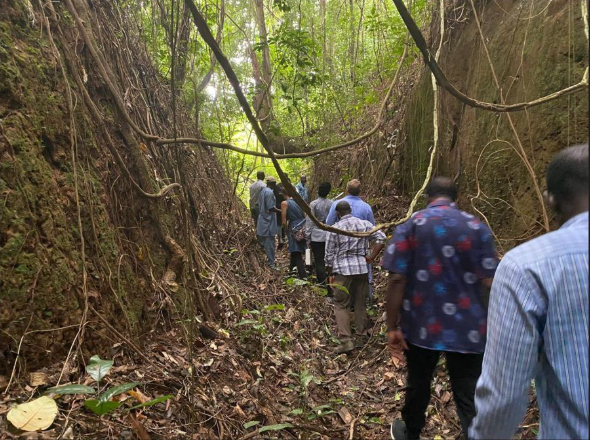
A burst of online excitement this week around Sungbo’s Eredo, one of Africa’s largest ancient monuments, has been driven not by a new discovery or fresh funding, but by a reminder.
On 28 January, the US Mission in Nigeria marked what it called “This Week in US-Nigeria History” by recalling a $400,000 grant awarded in 2020 to preserve the vast earthworks in south-west Nigeria. The post, shared under the hashtag #Freedom250, was quickly picked up by Yoruba cultural activists, heritage groups and Nigerian media outlets, pushing the story into the list of top trending topics on X.
What might have been a routine diplomatic commemoration instead opened a window onto deeper debates about history, identity and what development should look like in Africa’s most populous country.
Join our WhatsApp ChannelA Monument Older Than Colonial Nigeria
Sungbo’s Eredo is not a ruin in the romantic sense of stone temples or palaces. It is a 160-kilometre (100-mile) system of earthen walls and ditches, some of them as high as a seven-storey building, that loops around the heartland of the old Ijebu kingdom in today’s Ogun and Lagos states.
Built between roughly the 10th and 14th centuries, it is one of the largest pre-industrial engineering works anywhere in the world. In Yoruba oral history it is associated with Bilikisu Sungbo, a powerful woman sometimes linked to the Queen of Sheba, giving the site both archaeological and mythic significance.
For decades it was overgrown, cut through by roads and farms, and largely absent from Nigeria’s national story. It was only in the 1990s that archaeologists and local activists began to map it properly and push for protection. It is now on Nigeria’s tentative list for Unesco World Heritage status, but remains under pressure from erosion, housing, quarrying and deforestation.
Purpose of US Grant
The US grant, awarded through the Ambassador’s Fund for Cultural Preservation, was the largest such award Nigeria had received. It brought together American and Nigerian universities, museum authorities and local communities to document the earthworks, stabilise vulnerable sections, train site managers and raise public awareness.
By the end of 2024, project leaders said key parts of the monument had been surveyed and protected, and that local custodians were better equipped to manage it.
This sort of funding is a small part of US foreign policy, but it has symbolic weight. Alongside the repatriation of looted Benin Bronzes and smaller grants for sites such as the ancient Nok culture, it signals a willingness to engage with African history on its own terms rather than only through a colonial lens.
Why It Struck a Nerve Online
The reaction on Nigerian social media was telling. Many users expressed pride that a pre-colonial Yoruba achievement was being recognised internationally. For some, especially Yoruba cultural nationalists, the story was less about the United States and more about reclaiming a past that they feel has been marginalised in Nigeria’s post-colonial narrative.
Others were less impressed. A small but vocal group asked why foreign governments were funding ancient walls when what Nigeria needs, they argued, are factories, technology and jobs. One popular comment put it bluntly: “We need Tesla and Ford, not old history.”
There were also calls for similar support for other neglected heritage sites, from Osun-Osogbo in the south-west to historical landscapes in the Niger Delta, hinting at long-standing grievances over who gets attention and who is overlooked.
Cultural Diplomacy in a Divided Age
The timing of the US post also matters. It came as Washington is marking what it calls “Freedom250”, a broad celebration of democratic values ahead of America’s 250th anniversary. Linking that to a Nigerian heritage site is a way of projecting soft power – suggesting shared respect for history, identity and freedom.
In Nigeria, where debates about ethnicity, federalism and national cohesion are increasingly sharp, such gestures do not land in a neutral space.
For some, the recognition of Sungbo’s Eredo feels like overdue validation. For others, it risks feeding the idea that ethnic histories are more important than a shared national future.
United States Seizes $5m In Tether From Pig Butchering Scams, FBI Warns Of Rising Cybercrime
USA House Warns of Fake VIP Tickets as Davos WEF Begins
United States and Zambia Strengthen Efforts to Combat Gender-Based Violence
What is striking is that a five-year-old grant, long since spent, could still provoke such strong reactions. That, perhaps, is the real story behind the trend: in a country wrestling with economic hardship and political uncertainty, the question of who we are, and whose past matters, remains as powerful as ever.

Prosper Okoye is a Correspondent and Research Writer at Prime Business Africa, a Nigerian journalist with experience in development reporting, public affairs, and policy-focused storytelling across Africa