 Prosper Okoye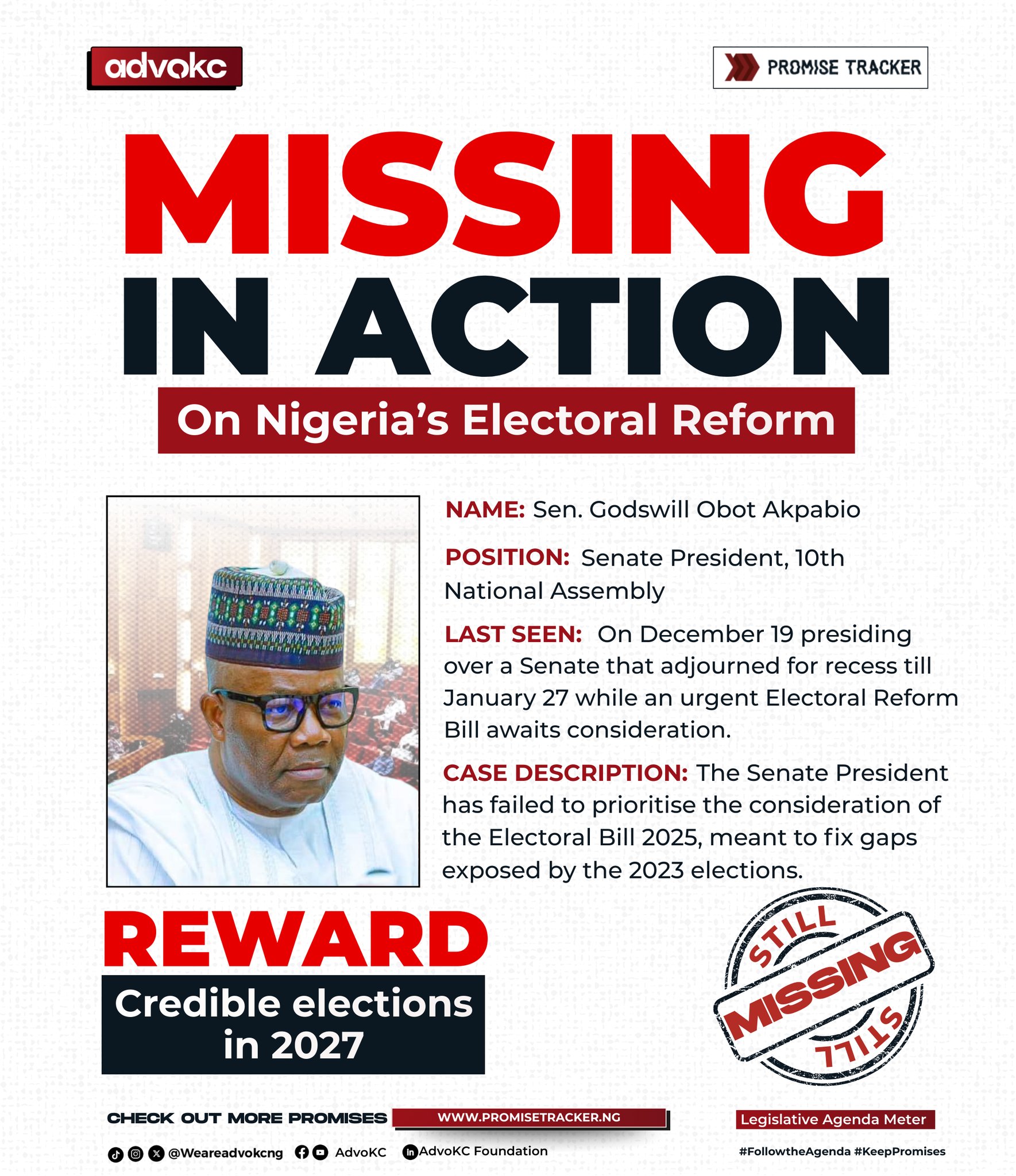
Nigeria’s Senate leadership is facing growing pressure over delays in considering the Electoral Bill 2025, with activists and commentators warning that the country risks repeating the problems that marred the 2023 general elections.
The criticism has been driven largely by campaigners on social media. Writing on X, Mercy David, accused the Senate, led by Senate President Godswill Akpabio, of lacking urgency on what they described as Nigeria’s most important electoral reform ahead of the 2027 polls.
Prime Business Africa reports that their posts have helped amplify wider public concern over the stalled legislation.
Join our WhatsApp ChannelAt the centre of the controversy is the bill’s unexplained omission from Senate proceedings.
Tinubu to New INEC Chair Amupitan: Prove Integrity Through Credible, Transparent Elections
The Electoral Bill 2025 was listed on the Senate’s Order Paper on 3 December 2025 for presentation and consideration, with the committee report already completed.
However, it was skipped without explanation. The campaigners argue that the delay is not due to unfinished legislative work but a lack of political will, particularly as electoral timelines continue to run while lawmakers remain on recess.
In a series of posts, James Asika warned that failure to act could force Nigeria to conduct the 2027 elections under the same legal framework used in 2023.
Nigerian Senate Pushes Sweeping Electoral Reforms, Moves to Make INEC Prove Poll Credibility
That election was widely criticised for disputes over results, technical failures in result transmission and prolonged court cases that extended well beyond polling day.
Concerns have been heightened by developments in the National Assembly. While the Senate has yet to conclude its work on the bill, the House of Representatives has already passed its own version.
Eddy Timothy described the gap between both chambers as “dangerous”, warning that it could slow the reform process or derail it entirely if timelines continue to slip.
House Of Reps Withdraws Bill To Remove VP, Governors’ Immunity
The Electoral Bill 2025 is intended to replace or substantially amend the Electoral Act 2022. It forms part of broader efforts to address weaknesses exposed during the last general election and to strengthen the legal framework ahead of 2027.
Supporters say the proposals amount to a comprehensive overhaul rather than a routine amendment.
Among the key reforms under discussion are measures to strengthen the independence of the Independent National Electoral Commission (INEC), reduce political interference and improve transparency in election management.
Other proposals include real-time electronic transmission of results, tougher penalties for vote buying and selling, early voting for certain categories of workers and provisions for Nigerians in the diaspora.
Mercy David has also highlighted unresolved structural issues, including constitutional changes to guarantee INEC’s independence and rules that make a returning officer’s declaration final, even when errors are alleged.
Critics argue that such provisions often leave aggrieved parties with no option but lengthy court battles.
Although the bill passed second reading in the Senate in October 2025, progress has since stalled.Further consideration was reportedly paused to allow for consultations.
“Inaction could undermine public trust in Nigeria’s democracy and put the credibility of the 2027 elections at risk,” activist, Tunde Akindele warned.
With public hearings already held and committee work largely completed, reform advocates insist the remaining challenge is political will.
As 2027 approaches, attention remains firmly on Senate leadership, with critics asking whether lawmakers will act swiftly enough to fix the flaws of the past — or whether today’s delays will shape Nigeria’s next election once again.

Prosper Okoye is a Correspondent and Research Writer at Prime Business Africa, a Nigerian journalist with experience in development reporting, public affairs, and policy-focused storytelling across Africa