 Prosper Okoye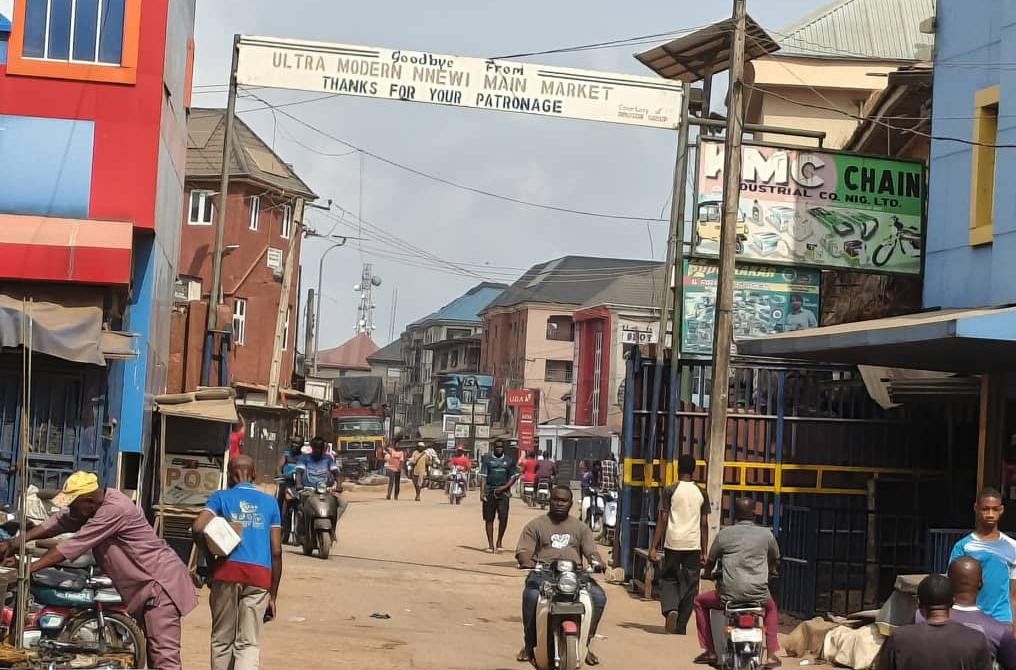
Some traders in Anambra State opened their shops on Monday despite lingering fears of possible attacks, as authorities intensify efforts to end the weekly sit-at-home that has disrupted business activities across the South-East.
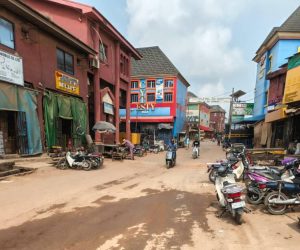
Visits by Prime Business Africa to parts of the state showed a mixed situation early Monday morning, with some traders opening for business while many shops remained locked as of about 9:00 a.m.
At the Nkwo Nnewi Market, one of the major trading hubs in the state, a few traders had opened their shops while others stayed away.
Join our WhatsApp ChannelSome of those who spoke to our correspondent on condition of anonymity said they reopened mainly out of fear of sanctions from the state government following recent enforcement measures by Governor Chukwuma Soludo.
“We have been hearing many security threats on social media forbidding us from opening our shops on Monday, but we have to obey the governor,” one trader said.
“But we are worried that there is not even a single policeman that can defend us if there is any form of attack by those enforcing the sit-at-home order,” the trader added.
In January 2026, Soludo visited the Onitsha Main Market on a Monday and discovered that many shops were closed in compliance with the sit-at-home.
The governor immediately ordered the market shut for one week, describing the continued closure of businesses as “economic sabotage”. Security agencies sealed the market and warned that the sanction could be extended if traders continued to stay away on Mondays.
After the one-week closure, the state government reopened the market and directed traders to resume normal activities on Mondays, insisting that the sit-at-home had no place in the state.
Weeks later, the government also shut the Nkwo Nnewi Market for another week after traders again failed to open their shops on a Monday.
Officials said the action was aimed at discouraging compliance with the sit-at-home order.
Soludo has also warned that markets that continue to shut down on Mondays could face longer closures or restructuring as part of plans to reorganise major trading centres in the state.
The Monday sit-at-home began in 2021 after it was declared by the separatist group Indigenous People of Biafra (IPOB) to protest the detention of its leader, Nnamdi Kanu.
Although the group later said it suspended the order, many residents and traders have continued to observe it out of fear of attacks.
Soludo has repeatedly insisted that Anambra is not a “four-day work week state” and has directed businesses, schools and public institutions to operate normally on Mondays.
On February 8, 2026, IPOB announced that Kanu had ordered the “total and permanent cancellation” of the Monday sit-at-home across the South-East, urging residents to resume normal activities from February 9.
READ ALSO:
Former Presidential Aide Rejects Claims of Soludo’s Arrogance, Says Second Term Will Be Better
Anambra Stakeholders Split Over Soludo’s ‘One-Sided’ Project Implementation
Soludo’s Igbo Self-Marginalisation Claim ‘Factually Incorrect’, Says US-based Analyst
Despite the announcement, many traders and residents still stay away from work on Mondays due to fears of attacks by armed groups believed to be enforcing the order.
Furthermore, Soludo had slashed the February salaries of government workers who were absent from work on Mondays. Observations showed that public primary and secondary schools owned by the government were open, while many of their private counterparts remained closed.
During a visit to Chukwuemeka Odumegwu Ojukwu University (COOU), the environment appeared quiet. However, officials explained that this could be due to the ongoing examinations rather than the sit-at-home order. They noted that only a few students were scheduled to sit for exams at the time.

Prosper Okoye is a Correspondent and Research Writer at Prime Business Africa, a Nigerian journalist with experience in development reporting, public affairs, and policy-focused storytelling across Africa