 Prosper Okoye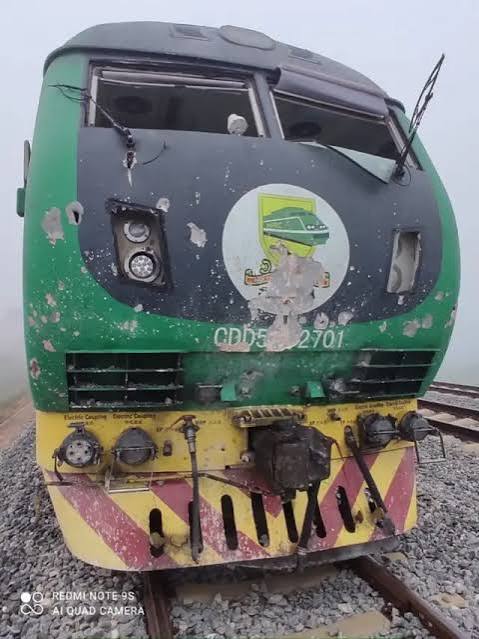
For years, Nigeria’s railways were meant to offer something the country desperately needed: a safe, fast way to move people and goods across a vast and often dangerous road network.
Today, many passengers say the trains barely move at all.
That is why Nigeria’s Senate has stepped in, launching a sweeping investigation into a system that lawmakers now describe as slow, unsafe and badly mismanaged — despite billions of naira spent to revive it.
Join our WhatsApp ChannelThe trigger was not a single derailment or breakdown, but a steady accumulation of frustration.
“Slower Than a Bicycle”
In parliament this week, Senate President Godswill Akpabio delivered an unusually blunt verdict on the Abuja–Kaduna railway, once the flagship of Nigeria’s rail revival.
He told colleagues that the journey had deteriorated so badly that a bicycle — or even a keke napep — could now reach Kaduna faster than the train.
That route was built to replace one of Nigeria’s most dangerous highways, where kidnappings and armed attacks have become common. Instead, passengers now complain of long delays, reduced services and overcrowded coaches.
Senator Abdul Ningi said the journey, once around 90 minutes, now takes more than three hours. Trains that used to run many times a day have been cut to just one return service.
Despite the poor service, the line has generated more than ₦1.8bn — prompting questions over where the money has been spent.
A System Under Strain
Other senators described vandalised tracks, missing equipment, derailments and ticket racketeering across the network. Some warned that insecurity along rail corridors is now almost as serious as on the highways the trains were meant to replace.
The result, lawmakers say, is a system that is shrinking just when Nigeria needs it most.
With fuel costs rising, roads breaking down and trade struggling, rail was supposed to carry food, cement and manufactured goods cheaply across the country. Instead, many of Nigeria’s lines operate far below capacity.
Senate Demands
The ad-hoc committee set up this week, chaired by former governor Adams Oshiomhole, has been told to go far beyond timetable problems.
It will examine how rail contracts were awarded, how foreign loans were spent, whether projects were properly built, and why services have deteriorated so sharply.
In effect, the Senate is asking whether Nigeria’s railway revival has been poorly managed — or fundamentally misdesigned.
However, while lawmakers talk of decline, the Nigerian Railway Corporation paints a very different picture.
Its leadership says the country is on the verge of a rail transformation — expanding from about 4,000km of track today to 10,000km within five years. LNG-powered trains are being tested. New urban railways are planned. Kano is getting a ₦1tn metro system. More than ₦240bn has been set aside for rail projects in the 2026 budget.
But critics say Nigeria keeps building shiny new lines without fixing the old ones — and without connecting them into a true national network.
Most of Nigeria’s railways still run north–south, designed decades ago to move raw materials to ports, not to link Nigerian cities, factories and farms to one another. There are still no meaningful east–west rail connections.
Nigeria Senate Defers Debate on Electoral Act Repeal Bill
Tension As Senator Akpoti-Uduaghan Denied Access To National Assembly
Nigeria Senate Orders Nationwide Crackdown as Lead Poisoning Hits Lagos
Why This Probe Matters
For ordinary Nigerians, this is not an abstract policy debate.
If trains keep slowing down, passengers will return to dangerous roads. If freight stays stuck on trucks, food prices and transport costs will rise. If vandalism continues, even new railways will decay.
That is why this Senate probe carries weight.
It may decide whether Nigeria finally builds a railway that works — or whether its rail revival remains, like so many of its trains, stuck on the tracks.

Prosper Okoye is a Correspondent and Research Writer at Prime Business Africa, a Nigerian journalist with experience in development reporting, public affairs, and policy-focused storytelling across Africa