 Prosper Okoye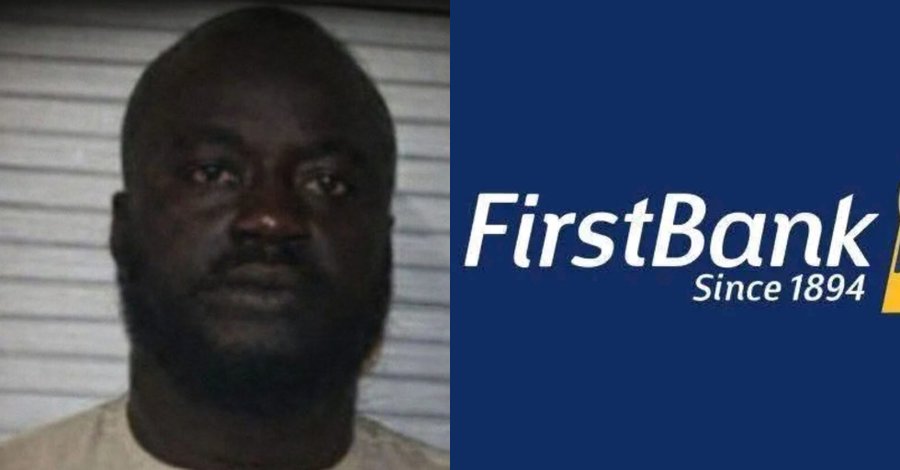
A Nigerian court has sentenced a man to prison after he spent more than ₦1.3bn (£730,000) that was mistakenly paid into his bank account by one of the country’s largest lenders, First Bank Plc.
Ojo Eghosa Kingsley was convicted on Monday by an Edo State High Court in Benin City after pleading guilty to stealing funds that were wrongly credited to his account due to what the bank described as a system glitch.
Investigators say the erroneous transfers, which totalled ₦1,507,502,182.24, occurred intermittently between June and November 2025. Rather than alerting the bank, prosecutors told the court that Mr Kingsley converted the funds for personal use, transferring large sums to accounts belonging to his mother, Itohan Ojo, and his sister, Edith Okoro Osaretin.
Join our WhatsApp ChannelAccording to court filings, some of the money was used to complete a building project and to finance what prosecutors described as a “new lifestyle”.
Arrest and Trial
Mr Kingsley was arrested by the Economic and Financial Crimes Commission (EFCC) following a petition submitted by First Bank after internal reviews flagged the unexplained transactions.
He was arraigned on 19 January 2026 on a one-count charge of stealing, contrary to Section 387(1) of the Edo State Criminal Law 2022. He pleaded guilty without contest.
His lawyer appealed to the court for leniency, telling the judge that his client was remorseful and had learned from the experience.
“He is a first-time offender who has shown regret and is willing to turn a new leaf if given the opportunity,” the defence counsel said, while urging the court to consider restitution.
Delivering judgment, Justice W. I. Aziegbemhin sentenced Mr Kingsley to one year in prison or the option of a ₦5m fine. The court also ordered him to refund the outstanding balance of ₦272,252,193.59 to First Bank.
Legal observers have stressed that the refund order is separate from, and in addition to, the custodial sentence or fine.
During proceedings, Mr Kingsley reportedly told the court that he preferred serving the prison term rather than repaying the remaining funds.
However, the judge made it clear that restitution was mandatory, warning that failure to comply could attract further legal consequences, including extended imprisonment.
Recovery of Funds
Before the conviction, the EFCC said it had already recovered ₦802,420,000 from accounts linked to Mr Kingsley and his relatives. First Bank also reversed transactions worth more than ₦300m directly from his account.
The recovered funds were subsequently handed over to the bank.
Although First Bank has not issued a public statement specifically addressing the case, its decision to petition the EFCC and cooperate with investigators reflects standard banking protocol when recipients of erroneous credits refuse to return funds.
In similar cases, banks have maintained that customers are obligated to report unexpected deposits and cooperate with reversals, in line with Central Bank of Nigeria (CBN) regulations.
Banking Errors and The Law
Financial experts say such incidents are often caused by software bugs or system upgrades within digital banking platforms.
A senior banker, quoted anonymously in local media, said: “When a customer receives money that does not belong to them, the safest action is to immediately notify the bank. Spending it exposes the person to criminal liability.”
Under Nigerian law, refusing to return funds paid in error can amount to fraudulent conversion or stealing. Offenders may face up to three years in prison under the Criminal Code or up to five years under the Penal Code, alongside restitution.
Banks are also empowered by the Money Laundering (Prevention and Prohibition) Act 2022 to place temporary restrictions on accounts linked to disputed funds while investigations are ongoing.
Public Debate and Reactions
The case has triggered widespread debate on social media and online forums, reflecting broader anxieties about poverty, ethics and accountability in Nigeria’s strained economy.
On Nairaland, one of the country’s largest online forums, some users expressed sympathy for Mr Kingsley, citing economic hardship and temptation.
“If it were me, I would have disappeared within hours,” one user wrote, while another argued that poverty made such actions understandable.
Others were sharply critical. “Keeping money that is not yours is still stealing,” another commenter said, comparing the act to taking an unlocked car simply because it was available.
Several users criticised what they described as misleading headlines that suggested Mr Kingsley could avoid repayment by choosing prison, pointing out that the judge’s use of the word “and” made restitution compulsory.
On X, formerly Twitter, posts ranged from detailed breakdowns of the EFCC’s investigation to mocking commentary about his reported preference for jail over repayment.
Wider Implications
Legal practitioner Emmanuel Omirin told local media that cases like this highlight weaknesses in banking systems and slow response times but warned that customers remain legally responsible for how they handle erroneous credits.
Finance analyst Caleb Ohaeri added that once a bank notifies a recipient of a mistaken transfer, “continued use of the funds crosses from error into fraud”.
Court to Rule on Tinubu’s Emergency Powers in Rivers State
Court Order Halts Impeachment Track as Rivers Assembly Moves to Activate Panel Request
Rivers Impeachment Crisis Deepens as Assembly Alleges Court Interference
For now, there is no public update on whether Mr Kingsley has complied with the court’s restitution order. But the case has become a cautionary tale, underscoring the legal risks of spending money that does not belong to you — even when it arrives without warning.

Prosper Okoye is a Correspondent and Research Writer at Prime Business Africa, a Nigerian journalist with experience in development reporting, public affairs, and policy-focused storytelling across Africa