 Prosper Okoye
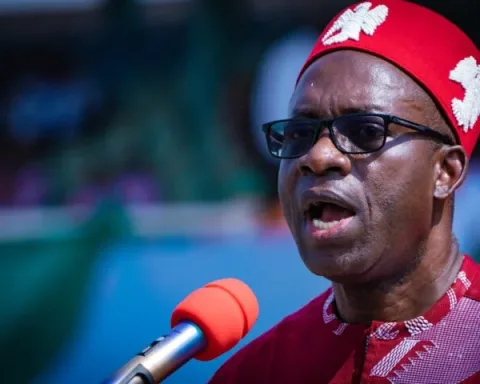
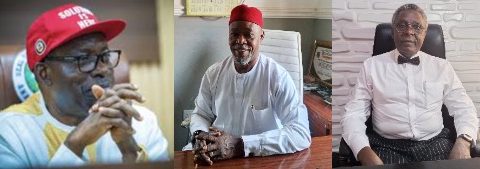
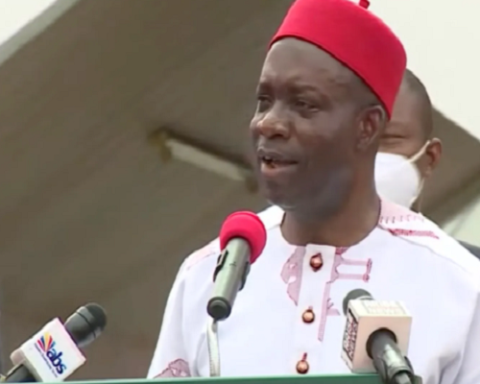
A former aide to ex-President Olusegun Obasanjo, Chief Handel Okoli, has dismissed claims that Charles Soludo is arrogant or unwilling to listen to advice in the conduct of state affairs.
Okoli, who served as Special Assistant on Labour during the Obasanjo administration, spoke in an interview with Journalist on Sunday in Abuja.
He said critics often misunderstand the governor’s approach to governance, arguing that Soludo’s intellectual background means he expects well-reasoned arguments before accepting proposals.
“A lot of people say he is arrogant. Having known him for a long time, I ask myself whether he is truly arrogant or whether people misunderstand him,” Okoli said.
“If you are dealing with someone who is intelligent, you must be sure of what you are saying. Don’t come with falsehood. If he discovers you are not making sense and tells you so, some politicians walk away and say he is arrogant because they have not won the argument.”
Okoli narrated an experience to illustrate how the governor could be persuaded when presented with convincing reasoning.
According to him, Soludo initially declined to personally commission the Alex Ekwueme Civic Centre, suggesting that a commissioner could represent him.
“I told him there was no way a place built to immortalise a former vice-president should be commissioned by a commissioner,” he said. “After much persuasion based on protocol, he eventually attended and performed the commissioning.”
The former presidential aide also dismissed allegations that the governor’s ongoing projects were politically motivated in preparation for his re-election.
Critics had argued that little was achieved during the first two years of the administration.
Okoli, however, said the early period of the administration was largely devoted to planning.
“Soludo understands governance given his background as former governor of the Central Bank of Nigeria. Planning takes time,” he said.
“If you want to succeed, you must plan first. Some people looked at that period and said nothing was happening, but he was putting structures in place before execution.”
He added that the governor’s development blueprint includes long-term economic plans such as the establishment of an airport linked to an economic free zone, which he said would enhance trade and cargo movement.
“Those who say he is working now because he wants re-election should know there is nothing wrong with that,” Okoli said. “But I can assure people that his second tenure, it will be better than the first.”
Okoli also pointed to achievements in education and infrastructure, including the recruitment of thousands of teachers and road construction projects across the state.
“About 8,000 teachers have been recruited, which is commendable. The performance of schools and students has improved. On roads, more than 400 kilometres have been constructed, including federal roads,” he said.
Despite the commendation, he urged the state government to pay urgent attention to erosion and flooding challenges affecting communities during the rainy season.
He specifically cited the impact of increased runoff water in areas such as Uku and neighbouring communities.
“Before constructing roads, proper drainage must be completed so that floodwater has somewhere to go,” he said, adding that failure to address drainage could worsen erosion damage when the rains return.
Okoli warned that delaying intervention could increase the cost of repairs.
“If a project costs one billion naira now, it could cost 20 billion after the rains if nothing is done,” he said.
He also expressed hope that Soludo could eventually seek leadership roles at the national level after completing his tenure in Anambra.
“We are also waiting for him at the federal level. Whatever he has achieved in Anambra can be brought to Abuja,” Okoli said. “We want his relationship with the president to continue so that Anambra does not lose its fair share from the centre.”

Prosper Okoye is a Correspondent and Research Writer at Prime Business Africa, a Nigerian journalist with experience in development reporting, public affairs, and policy-focused storytelling across Africa