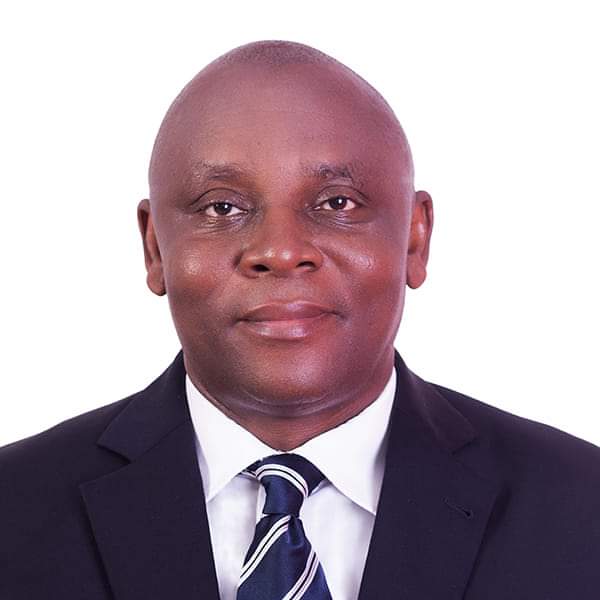
 Etim Etim
Nigerians are a troublesome lot. They harass the government for biting inflation, complain about Nyesom Wike for daring to clean up Abuja and now they want all our eyes to be on the judiciary. With the cost-of-living crisis getting harder and harder, just about anything rankles us.
Take the case of a retired army general who passed away recently, leaving behind a large swath of assets and a family fighting over them. Some people want to know how he acquired so much wealth. It’s as if they want him to declare his assets in his grave. General Abdullahi Muraina, who retired from the army in 2014, passed away in Dubai recently. He was chief of accounts and budget before he voluntarily retired. He left behind many houses and housing estates in Abuja and Ibadan; petrol stations; plazas; event centers and acres of land in different parts of the country. There are also bulletproof vehicles and many other luxury cars. It is quite a hefty collection of high-value real estate in some of the highly prized locations in the country. His family of two wives and nine children are now locked in a legal battle on how to share these assets. An advertisement appeared in Thisday newspaper last week, warning the public not to deal in any of the 19 listed properties and six vehicles as they are all subjects of lawsuits. “The upper area court acquires jurisdiction, power and control over the above-enumerated properties, pending the final determination and the outcome of the suit,’’ the lawyers stated in the advert.
Join our WhatsApp ChannelREAD ALSO: The Violence In Lagos And My Fears For The Future – ETIM ETIM
But questions surrounding the sources of this stupendous wealth, given that the man was in charge of military finances and budgets, have once again brought the issue of corruption to focus. But I think that the people asking these questions do not seem to understand the basic DNA of the Nigerian public official. It is an unwritten code in this country that any person who is in charge of a big organisation with a sizeable yearly budget, be it a state government, an MDA, National Assembly or even the military, is in the race to enter his name into Forbes 100. The listing of the world’s top wealthy people is an honour that no Nigerian has ever earned, but one to which our public officials are constantly in the race for. People like Abdulraheed Maina; Ahmed Idris; Diezani Alison-Madueke; Tafa Balogun and many others have competed for this honour in the past; and as I write, the race is on.
In the case of Gen. Muraina, his tenure as director of budget and finance coincided with the period the military was spending so much to acquire weapons and ammunition to fight Boko Haram in the North-East. It was a big moment for him and the institution he loved and served so well. Boko Haram and other criminals nearly took over the country, with their headquarters in the North-East. The then president, Dr. Goodluck Jonathan, even confessed publicly that some persons who were loyal to the terrorist groups were serving in his government. There were bombs in Abuja and many parts of the country almost every day. Worship places were routinely attacked. Undaunted, our military fought fiercely. But for the gallantry of the armed forces, the country would have been overrun. Why then are Nigerians worried that a general who was in the thick of it all, gave so much to the country, had retired with ‘small something’ that he would live on? Did they expect him to live in penury after risking his life in service of the nation? It is a matter of regret that Gen. Muraina could not go to the great beyond with his houses and cars. The fight within his family would have been avoided. And this is why death is such a dreadful part of living. We work so hard and acquire so much; some steal as much as they can from their country, taking away the resources that would have provided schools, hospitals, roads, electricity and other benefits. And when death comes, we leave everything behind; and in some cases, fights erupt in the family.
These quarrels leave in their wake lasting enmity that extends to generations unborn. Some could be quite bloody and expose underlying, deep-rooted distrusts among families once held together by the departed papa. Even in instances where the man had a Will, disagreements are not totally avoided. The fight within the family of the late wealthy Lagos lawyer, Chief FRA Williams, over his multibillion Naira estate, is a case study. It has now extended well to his grandchildren. I hope they will find peace someday. But then, lawyers and fiduciary experts recommend leaving a Will and updating it regularly as the best safeguard against war in the family after we have gone. “With a decent Will, written with an understanding of what is important to each heir, you can protect the emotional bonds of your family,’’ writes Gina Creedon, an expert in the field.
This piece is a satirical commentary on how some folks turn government’s resources in their care into personal estates, and leave them behind for feuding families. I should, however, acknowledge that most other wealthy people got their riches in an honest way. Not all Nigerians are thieves. I, therefore, pay respect to the hardworking men and women of this country who created their wealth in the time-honoured old fashion of hard work and honesty. I salute their industry, creativity and grit. May their children never fight over their inheritance. I salute also the honest workers, professionals, farmers, artisans and labourers who toil day and night to provide for their families. May their labour not be in vain.

Etim Etim
ETIM ETIM is a journalist, banker and author. He has been a member of the Editorial Board of The Guardian, a Regional Manager in Access Bank and is currently a Columnist in Prime Business Africa, The Cable and Businessday newspapers.
He is also the Chief Executive of Stein Meyer Communications, a major media consultancy and the author of the best-selling book, "Akwa Ibom Heroes: Inside Story of the Fight for Abrogation of Onshore-Offshore Oil Dichotomy" and co-author of another book, "Osinbajo Strides: Defining Moments of an Innovative Leader".