 Prosper Okoye
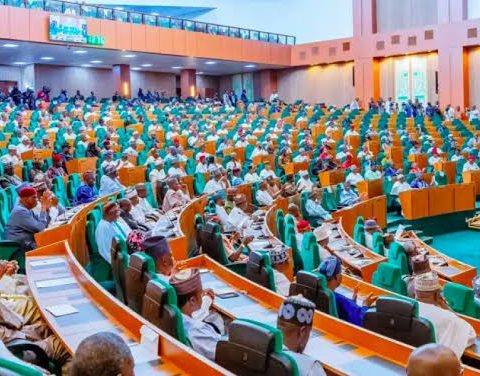
A Senate committee has warned it may issue arrest warrants against former officials of the Nigerian National Petroleum Company Limited (NNPCL) if they fail to appear before it on a date to be announced, lawmakers said on Thursday.
The committee, chaired by Senator Wadada, said the former management team is expected to appear alongside the current leadership, led by GCEO Bayo Ojulari, and external auditors who worked with the company during the period under review.
Join our WhatsApp ChannelThe panel said it expects the company to account for ₦210 trillion flagged in audit reports, comprising ₦103 trillion and ₦107 trillion that were allegedly not properly explained in the company’s financial records.
“NNPCL needs to properly account for ₦210 trillion,” the committee said, noting that its 19 questions arising from last year’s audit were not satisfactorily answered.
The company had claimed the ₦103 trillion represented cumulative spending by joint venture partners since 2017, while the ₦107 trillion listed as “sundry receivables” was reportedly owed by banks and other entities—a response rejected by the lawmakers.
The committee also questioned the reported ₦5 billion expenditure used to change the company’s name from the former Nigerian National Petroleum Corporation to NNPCL, calling the spending unacceptable and demanding explanations.
In addition, the panel directed NNPCL to refund all production costs charged against crude oil revenue, arguing that the company and its subsidiaries do not directly produce crude oil.
READ ALSO:
NNPCL Posts ₦5.4tn Profit in 2024, Unveils Roadmap to Attract $60bn Investments by 2030
The committee recommended that the Office of the Auditor-General for the Federation conduct a forensic audit of NNPCL’s financial statements for the period, in line with Section 85 of the 1999 Constitution.
Former GCEO Abba Kyari led the national oil company from 2019 to 2025.

Prosper Okoye is a Correspondent and Research Writer at Prime Business Africa, a Nigerian journalist with experience in development reporting, public affairs, and policy-focused storytelling across Africa
- Prosper Okoye
- Prosper Okoye
- Prosper Okoye
- Prosper Okoye
- Prosper Okoye
- Prosper Okoye
- Prosper Okoye
- Prosper Okoye
- Prosper Okoye
- Prosper Okoye
- Prosper Okoye
- Prosper Okoye
- Prosper Okoye
- Prosper Okoye
- Prosper Okoye
- Prosper Okoye
- Prosper Okoye
- Prosper Okoye
- Prosper Okoye
- Prosper Okoye
- Prosper Okoye
- Prosper Okoye
- Prosper Okoye
- Prosper Okoye
- Prosper Okoye
- Prosper Okoye
- Prosper Okoye
- Prosper Okoye
- Prosper Okoye
- Prosper Okoye
- Prosper Okoye
- Prosper Okoye
- Prosper Okoye
- Prosper Okoye
- Prosper Okoye
- Prosper Okoye
- Prosper Okoye
- Prosper Okoye
- Prosper Okoye
- Prosper Okoye
- Prosper Okoye
- Prosper Okoye
- Prosper Okoye
- Prosper Okoye
- Prosper Okoye
- Prosper Okoye
- Prosper Okoye
- Prosper Okoye
- Prosper Okoye
- Prosper Okoye
- Prosper Okoye
- Prosper Okoye
- Prosper Okoye
- Prosper Okoye
- Prosper Okoye
- Prosper Okoye
- Prosper Okoye
- Prosper Okoye
- Prosper Okoye
- Prosper Okoye
- Prosper Okoye
- Prosper Okoye
- Prosper Okoye
- Prosper Okoye
- Prosper Okoye
- Prosper Okoye
- Prosper Okoye
- Prosper Okoye
- Prosper Okoye
- Prosper Okoye
- Prosper Okoye
- Prosper Okoye
- Prosper Okoye
- Prosper Okoye
- Prosper Okoye
- Prosper Okoye
- Prosper Okoye
- Prosper Okoye
- Prosper Okoye
- Prosper Okoye
- Prosper Okoye
- Prosper Okoye
- Prosper Okoye
- Prosper Okoye
- Prosper Okoye
- Prosper Okoye
- Prosper Okoye