 MARCEL MBAMALU
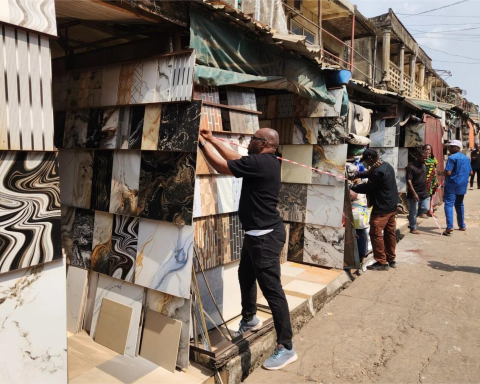
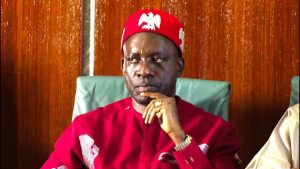
Governor Chukwuma Soludo of Anambra State has ordered the closure of the Onitsha Main Market for one week because traders apparently disobeyed the governor’s order to open the Onitsha Market against the prevailing Monday sit-at-home practice.
This looks like punishment, but it is actually compounding the same problem which the governor wishes to resolve. Who is the real saboteur?
Join our WhatsApp ChannelThe shutdown of Onitsha Main Market is definitely more than an issue of compliance, enforcement, or even legality. It reopens an old wound in the political economy of the South-East, which many believed was gradually healing through fatigue, informal negotiations, and the quiet return of normal life.
Which Economy is Soludo Protecting?
Governor Chukwuma Soludo frames his action as a war against “economic sabotage.” But before one accepts this framing, a more fundamental question must be asked: what economy is being protected, and whose economic pain is being prioritised?
Nigeria’s economy itself is fragile, uneven, and largely informal. In the South-East, markets like Onitsha Main Market are not mere commercial spaces; they are survival systems. To close such a market ostensibly to punish traders for staying away out of fear is to punish victims twice: first by insecurity, and then by the state.
Governor Soludo insists that sit-at-home is over. Yet history suggests that such practices often fade not through confrontation but through exhaustion.
In 2023, the Enugu State Governor, Peter Mbah attempted a similar hardline strategy at Ogbete Market when sit-at-home was already losing relevance. The result was not economic revival but bloodshed when traders protested closure of their shops. At least three lives were lost, property looted and several arrests made. In the end, fear of sit-at-home grew louder, and trauma was renewed. The lesson should have been clear: force reawakens what silence allows to die.
By sealing Onitsha Main Market, the Anambra government may have unintentionally revived a practice it claims to be burying. Fear, once reintroduced into a system, rarely obeys government timetables. Traders did not shut their shops out of rebellion but out of self-preservation. Even the story itself admits this, noting traders’ fear of attacks by miscreants enforcing sit-at-home through violence.
Another Uncomfortable Question Feeding a Conspiracy Theory
Why is state power being exercised against traders rather than against the agents of fear? What sanctions have been applied to security operatives who routinely abandon road posts on Mondays? What structural security guarantees exist beyond press statements and ultimatums?
More troubling is the wider pattern emerging across the South-East. Again and again, state actions, however well-intentioned, end up disproportionately destroying Igbo economic assets. Markets are sealed. Shops are burnt. Traders absorb losses. Yet little is heard about coordinated regional responses to the destruction of Igbo businesses in other parts of Nigeria, judicial marginalisation, political exclusion, or systemic economic estrangement.
Soludo Shuts Onitsha Main Market for One Week Over Sit-at-Home Defiance
Soludo’s Igbo Self-Marginalisation Claim ‘Factually Incorrect’, Says US-based Analyst
This imbalance feeds dangerous perceptions. When Southeast governors appear more decisive against their own traders than against external injustices, conspiracy theories thrive. Whether true or not, the belief that Igbo economic destruction has become an “assignment” given to their own leaders is taking root, and perception, in politics, often matters as much as reality.
Governor Soludo, an economist of global repute, will inevitably be judged not by theory but by outcomes. Has Anambra witnessed transformative market reforms under his watch? Have traders in Onitsha experienced infrastructural upgrades, tax reliefs, credit access, or modernisation commensurate with the sacrifices now demanded of them? These are the benchmarks against which accusations of “economic sabotage” must be measured. Soludo promised to turn Anambra to a “Dubai/Taiwan-type economy, but this remains a mirage. Instead, critics have pointed to drawbacks in tax and revenue drives, which have been labelled high-handed and poorly implemented, leaving businesses confused.
A one-week shutdown does not cure fear. It does not rebuild trust. It does not answer the historical grievances that fuel resistance, nor does it neutralise the criminal elements that exploit them. Instead, it risks turning economic policy into collective punishment.
History is unforgiving to leaders who confuse enforcement with statesmanship. The South-East has suffered too much economic self-harm, which are sometimes imposed from outside and sometimes enabled from within. Governor Soludo still has time to choose dialogue over defiance, protection over punishment, and healing over hard lines.
If not, he risks being remembered not as the economist who rebuilt Anambra’s economy, but as one of those Igbo leaders whose methods appeared rational on paper, but in essence, worked against the collective interests of their own people. And that would be a tragedy no market reopening could undo.

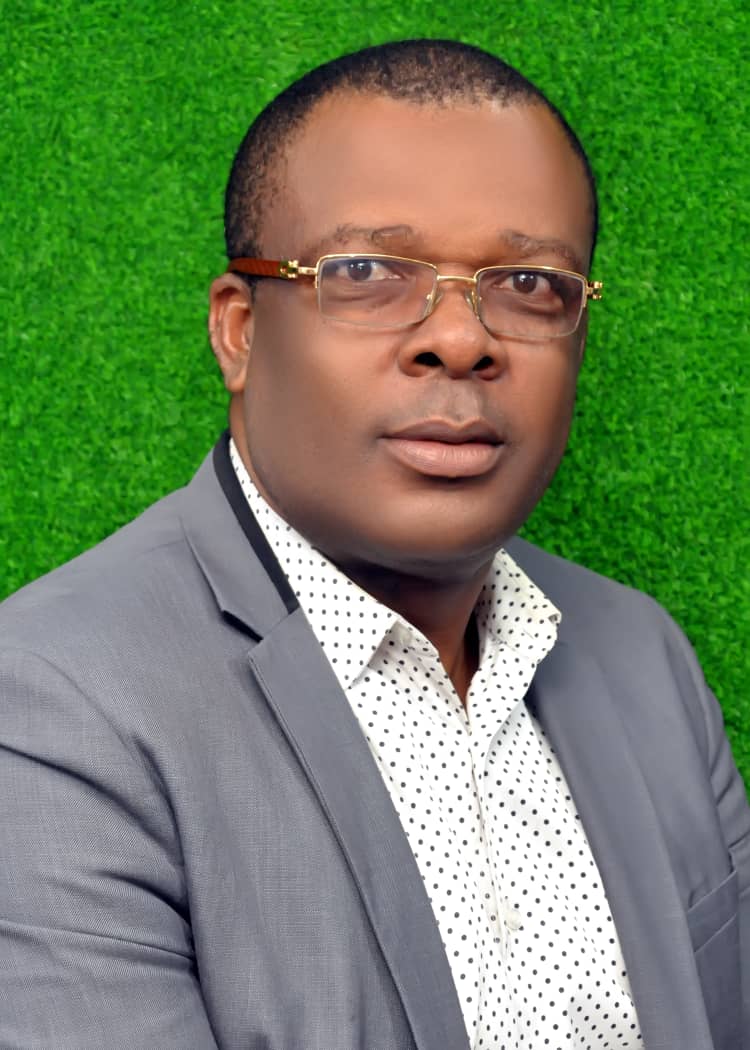
Dr. Marcel Mbamalu is a distinguished communication scholar, journalist, and entrepreneur with three decades of experience in the media industry. He holds a Ph.D. in Mass Communication from the University of Nigeria, Nsukka, and serves as the publisher of Prime Business Africa, a renowned multimedia news platform catering to Nigeria and Africa's socio-economic needs.
Dr. Mbamalu's journalism career spans over two decades, during which he honed his skills at The Guardian Newspaper, rising to the position of senior editor. Notably, between 2018 and 2023, he collaborated with the World Health Organization (WHO) in Northeast Nigeria, training senior journalists on conflict reporting and health journalism.
Dr. Mbamalu's expertise has earned him international recognition. He was the sole African representative at the 2023 Jefferson Fellowship program, participating in a study tour of the United States and Asia (Japan and Hong Kong) on inclusion, income gaps, and migration issues.
In 2020, he was part of a global media team that covered the United States presidential election.
Dr. Mbamalu has attended prestigious media trainings, including the Bloomberg Financial Journalism Training and the Reuters/AfDB Training on "Effective Coverage of Infrastructural Development in Africa."
As a columnist for The Punch Newspaper, with insightful articles published in other prominent Nigerian dailies, including ThisDay, Leadership, The Sun, and The Guardian, Dr. Mbamalu regularly provides in-depth analysis on socio-political and economic issues.