 Prosper Okoye
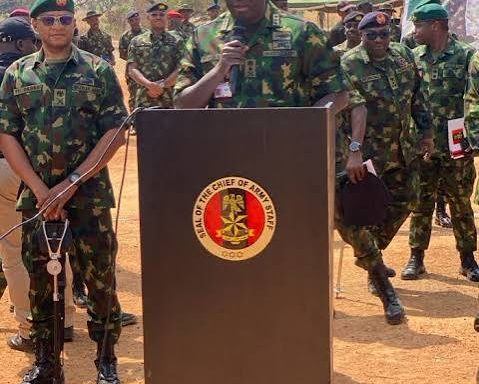
As of March 2026, Nigeria’s military continues to confront a persistent and evolving insurgency in the country’s Northeast. The campaign is being led mainly through Operation Hadin Kai, which is tasked with countering extremist groups operating in the region.
The conflict is largely driven by insurgent factions such as Boko Haram, the Islamic State West Africa Province (ISWAP), and Jamā’at Ahl as-Sunnah lid-Da’wah wa’l-Jihād (JAS). Although the military dismantled most insurgent territorial control after the peak of the conflict between 2014 and 2015, the region remains volatile. Attacks now occur in scattered forms, including ambushes, civilian abductions, and raids on military positions.
Recent incidents in places such as Kukawa and Ngoshe highlight the continued security challenges in the region. Despite support from international partners, including training and intelligence cooperation from the United States, several structural and operational issues continue to affect the military’s efforts.
Join our WhatsApp ChannelBelow are six major security challenges currently facing the Nigerian military in the Northeast.
Persistent and Evolving Insurgency
One of the biggest challenges remains the continued presence of extremist groups. Despite years of military operations, Boko Haram and ISWAP still carry out deadly attacks across the region.
Reports indicate that more than 20 forward operating bases were attacked or overrun in early 2025 alone. Insurgent groups have shifted from holding territory to conducting guerrilla-style attacks, including ambushes, kidnappings, and surprise raids.
The complex terrain around Lake Chad and dense forests such as Sambisa Forest provide hiding places for militants, allowing them to regroup and launch attacks even after major military offensives.
Overstretched Military Resources and Manpower
Nigeria’s armed forces are facing pressure from multiple security threats across the country. While fighting insurgency in the Northeast, the military is also responding to banditry in the Northwest and communal clashes in parts of the North Central region.
This multi-front security crisis has stretched manpower and equipment. Although the federal government allocated about N5.41 trillion for defence in the 2026 budget, the scale of threats means the military still struggles to maintain a constant presence in all vulnerable areas.
Recruitment efforts and the deployment of experienced personnel are ongoing, but the demand for troops remains high.
Porous Borders and Cross-Border Terrorism
The Northeast shares borders with Chad, Niger, and Cameroon, making it easier for insurgents to move across national boundaries.
Militants often exploit these porous borders to transport weapons, fighters, and supplies. The presence of extremist groups across the Sahel region further complicates the situation, creating opportunities for cooperation among different armed groups.
Regional security efforts such as the Multinational Joint Task Force have been established to address these threats, but the vast and difficult terrain continues to challenge surveillance and border control.
Advanced and Adaptive Terrorist Tactics
Insurgent groups have become more sophisticated in their tactics. They frequently use improvised explosive devices (IEDs), landmines, and coordinated ambushes against military convoys and civilian targets.
In some cases, militants have overrun military positions and seized weapons, ammunition, and vehicles. These attacks not only weaken local security but also strengthen insurgent capabilities.
The growing use of technology and mobility by these groups means the military must constantly adapt its strategies, including improving drone surveillance and intelligence gathering.
Humanitarian Crisis and Community Mistrust
Years of conflict have created a severe humanitarian crisis in the Northeast. Thousands of civilians have been displaced, and many communities continue to face the threat of abductions and attacks.
Mass kidnappings remain a serious concern. In some incidents, entire communities, including schoolchildren and worshippers, have been targeted by insurgents.
At the same time, allegations of human rights abuses by security forces have created mistrust in some communities. When civilians lose confidence in the military, it becomes harder for security agencies to gather local intelligence, which is crucial for counterinsurgency operations.
READ ALSO
Trump Sanctions Rwanda Military Over DR Congo Conflict
Army Denies Mutiny Threat Amid Pay Rumours
National Assembly Approves N1.5tn Budget for Army
Limited Equipment, Technology, and Coordination
Modern counterinsurgency operations require advanced technology, intelligence systems, and strong coordination among security agencies. However, Nigeria’s military still faces gaps in these areas.
Although international partners provide training and support, the military needs more advanced surveillance systems, drones, and intelligence tools to respond effectively to evolving threats.
There are also calls for stronger coordination among national security agencies and greater regional cooperation to close operational gaps that insurgents often exploit.
The Road Ahead
While Nigeria has made progress in reducing insurgent territorial control since the height of the conflict, security challenges in the Northeast remain complex. The continued presence of extremist groups, combined with regional instability and humanitarian concerns, means that military operations alone may not be enough.
Experts increasingly argue that long-term stability will depend not only on security operations but also on economic recovery, community trust, and stronger regional cooperation.

Prosper Okoye is a Correspondent and Research Writer at Prime Business Africa, a Nigerian journalist with experience in development reporting, public affairs, and policy-focused storytelling across Africa
- Prosper Okoye
- Prosper Okoye
- Prosper Okoye
- Prosper Okoye
- Prosper Okoye
- Prosper Okoye
- Prosper Okoye
- Prosper Okoye
- Prosper Okoye
- Prosper Okoye
- Prosper Okoye
- Prosper Okoye
- Prosper Okoye
- Prosper Okoye
- Prosper Okoye
- Prosper Okoye
- Prosper Okoye
- Prosper Okoye
- Prosper Okoye
- Prosper Okoye
- Prosper Okoye
- Prosper Okoye
- Prosper Okoye
- Prosper Okoye
- Prosper Okoye
- Prosper Okoye
- Prosper Okoye
- Prosper Okoye
- Prosper Okoye
- Prosper Okoye
- Prosper Okoye
- Prosper Okoye
- Prosper Okoye
- Prosper Okoye
- Prosper Okoye
- Prosper Okoye
- Prosper Okoye
- Prosper Okoye
- Prosper Okoye
- Prosper Okoye
- Prosper Okoye
- Prosper Okoye
- Prosper Okoye
- Prosper Okoye
- Prosper Okoye
- Prosper Okoye
- Prosper Okoye
- Prosper Okoye
- Prosper Okoye
- Prosper Okoye
- Prosper Okoye
- Prosper Okoye
- Prosper Okoye
- Prosper Okoye
- Prosper Okoye
- Prosper Okoye
- Prosper Okoye
- Prosper Okoye
- Prosper Okoye
- Prosper Okoye
- Prosper Okoye
- Prosper Okoye
- Prosper Okoye
- Prosper Okoye
- Prosper Okoye
- Prosper Okoye
- Prosper Okoye
- Prosper Okoye
- Prosper Okoye
- Prosper Okoye
- Prosper Okoye
- Prosper Okoye
- Prosper Okoye
- Prosper Okoye
- Prosper Okoye
- Prosper Okoye
- Prosper Okoye
- Prosper Okoye
- Prosper Okoye
- Prosper Okoye
- Prosper Okoye
- Prosper Okoye
- Prosper Okoye
- Prosper Okoye
- Prosper Okoye
- Prosper Okoye
- Prosper Okoye
- Prosper Okoye
- Prosper Okoye
- Prosper Okoye
- Prosper Okoye
- Prosper Okoye