 Prosper Okoye
Nigeria’s electoral umpire, the Independent National Electoral Commission (INEC), has begun implementing a series of reforms aimed at improving transparency, reducing litigation, and strengthening public confidence ahead of the 2027 general elections.
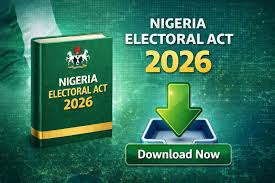
The reforms follow the enactment of the Electoral Act 2026, signed into law on February 18, 2026, which repealed the earlier 2022 electoral legislation. They also stem from a 142-point post-election review conducted after the 2023 polls, of which 86 recommendations fall within INEC’s administrative powers.
INEC chairman, Joash Amupitan, has said the commission is determined to address the logistical and technological issues observed in previous elections and ensure that the 2027 polls are more credible and inclusive.
Join our WhatsApp ChannelAlthough INEC has not published an official list of the reforms, reporting from official announcements and recent statements shows that at least ten major changes are already being implemented.
New Election Timetable
INEC has released a revised election schedule in line with the provisions of the Electoral Act 2026.
Under the new calendar, presidential and National Assembly elections will take place on Saturday, January 16, 2027, while governorship and State Houses of Assembly elections will be held on Saturday, February 6, 2027.
The adjustment aligns with the Act’s shorter 300-day notice requirement and revised timelines for party primaries and other pre-election activities.
Overhaul of Political Party Regulations
The commission is conducting a technical review of its regulations and guidelines for political parties to bring them in line with the new law.
The review covers candidate nomination procedures, internal party democracy, financial disclosures, dispute resolution mechanisms and the introduction of mandatory digital membership registers.
INEC says the changes are designed to curb irregular primaries and reduce the number of pre-election court cases.
End of PVCs as the Only Voter ID
Permanent Voter Cards (PVCs) will no longer be the only acceptable form of voter identification at polling units.
Under the new framework, voters may also use computer-generated voting slips or downloadable voter cards printed from the INEC portal, provided their identity is verified through the biometric system.
The move is intended to address the problem of uncollected PVCs, which exceeded 1.5 million during the 2023 elections.
BVAS and IReV Backed by Law
The electoral law now formally recognises the Bimodal Voter Accreditation System (BVAS) and the INEC Result Viewing Portal (IReV).
INEC says it is upgrading both systems, including improving offline capabilities that allow devices to store results and upload them later if internet connectivity is poor.
The commission hopes the upgrades will prevent the technical challenges experienced during previous elections.
Hybrid Result Transmission System
Electronic transmission of polling unit results to the IReV portal is now mandatory.
However, the law also allows the manual collation of signed result sheets as a backup if network failures occur. INEC says the hybrid approach is meant to ensure that results can still be processed even in areas with weak connectivity.
Downloadable Voter Cards
Eligible voters whose names appear on the national register will now be able to download and print their voter cards online.
INEC says the innovation will help reduce disenfranchisement caused by lost, damaged, or uncollected PVCs.
Ban on Indirect Primaries
Political parties will no longer be allowed to conduct indirect or delegate primaries.
Under the new law, parties must adopt either direct primaries involving all registered members or a consensus arrangement among aspirants. The rule is expected to reduce allegations of manipulation and internal party conflicts.
Disability Data in the Voter Register
INEC is also required to disaggregate the national voter register by type of disability.
The commission says the data will help improve election planning, polling unit accessibility and inclusion for persons living with disabilities.
Tougher Punishments for Electoral Offences
The Electoral Act 2026 introduces stricter penalties for election officials who violate the law.
Returning officers who falsify election results face a minimum of ten years in prison without the option of a fine, while presiding officers who fail to sign official result sheets risk a three-year jail term.
INEC says it will enforce these provisions strictly.
Implementation of Post-Election Reform Plan
Beyond legislative changes, the commission is implementing 86 administrative reforms drawn from its 142-point post-election review.
These measures cover voter management, logistics, election technology, security coordination and voter education. They also include preparations for early or special voting arrangements for election officials, security personnel, journalists and observers, subject to further constitutional amendments.
READ ALSO:
2027 Polls: INEC Promises Reforms as Political Parties Begin Digital Registration
FCT Polls: INEC Allegedly Forgets Original Copy of Result Sheets
INEC Shifts 2027 Presidential Election to January 16 After New Electoral Act
Preparing for 2027
INEC has already begun operational planning for the reforms, including equipment procurement, mock testing of election technology and expanded voter education campaigns.
The commission has indicated that the 2027 elections could cost about ₦873 billion, reflecting the scale of the technological and logistical upgrades.
Some additional proposals—such as the creation of an Electoral Offences Commission and changes to the appointment process for Resident Electoral Commissioners—are still awaiting action by the National Assembly.
For now, INEC says the ongoing reforms are designed to ensure that the 2027 general elections become the most transparent and credible in Nigeria’s democratic history.

Prosper Okoye is a Correspondent and Research Writer at Prime Business Africa, a Nigerian journalist with experience in development reporting, public affairs, and policy-focused storytelling across Africa
- Prosper Okoye
- Prosper Okoye
- Prosper Okoye
- Prosper Okoye
- Prosper Okoye
- Prosper Okoye
- Prosper Okoye
- Prosper Okoye
- Prosper Okoye
- Prosper Okoye
- Prosper Okoye
- Prosper Okoye
- Prosper Okoye
- Prosper Okoye
- Prosper Okoye
- Prosper Okoye
- Prosper Okoye
- Prosper Okoye
- Prosper Okoye
- Prosper Okoye
- Prosper Okoye
- Prosper Okoye
- Prosper Okoye
- Prosper Okoye
- Prosper Okoye
- Prosper Okoye
- Prosper Okoye
- Prosper Okoye
- Prosper Okoye
- Prosper Okoye
- Prosper Okoye
- Prosper Okoye
- Prosper Okoye
- Prosper Okoye
- Prosper Okoye
- Prosper Okoye
- Prosper Okoye
- Prosper Okoye
- Prosper Okoye
- Prosper Okoye
- Prosper Okoye
- Prosper Okoye
- Prosper Okoye
- Prosper Okoye
- Prosper Okoye
- Prosper Okoye
- Prosper Okoye
- Prosper Okoye
- Prosper Okoye
- Prosper Okoye
- Prosper Okoye
- Prosper Okoye
- Prosper Okoye
- Prosper Okoye
- Prosper Okoye
- Prosper Okoye
- Prosper Okoye
- Prosper Okoye
- Prosper Okoye
- Prosper Okoye
- Prosper Okoye
- Prosper Okoye
- Prosper Okoye
- Prosper Okoye
- Prosper Okoye
- Prosper Okoye
- Prosper Okoye
- Prosper Okoye
- Prosper Okoye
- Prosper Okoye
- Prosper Okoye
- Prosper Okoye
- Prosper Okoye
- Prosper Okoye
- Prosper Okoye
- Prosper Okoye
- Prosper Okoye
- Prosper Okoye
- Prosper Okoye
- Prosper Okoye
- Prosper Okoye
- Prosper Okoye
- Prosper Okoye
- Prosper Okoye
- Prosper Okoye
- Prosper Okoye
- Prosper Okoye