 Etim Etim
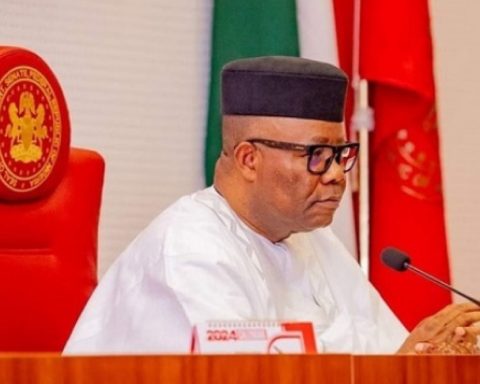
The Senate is currently undertaking a comprehensive amendment of the Central Bank Act of 2007, but the exercise is generating mixed reactions in the banking industry. Operators are worried that some of the new clauses being proposed by the lawmakers are capable of eroding the autonomy and independence of the apex bank and therefore weakening its capacity to perform. The amendment bill is being sponsored by Senator Mukhail Adetokunbo Abiru (Lagos East) and is co-sponsored by 32 others. Wednesday, May 29 was slated for a public hearing for this amendment. Senator Abiru was once the chief executive of Polaris Bank, a fellow of Institute of Chartered Accountants of Nigeria (ICAN) and a member of Chartered Institute of Bankers (CIBN).
He holds a first degree in Economics from Lagos State University. In August 2020, Abiru resigned from the position of CEO of Polaris Bank to run for the senatorial seat. Many in the financial services sector are worried that a man with such credentials is leading the charge to weaken our central bank, and this is the context of my intervention today.
Join our WhatsApp ChannelThe proposed amendments include setting the tenure of the Governor and Deputy Governors at a single, non-renewal term of six years; appointment of a minimum of one career staff of the Bank in the Committee of Governors; appointment of at least one woman among the external directors and the establishment of the position of Chief Compliance Officer in the rank of a Deputy Governor.
READ ALSO: CBN’s Independence Under Threat As Senate Proposes Amendments
It is also proposed that the five external directors should hold office for a non-renewal single five years. In addition, the amendment intends to increase the Ways and Means to government to 10% of the total revenues of the previous three years. These are quite commendable innovations. I’m particularly pleased with the single tenures for the Governor and the Deputy Governor and the creation of the Chief Compliance Officer. I’m surprised that the CBN had not established the Chief Compliance Office all this while, yet the apex bank had since mandated the commercial banks to create the position in the last 15 years or so. I remember that Access Bank has a Chief Compliance Officer as far back as when I joined in 2008. How could the CBN not have had one? There is also a provision in the proposed review of the law that states that changing legal tender should be done in phases and in a manner that does not cause any distortion to the economy. Nobody would disagree with this given our recent experience. I also support the proposed increase in the CBN’s paid up capital from One billion Naira to one trillion Naira, and the provision that such reviews should be done as regularly as is necessary.
READ ALSO:
But there are a few provisions in the proposed amendment bill that have jolted stakeholders, the banking industry and even international partners like the IMF. The bill seeks to establish a seven-member Coordinating Committee for Monetary and Fiscal Policies to be chaired by the finance minister. The Coordinating Committee will set “internally consistent targets of monetary and fiscal policies that are conducive to controlling inflation and promoting financial conditions for sustainable growth.’’ In other words, the bill, if passed and signed into law, will give the finance minister powers to fix interest rate – a traditional duty of any central bank the world over. In addition, the CBN’s budget would be approved by the National Assembly while the Governor will have to appear before the lawmakers twice in a year to give accounts of his stewardship, in addition to answering to their routine summons as often as they deem fit. With these amendments, the CBN will essentially revert to its former status as an appendage of the Finance Ministry, about 20 years after it secured an autonomy.
A central bank independence matters for price stability which in turn conduces for a consistent long-term growth. During the COVID-19 pandemic central banks responded swiftly to steer the global economy out of meltdown due to their independence. Now, facing rising inflation, central bankers are responding to the challenges – although at different speed and timelines. In many countries, their responses helped to tame inflation. Compare this to the 1970s when most central banks were still subjugated under bureaucratic and political influences and how sluggishly the central banks responded to the high inflation then. This is why the IMF was among the first to kick against the proposed amendment of the CBN law, stating that the proposed amendments “could undermine the authority of the CBN and weaken its capacity to respond to emerging challenges appropriately.’’ Indeed, Turkey and Venezuela are good examples of this.
Eminent economist and former director of the CBN and former member of its Monetary Policy Committee (MPC), Prof Akpan Ekpo, is unsparing in his assessment of the proposal. Speaking to this writer, he said: “The Coordinating Committee is unnecessary. The Finance Ministry may have its own committee to determine crucial fiscal variables, while accommodating monetary policy. That is, the CBN will be represented in that committee as is the case in the MPC where the Finance Ministry is also represented. The seven-member Coordinating Committee will undermine the independence of the CBN and place it under the control of the Finance Minister. The CBN (Monetary policy) and the Ministry of Finance (Fiscal Policy) must coordinate and collaborate. Its global best practice that doesn’t require any legal backing. The misnomer of the Coordinating Committee will create further distortions resulting in the mismanagement of the economy. I am particularly worried that the Senate is increasingly becoming an institution of revisionism. Just this week, it reverted to the old National Anthem without as much as a debate or convincing reason; and now the senate is taking the CBN back to the apron string of the Ministry of Finance. What else should we expect from this senate?

Etim Etim
ETIM ETIM is a journalist, banker and author. He has been a member of the Editorial Board of The Guardian, a Regional Manager in Access Bank and is currently a Columnist in Prime Business Africa, The Cable and Businessday newspapers.
He is also the Chief Executive of Stein Meyer Communications, a major media consultancy and the author of the best-selling book, "Akwa Ibom Heroes: Inside Story of the Fight for Abrogation of Onshore-Offshore Oil Dichotomy" and co-author of another book, "Osinbajo Strides: Defining Moments of an Innovative Leader".