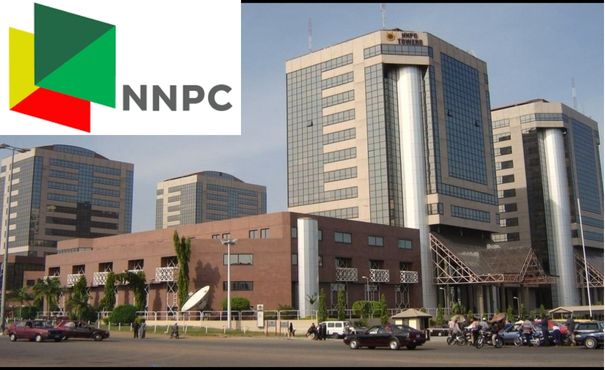
Very few business organisations are as lucky as NNPCL, Nigeria’s state-owned oil company, founded over 50 years ago. Since its founding, the corporation has consistently failed to perform its basic functions and meet its organisational objectives; and rather than being liquidated or put up for sale for these failures, NNPC routinely undergoes some form of moulting, shedding its skin and assuming a new look.
The façade might look brilliant, but it’s only skin-deep. NNPC was founded about the same time, or earlier than successful global state-owned oil companies like Saudi Aramco, owned by Saudi government; Petronas (Malaysian government; Equinor ASA (formerly Statoil, owned by Norway) and Petrobras, owned by Brazil. While these other ones have grown into transnational giants with oil fields and refineries across the globe, NNPC has become a cesspool of corruption, incompetence and decadence.
Join our WhatsApp ChannelBut the corporation is very adept at playing games and worming itself into the heart of politicians, just to stay alive. This month, the government changed its status as a monopolist, responsible for sole importation of petroleum products, to a monopsonist, the sole buyer of Dangote Refinery’s petrol. NNPC is the ultimate amoeba of Corporate Nigeria, and the implications are worrisome.
READ ALSO: Petrol Price To Hit N1,300, NNPC Faces Financial Strain
It was Aliko Dangote himself that announced that the federal government has mandated the NNPC to be the sole off-taker for petrol from his refinery. It has many implications for availability and pricing of the product. After many years of operating as an inefficient, corruption-ridden monopolist, exclusively importing fuel for years, the corporation has just turned a monopsonist – a single buyer of Dangote’s petrol. In many economies, monopolies enjoy high profits and sometimes efficiency due to lack of competition, but in the case of NNPC, Nigerians were served with persistent fuel scarcity; inefficient business models and opacity in operations.
If the corporation could not deliver imported fuel to Nigerians, what’s the guarantee that it will manage the distribution of Dangote petrol without hiccups? How did NNPC incur a $6 billion indebtedness to its offshore petrol suppliers when its local customers were even paying in advance for the products? This indebtedness has cut off petrol supplies into the country and led to the acute scarcity we have today. What is the guarantee that NNPC will not owe Dangote and mess up fuel distribution in the country?
READ ALSO: NNPCL’s $6.8 Billion Debt Crisis Sparks Calls for Urgent Privatisation
The inefficiencies inherent in its operations would greatly impede NNPC’s capacity to purchase and distribute products to other retailers. How would the transactions be funded? Credit sales? Bank credit? IOUs? Is the corporation credit worthy? Note that the Dangote Group is still indebted to the tune of about $3 billion to some Nigerian banks, being part of the loans secured to fund the construction of the complex. Can the Group therefore afford to be further weighed down with an indeterminable exposure to a dysfunctional state enterprise? In its 2023 audited annual report, the corporation announced that it spent a whopping N7 billion on unspecified items lumped as ‘’others’’, while N10 billion was spent on NNPC Foundation. What constitutes the ‘’others’’? Such opacity is not permitted in modern business practices driven by good corporate governance.
As a sole off-taker, NNPC has become a major determiner of petrol price at fuel stations across the country. This is why Mr. Dangote could not announce the price at which his product would be selling at the pumps. ‘’That depends on NNPC’’, he told reporters last Monday when asked the retail pump price, adding, ‘’the Federal Executive Council has asked the NNPC to determine the price’’. In other words, the country is still in a situation in which the government, instead of the market, remains the fixer of petrol price. That puts the Tinubu administration in a bind, with the immediate consequence being that the government will continue to face the wrath of labour unions whenever prices move up.
Petrol subsidy was expected to die a natural death as full deregulation kicks in once the Dangote Refinery commences production. The government was expected to completely hand off price-fixing duties; and allow the regulators to oversight the business, the way the CBN manages the banking industry. But since NNPC is still involved as a buyer’s monopoly (another name for monopsony), the refinery might be ‘squeezed’ to settle at a controlled price. Alternatively, the government may continue to subsidize the product – buy high from the refinery and sell lower to Nigerians.
Either way, a pricing dispute between the refinery and NNPC is inevitable, and that would be bad for Dangote. In trying to fend off pressures from labour and motorists, the government may shift the blame on Dangote for being excessive in its pricing, instigating the regulators in the mid-stream and low-stream segments of the market (who had never been particularly fond of Aliko Dangote and his refinery) to clamp down on the business mogul. I pity Aliko Dangote. His patriotism has become his albatross. He can’t say ‘’No’’ to this government; and the President, being the Minister of Petroleum, doesn’t brook disagreement. Interesting days are ahead!
My take is that NNPC should no longer enjoy any monopolistic or monopsonist status because it is incapable of managing its own affairs. Its bloated, inept, crooked and opaque. Dangote Refinery should be allowed the freedom to appoint as many off-takers or distributors as possible. In fact, there’s no reason why the refinery cannot even own its own filling stations either solely or in partnership with existing outlets, and sell directly to Nigerians, as it happens in other countries. Nigerians have expected that the new refinery will end perennial fuel scarcity and long queues. My hope has been that petrol would hover between N500 and N700 per litre at the pumps. But with this new arrangement of inserting NNPC into the mix, the prospects are daunting.

Etim Etim
ETIM ETIM is a journalist, banker and author. He has been a member of the Editorial Board of The Guardian, a Regional Manager in Access Bank and is currently a Columnist in Prime Business Africa, The Cable and Businessday newspapers.
He is also the Chief Executive of Stein Meyer Communications, a major media consultancy and the author of the best-selling book, "Akwa Ibom Heroes: Inside Story of the Fight for Abrogation of Onshore-Offshore Oil Dichotomy" and co-author of another book, "Osinbajo Strides: Defining Moments of an Innovative Leader".