 Etim Etim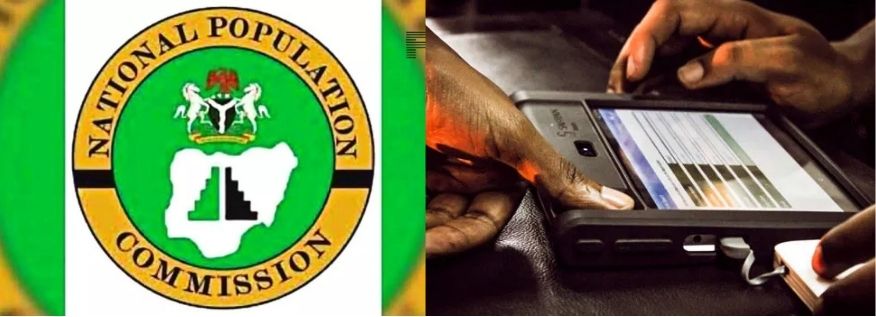
If all goes well, Nigeria will have its first biometric population census before the 2027 general elections, paving the way for a more reliable and accurate enumeration of its citizens which, in turn, conduces to result-oriented economic reforms and planning.
The last census was held in November 2006. Last week, the management of the National Population Commission (NPC) briefed President Tinubu on its readiness for the exercise. The President promised to set up a committee to review the N980 billion budget proposed for the exercise. Tinubu stressed his commitment to ensuring adequate and reliable figures from the census to augment development planning, and this explains why he opted for biometric census rather than the conventional census.
Join our WhatsApp ChannelA biometric population census is a modern method of conducting a census and it incorporates the use of biometric technologies to collect and verify demographic data. While a conventional census only counts the number of people in each household under various socioeconomic classifications like gender, religion, ethnicity, income groups, etc, a biometric census goes further and obtain unique physical or behavioural characteristics such as fingerprints, facial recognition, or iris scans to identify and verify individuals. I should note that in Nigeria, religion and ethnicity are not included in the census questionnaire.
NPC seems prepared for the exercise. It has already produced digital maps for the country; procured digital tablets; demarcated the whole country and trained staff. Biometric devices and software are part of outstanding items to be procured as soon as the government gives the go-ahead. All that remains is for President Tinubu to proclaim the date for the next census – the first since 2006 – and the counting will commence. Biometric census has many benefits. It does not only help ensure that each individual is counted only once, thereby reducing errors and duplicates, it also provides an additional layer of security, making it more difficult for individuals to provide false information. Our previous censuses have been controversial due to suspicions that the numbers from some parts of the country were excessively bloated.
Using biometric technologies would considerably reduce, if not eliminate, such problems. In addition, the biometric technology will add to the efficiency of the exercise as biometric data can be collected and processed quickly, reducing the time and resources required for data collection. Biometric data can also be used to create unique identification numbers, enabling governments to better track population dynamics and provide targeted services. Since Nigeria has already embarked on national biometric data collection through NIMC, data from the biometric census would be incorporated into the national database.
READ ALSO: How To Use NPC Mobile App For Census Training
At the NPC meeting, the President asked NIMC to be part of the budget review. He noted that the biometric census will help the government to plan for employment, agriculture and food sufficiency and promised to engage with development partners for assistance. ‘’So many problems come up without adequate data’’, he said. It’s quite baffling that Nigeria has not been able to conduct a census in almost two decades. The delays have been largely due to funding difficulties, insecurity in certain areas and the COVID-19 pandemic. But the benefits of the census are too important to overlook.
Biometric census in particular enables governments to make informed decisions; develop effective policies and focus on services, such as healthcare and education, to those who need them most. Biometric data provides a transparent and accountable way to collect and manage population data and help governments respond more effectively to natural disasters and other crises. Related to a reliable census is birth and death registration. A lot of births are not recorded in many states of the federation, making it difficult to measure population growth and other indices. It is the responsibility of governors to partner with officials of NPC in their states and launch an advocacy programme to encourage regular birth and death registrations.
READ ALSO: Buhari Suspends National Census, Incoming Govt To Determine New Date
Nigeria has a long history with population census even before the country was created in 1914; and as a citizen, I have been counted several times. It was first conducted in 1886 by the British Colonial government, specifically in the Colony of Lagos. Although limited in scope as it covered only Lagos, it marked the beginning of a series of censuses that would be eventually expanded to cover the whole country. The last exercise was in 2006. I was first counted as a baby in the 1962 exercise. I have faint recollections of the 1972 census conducted by the Gen. Yakubu Gowon government soon after the civil war. Gowon needed accurate data to implement his post-war reconstruction and rehabilitation programme. In 1991, the Babangida regime conducted another exercise and I was counted in Ikoyi, Lagos. It was followed by the 2006 exercise carried out by the Obasanjo administration when I was counted in Lekki, Lagos, this time, with my wife and children. I look forward to the next one – a biometric census – that would, hopefully, eliminate those controversies that have trailed the previous exercises.
Overall, a biometric population census has the potential to provide more accurate and reliable data, improve governance, and enhance service delivery. President Tinubu should fix a date for the next census.

Etim Etim
ETIM ETIM is a journalist, banker and author. He has been a member of the Editorial Board of The Guardian, a Regional Manager in Access Bank and is currently a Columnist in Prime Business Africa, The Cable and Businessday newspapers.
He is also the Chief Executive of Stein Meyer Communications, a major media consultancy and the author of the best-selling book, "Akwa Ibom Heroes: Inside Story of the Fight for Abrogation of Onshore-Offshore Oil Dichotomy" and co-author of another book, "Osinbajo Strides: Defining Moments of an Innovative Leader".