 Prosper Okoye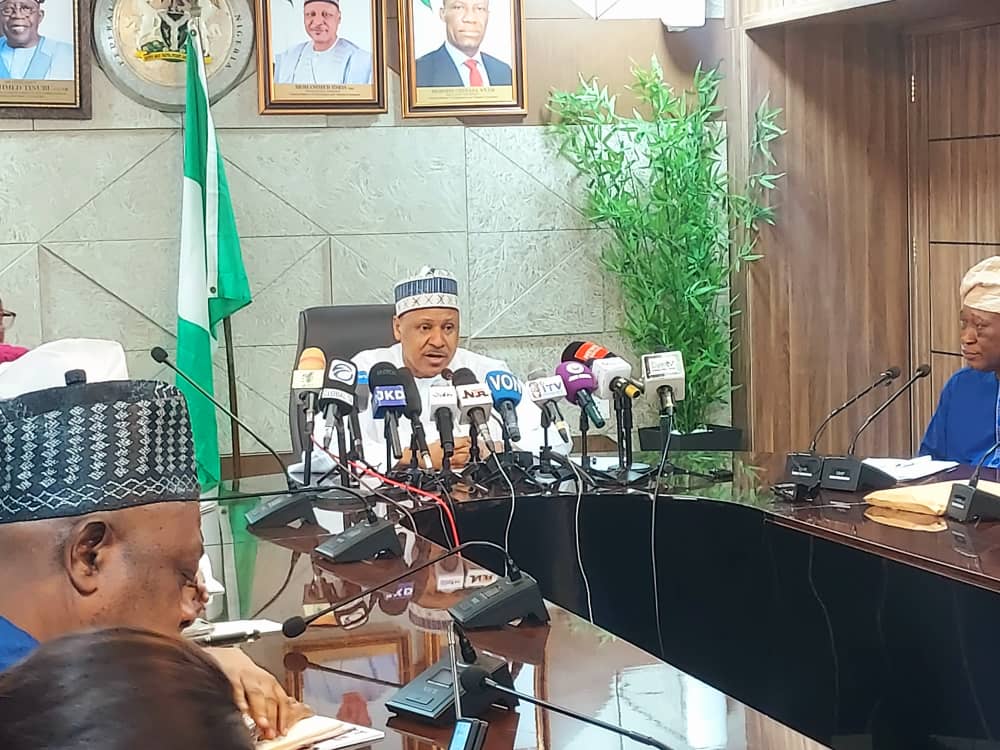
The Minister of Information and National Orientation, Mohammed Idris, has defended President Bola Ahmed Tinubu’s push for state police, saying the move is driven by growing security challenges and the limits of the current centralised system.
Speaking during a courtesy visit by the Centre for Crisis Communication in Abuja on Thursday, Idris said the president is committed to decentralising policing to better tackle crimes such as kidnapping and violent attacks. “There was a time centralised policing worked for Nigeria, but this time it is no longer working,” he added.
He noted that while the advantages and risks of state police are still being assessed, the benefits outweigh the concerns. “It is the desire of the president to ensure that we have state police as soon as it is practicable,” Idris said.
Join our WhatsApp ChannelThe minister stressed that the plan depends on the National Assembly providing the legal framework, adding that the president has already formally requested lawmakers’ support. He urged the Senate and other legislators to act swiftly, saying, “the time has come” for Nigeria to adopt state policing, while emphasising that any implementation would follow constitutional provisions.
Nigeria currently operates a centralised system under the Nigeria Police Force, which has faced increasing criticism for being overstretched. Calls for decentralised policing have grown over the years, particularly amid rising insecurity.
The debate intensified during the administration of Muhammadu Buhari, although his government stopped short of endorsing state police.
Momentum increased after the 2020 #EndSARS protests, which highlighted concerns about police effectiveness and accountability, leading to renewed calls for reform.
Regional security outfits such as Amotekun have since emerged, reflecting growing demand for more localised approaches to security.
Idris also highlighted the role of digital innovation in crisis communication, warning about the risks of misinformation in an era shaped by social media and artificial intelligence. He said the government would continue to work with civil society and other institutions to promote responsible information sharing and strengthen public trust.
READ ALSO:
Tinubu’s Oil Revenue Clampdown Stirs Relief at FAAC, Anxiety Inside NNPC
Tinubu Calls for Constitutional Change to Allow State Police
Maj. Gen. Christopher Olukolade, chairman of the Centre for Crisis Communication, called for an independent national crisis communication hub, stronger regulation of digital platforms, and improved media literacy to counter fake news and hate speech.

Prosper Okoye is a Correspondent and Research Writer at Prime Business Africa, a Nigerian journalist with experience in development reporting, public affairs, and policy-focused storytelling across Africa
- Prosper Okoye
- Prosper Okoye
- Prosper Okoye
- Prosper Okoye
- Prosper Okoye
- Prosper Okoye
- Prosper Okoye
- Prosper Okoye
- Prosper Okoye
- Prosper Okoye
- Prosper Okoye
- Prosper Okoye
- Prosper Okoye
- Prosper Okoye
- Prosper Okoye
- Prosper Okoye
- Prosper Okoye
- Prosper Okoye
- Prosper Okoye
- Prosper Okoye
- Prosper Okoye
- Prosper Okoye
- Prosper Okoye
- Prosper Okoye
- Prosper Okoye
- Prosper Okoye
- Prosper Okoye
- Prosper Okoye
- Prosper Okoye
- Prosper Okoye
- Prosper Okoye
- Prosper Okoye
- Prosper Okoye
- Prosper Okoye
- Prosper Okoye
- Prosper Okoye
- Prosper Okoye
- Prosper Okoye
- Prosper Okoye
- Prosper Okoye
- Prosper Okoye
- Prosper Okoye
- Prosper Okoye
- Prosper Okoye
- Prosper Okoye
- Prosper Okoye
- Prosper Okoye
- Prosper Okoye
- Prosper Okoye
- Prosper Okoye
- Prosper Okoye
- Prosper Okoye
- Prosper Okoye
- Prosper Okoye
- Prosper Okoye
- Prosper Okoye
- Prosper Okoye
- Prosper Okoye
- Prosper Okoye
- Prosper Okoye
- Prosper Okoye
- Prosper Okoye
- Prosper Okoye
- Prosper Okoye
- Prosper Okoye
- Prosper Okoye
- Prosper Okoye
- Prosper Okoye
- Prosper Okoye
- Prosper Okoye
- Prosper Okoye
- Prosper Okoye
- Prosper Okoye
- Prosper Okoye
- Prosper Okoye